Skip to content
Afrin

Afrin

Quality products
24/7 Support
Fast delivery
Delivery from 4 days
Active ingredient Oxymetazoline

Free delivery on orders from £ 166.00, free express delivery from £ 249.00

Afrin relieves blocked nasal passages by narrowing swollen blood vessels in the nasal lining. Relief usually begins within minutes. It is intended for short-term congestion linked to colds, allergic rhinitis, or sinus symptoms.

Overview

It contains oxymetazoline hydrochloride and is intended for short-term congestion linked to colds, allergic rhinitis, or sinus symptoms.

Directions for use

Afrin is used through the nose. The amount and frequency depend on the purpose of use, age, medical history, and advice from a doctor or pharmacist.

Use the nasal device as follows:

  • Clear the nose gently before application.
  • Keep the head upright or slightly forward rather than tipping it far backwards.
  • Direct the nozzle into the nostril without pushing it deeply.
  • Apply the prescribed amount while breathing in gently.
  • Repeat on the other side only when the recommended directions require it.
  • Do not share the device with another person.

The product is a nasal preparation, not an oral medicine. Swallowing the liquid can increase unwanted systemic exposure, especially in children.

Prevention of Rhinitis Medicamentosa

Rhinitis medicamentosa is persistent nasal congestion caused by frequent or prolonged use of topical decongestants. The nose can become increasingly dependent on the vasoconstrictor effect. When the medicine wears off, the blood vessels dilate again and the blockage may feel worse.

For this reason, oxymetazoline nasal products are generally limited to short courses, often no longer than three days unless a clinician gives different instructions. A cold may last longer than the safe period for a topical decongestant. Continuing Afrin simply because the cold has not ended is a common route to rebound congestion.

A person who has used a decongestant for longer than advised may need a planned reduction rather than repeated extra applications. Clinicians may recommend stopping one nostril at a time, changing to a saline preparation, or treating an underlying allergic condition with a different class of medicine.

If the nose becomes blocked again soon after the recommended short course, do not respond by increasing applications. Rebound congestion may be the cause rather than a worsening cold.

Formulation

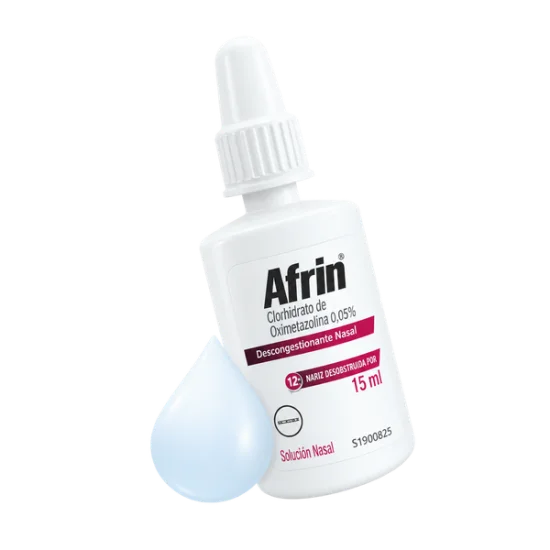
Afrin is a topical nasal decongestant containing oxymetazoline hydrochloride at a concentration of 0.05% in a 15 ml bottle. Oxymetazoline belongs to the sympathomimetic group of medicines and acts locally on blood vessels in the nasal mucosa.

Mechanism of action

Oxymetazoline hydrochloride acts as a direct-acting sympathomimetic amine. It stimulates alpha-adrenergic receptors on small blood vessels in the nasal mucosa. These vessels constrict, reducing the amount of blood and fluid entering swollen nasal tissues. This response does not depend on removing mucus. It mainly changes the size of swollen vascular tissue.

The result is less mucosal oedema and a wider nasal airway. The medicine does not remove mucus mechanically, and it does not suppress the immune response to a cold. Its role is local vascular narrowing.

Afrin acts locally, and its effect is temporary.

The British National Formulary describes topical nasal vasoconstrictors as short-term treatments because repeated use can alter the nasal response to stimulation [2].

Therapeutic indications

Indications for Use

Afrin may provide temporary relief when nasal obstruction is associated with:

  • The common cold
  • Allergic rhinitis
  • Sinus pressure and congestion
  • Swollen nasal passages during an upper respiratory infection

The product acts inside the nose rather than treating infection throughout the body. Persistent facial pain, fever, foul-smelling discharge, or symptoms that continue beyond the expected course require medical assessment because they may indicate a condition needing different treatment.

Afrin is most useful when congestion is preventing sleep or normal nasal breathing. Using it for every minor symptom increases the chance of rebound blockage.

The US Food and Drug Administration recognises oxymetazoline as a nasal decongestant active ingredient [1].

Common mistakes

Several usage errors reduce benefit or increase risk:

  • Applying the product every time the nose feels slightly blocked
  • Continuing beyond the short recommended course
  • Using extra doses after one application seems slow to work
  • Tilting the head far backwards and swallowing the liquid
  • Sharing one nasal device with another person
  • Using it immediately after another decongestant without checking the combination
  • Ignoring palpitations, severe headache, or a marked rise in blood pressure
  • Giving an adult formulation to a child without age-specific advice
  • Treating chronic allergic congestion with a topical vasoconstrictor alone
  • Using the product after nasal surgery without approval from the treating clinician

One detail is easy to miss: a congested nose can feel worse for a short period after lying down. That does not automatically justify an additional application. Elevating the head of the bed slightly and using saline may help without increasing oxymetazoline exposure.

Another common mistake is spraying while inhaling forcefully. This can send more liquid into the throat, where it may taste bitter and be swallowed. Gentle breathing is sufficient.

A third mistake is confusing a blocked nose with thick retained mucus. Afrin narrows swollen tissue, but it does not dissolve mucus. Saline irrigation, fluids, and appropriate treatment of the underlying condition may be more useful for that pattern.

Reasons not to use it

Afrin is not suitable for everyone. It requires specific caution or medical advice in the following situations:

  • Uncontrolled or untreated hypertension
  • Significant cardiovascular disease
  • Fast or irregular heart rhythms
  • Hyperthyroidism
  • Narrow-angle glaucoma
  • Diabetes or other conditions affected by adrenergic stimulation
  • Enlarged prostate with difficulty passing urine
  • Previous strong reactions to oxymetazoline or related decongestants
  • Recent nasal surgery or substantial injury inside the nose

Monoamine oxidase inhibitors, known as MAOIs, can increase the risk of blood-pressure elevation when combined with sympathomimetic medicines. Caution also applies to some antidepressants, stimulant medicines, and other treatments that raise blood pressure or heart rate.

When this is not for you

Afrin is not for you if you have uncontrolled high blood pressure, narrow-angle glaucoma, or a known serious reaction to oxymetazoline. It may also be unsuitable if you are taking an MAOI or have recently stopped one, unless a prescriber confirms that use is appropriate.

Pregnancy and breastfeeding require an individual assessment. Systemic absorption is expected to be limited when the product is used correctly, but unnecessary or prolonged exposure should be avoided. The NHS advises checking medicine suitability during pregnancy and breastfeeding rather than assuming that a nasal route removes all risk [3].

Children are more vulnerable to accidental swallowing and excessive adrenergic exposure. Use in anyone below the age specified for the formulation requires advice from a healthcare professional. Keep the bottle inaccessible to children.

Unwanted effects

Local reactions are the most common unwanted effects. They may include:

  • Temporary stinging or burning
  • Sneezing after application
  • Nasal dryness
  • Throat irritation from drainage
  • A feeling of irritation inside the nose
  • Reduced benefit after repeated use

These effects are often mild and short-lived. Dryness can become more noticeable in heated rooms, during winter, or when several drying medicines are used together.

Excessive absorption can produce systemic effects because oxymetazoline stimulates adrenergic receptors beyond the nasal lining. Possible symptoms include headache, dizziness, tremor, a faster or irregular heartbeat, raised blood pressure, nervousness, or difficulty sleeping. The risk increases with excessive dosing, swallowing the product, use in young children, or application to damaged nasal tissue.

People with hypertension or cardiovascular disease may be more sensitive to these effects. A severe headache, chest discomfort, fainting, marked palpitations, or breathing difficulty requires urgent medical attention.

A practical issue is that dryness and blockage can occur together. Increasing the dose does not correct the underlying irritation. It may intensify the cycle.

A dry, irritated nose often responds better to a bland saline spray or humidified air than to another application of a vasoconstrictor. Avoid inserting cotton buds or tissues deeply into the nasal passage.

Comparison

Nasal decongestants differ in speed, duration, route, and suitability for repeated use. The table compares categories rather than commercial products.

Option Main action and typical role Main limitation
Oxymetazoline nasal preparation Local alpha-adrenergic vasoconstriction; begins within minutes and may last for many hours Short-term use only because rebound congestion can occur
Phenylephrine or pseudoephedrine Vasoconstriction through systemic oral or local action Oral forms may affect blood pressure, pulse, sleep, or urinary flow
Fluticasone nasal corticosteroid Reduces allergic inflammation over regular use Slower onset; not intended as an immediate substitute for a rescue decongestant

Oxymetazoline is suited to rapid relief from a blocked nose. Oral pseudoephedrine may affect the whole body more strongly and can cause insomnia, palpitations, or blood-pressure changes in susceptible people. Phenylephrine also has systemic considerations when swallowed.

Fluticasone works differently. It reduces inflammatory activity associated with allergic rhinitis, but its benefit develops through regular use rather than immediate blood-vessel constriction. A person with recurring seasonal symptoms may need an anti-inflammatory approach instead of repeated oxymetazoline.

The closest practical alternative is another topical alpha-adrenergic decongestant containing a different active substance. Oxymetazoline tends to provide longer local relief, while the risk of rebound congestion remains a concern with the class as a whole.

What doctors say

In clinical practice, doctors often see Afrin work well for a blocked nose during the first few days of a cold. The same clinicians also see patients continue it for one or two weeks because the original infection has not yet resolved. The resulting congestion can be mistaken for persistent sinus disease.

A doctor will usually ask three practical questions: how long the congestion has lasted, how frequently the decongestant is being used, and whether symptoms return more severely when it wears off. Those answers help separate acute congestion from rhinitis medicamentosa.

Oxymetazoline is a symptom-relief medicine. It does not shorten the course of a cold or replace treatment for bacterial sinusitis. In allergic rhinitis, repeated reliance on a vasoconstrictor may hide the need for allergen avoidance or an intranasal corticosteroid.

Patients with cardiovascular conditions need a more cautious risk assessment. The European Medicines Agency applies pharmacovigilance principles to medicines that can produce systemic effects even when administered locally [4].

What customers often ask

Can Afrin affect driving, concentration, or work with machinery?

Afrin is applied to the nose and does not usually cause drowsiness when used correctly. Dizziness, headache, nervousness, blurred vision, or palpitations can occur, especially after excessive use or in sensitive individuals. The MHRA advises avoiding driving or machinery work if a medicine causes symptoms that impair alertness or coordination, a principle applicable to oxymetazoline use in 2026. Wait until symptoms have settled before driving.

Can Afrin be combined with MAO inhibitors or other medicines?

MAOIs can increase the pressor effects of sympathomimetic medicines and may raise blood pressure when combined with oxymetazoline. Extra caution applies to some antidepressants, stimulant medicines, and treatments for hypertension or heart rhythm disorders. The WHO’s medication-safety principles support checking combinations that affect cardiovascular function, including in 2019 guidance on safe medicine use [5]. A doctor or pharmacist should assess the full medicine list before use.

How does Afrin differ from a phenylephrine nasal preparation?

Both oxymetazoline and phenylephrine constrict blood vessels in the nasal mucosa through adrenergic activity. Oxymetazoline commonly begins working within minutes and may provide relief for longer, while the duration of phenylephrine products depends on the formulation. Both can cause rebound congestion when used repeatedly. The FDA’s 2022 oxymetazoline label also identifies duration limits as important for reducing this risk. The choice depends on age, medical history, other medicines, and the intended duration of treatment.

Can Afrin be used during pregnancy or breastfeeding?

Pregnancy and breastfeeding do not create an automatic prohibition, but they require an individual risk assessment. Use should be limited to the shortest appropriate period because oxymetazoline can produce systemic adrenergic effects if overused. The NHS pregnancy-medicine information available in 2026 supports discussing decongestant use with a healthcare professional rather than extending treatment independently. Non-drug measures such as saline may be considered when suitable.

Do you offer anonymous delivery?

Your order will be securely packed and shipped within 24 hours. This is exactly what your package will look like (images of an actual item sent). It has the size and look of a regular private letter (24x11x0.7 cm) and its contents cannot be seen.

How Buyers Rate Afrin

4
Based on 3 reviews
Andrew, 30
Middlesbrough
Two nights
Verified
Rating: 4.5 out of 5

The blocked feeling eased within a few minutes, especially before bed. I noticed a dry nose the next morning, so I stopped once I could breathe normally.

22 Nov 2026
Stuart, 52
Edinburgh
About a week
Verified
Rating: 3.5 out of 5

It worked quickly at first, but the congestion returned whenever it wore off. A pharmacist explained that I had probably developed rebound blockage, and stopping was uncomfortable for several days.

24 Oct 2026
Jack, 48
Leeds
Verified
Rating: 4 out of 5

The nasal relief was useful, but I felt my heart beating harder after an application. I stopped using it and arranged a review of the medicines rather than trying a larger dose.

7 Nov 2026

Sources

  1. U.S. Food and Drug Administration (2022). Drug label for oxymetazoline hydrochloride nasal spray.
  2. British National Formulary (2025). Nasal decongestants.
  3. NHS (2025). Decongestants.
  4. European Medicines Agency (2024). Pharmacovigilance: monitoring the safety of medicines.
  5. World Health Organization (2019). Medication safety in polypharmacy.
Get our free app Shop faster and track your orders 3.9 · 561 reviews Install