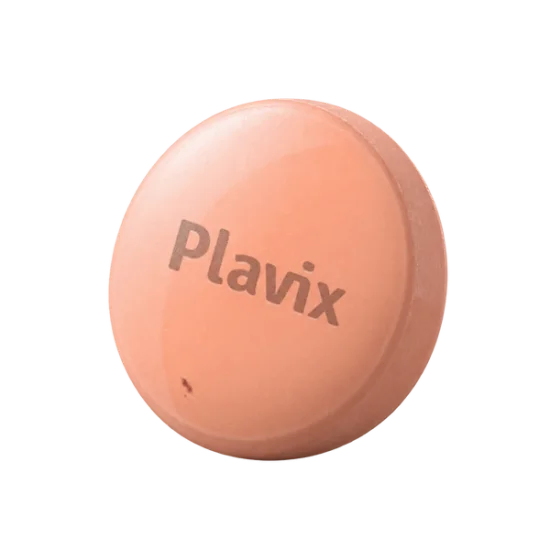
I took it with breakfast and used an alarm because missing tablets worried me. I noticed bruises on my forearms, but they were small and faded. The main adjustment was remembering to mention Plavix before a dental appointment.
Plavix
Patients with a recent heart attack, ischaemic stroke, peripheral arterial disease, or coronary stent may be prescribed Plavix. Plavix contains clopidogrel, an antiplatelet agent that reduces platelet-driven blood clots. It supports prevention of further heart attacks, strokes, and other arterial thrombotic events.
Overview
Plavix is an oral antiplatelet treatment containing clopidogrel. It belongs to the P2Y12 inhibitor group and is used to reduce the tendency of blood platelets to join together inside narrowed or damaged arteries. This action supports stroke prevention and the prophylaxis of thromboembolic disorders in appropriate cardiovascular patients. [1]
Target patient groups for antiplatelet therapy
Plavix is generally considered for adults who need prevention of arterial clotting rather than treatment of an existing venous clot. Typical clinical groups include:
- Adults recovering from certain heart attacks or acute coronary syndromes.
- Patients who have undergone coronary stent implantation.
- People with previous ischaemic stroke or transient ischaemic attack when antiplatelet therapy is appropriate.
- Adults with peripheral arterial disease.
- Patients requiring dual antiplatelet therapy with aspirin for a defined period after a coronary event or procedure.
Plavix does not dissolve a clot that has already formed. Its role is prevention: it makes platelets less reactive, reducing the chance that a clot will grow or recur.
A person with a previous brain haemorrhage, active stomach ulcer, severe liver disease, or unexplained bleeding needs a different risk assessment before treatment begins.
Directions for use
- Dose: Take one Plavix tablet once daily for maintenance treatment; the tablet strength and any prescribed loading dose in mg are determined for the individual patient, so there is no single dose for everyone.
- Frequency: Take the prescribed dose once per day unless the prescriber gives different instructions.
- Timing: Take the tablet at the same time each day, with water. It may be taken with food or on an empty stomach unless instructed otherwise.
- Duration: Continue treatment for the period prescribed. After coronary stent placement, the duration and any combination with aspirin are determined by the cardiology team.
- Route: Take Plavix orally as a tablet.
- Missed dose: Do not take two tablets together to compensate for a forgotten dose; seek clinical advice about the appropriate action.
Formulation
The active ingredient in Plavix is clopidogrel, supplied pharmaceutically as clopidogrel bisulfate. Dosing differs between strengths and between users, so there is no single amount that suits everyone. The precise regimen depends on the clinical indication and the strength prescribed.
Clopidogrel is a prodrug. The liver converts part of the dose into an active metabolite, which then blocks the platelet P2Y12 receptor. Generic clopidogrel bisulfate uses the same active pharmacological principle as branded clopidogrel formulations, although tablet appearance and non-active ingredients can differ between products.
Mechanism of action on blood platelets
Platelets normally respond to vessel injury by becoming activated and sticking together. They release chemical signals that recruit more platelets, helping form a plug. In a narrowed coronary or cerebral artery, this protective response can become dangerous and produce an arterial blood clot.
Mechanism of action
Clopidogrel blocks the platelet P2Y12 receptor for the life of the affected platelet. Platelet activity gradually returns as new platelets are produced. The irreversible action also explains why planned surgery may require a treatment interruption arranged by the prescribing team.
Clopidogrel requires activation through liver enzymes, including CYP2C19. Genetic differences, liver disease, and interacting medicines can reduce conversion to the active metabolite. This is one reason why the same dose may produce different platelet responses in different patients. [2]
Therapeutic indications
Doctors may prescribe Plavix after an acute coronary syndrome, including some heart attacks, or after coronary intervention with stent placement. It may also be used for selected patients with a previous ischaemic stroke, transient ischaemic attack, or peripheral arterial disease. The treatment plan depends on the diagnosis, bleeding risk, coronary anatomy, and other medicines being taken.
Common mistakes
Poor outcomes often follow practical errors rather than a lack of pharmacological activity. Frequent mistakes include:
- Stopping Plavix after bruising without discussing the finding.
- Missing several doses after a hospital discharge.
- Doubling the next tablet after forgetting a dose.
- Taking ibuprofen regularly for back or joint pain without reporting it.
- Assuming aspirin can be added safely because both medicines prevent clots.
- Failing to mention clopidogrel before dental treatment or surgery.
- Starting a supplement marketed for circulation without checking its bleeding effects.
- Confusing a loading dose with the long-term daily dose.
- Treating black stools or vomiting blood as ordinary stomach upset.
One detail matters after hospital discharge: medication lists can change between the ambulance, ward, cardiology clinic, and general practice. Compare the instructions from the treating team and report discrepancies promptly rather than choosing the shortest course.
Another error is interpreting a lack of symptoms as proof that treatment is unnecessary. Plavix does not normally produce a noticeable daily sensation. Its benefit is preventive, so adherence cannot be judged by how a person feels on a particular morning.
Reasons not to use it
The principal contraindications and high-risk situations include:
- Active pathological bleeding, such as an intracranial haemorrhage or actively bleeding peptic ulcer.
- Severe hypersensitivity to clopidogrel or a tablet ingredient.
- A previous serious allergic reaction to clopidogrel.
- Severe liver impairment requiring specialist assessment.
- A planned operation or invasive procedure where bleeding must be carefully controlled.
- A history of major bleeding requiring an individual risk–benefit review.
- Pregnancy or breastfeeding, where use requires a specific clinical decision based on the cardiovascular indication.
When this is not for you
Plavix is not for you if you currently have active internal bleeding or have been told that clopidogrel caused a severe allergic reaction. It is also unsuitable as a self-started treatment for chest pain, suspected stroke, or a suspected clot; those symptoms require emergency care.
Patients with a past stomach ulcer, uncontrolled high blood pressure, low platelet count, kidney disease, or a previous brain haemorrhage may need closer monitoring. People who fall frequently or use alcohol heavily may also have a higher practical bleeding risk.
Unwanted effects
The main drawback of Plavix is bleeding. Because platelets remain less able to form plugs, minor injuries can produce longer bleeding and bruises may appear more easily. Nosebleeds, gum bleeding, heavier menstrual bleeding, diarrhoea, abdominal discomfort, and indigestion can also occur.
Seek urgent medical assessment for:
- Black or bloody stools.
- Vomiting blood or material resembling coffee grounds.
- Red or brown urine.
- Sudden severe headache, weakness, confusion, speech difficulty, or loss of balance.
- Bleeding that does not stop with firm pressure.
- Rapidly expanding bruising without a clear injury.
- Signs of a serious allergic reaction, such as facial swelling or breathing difficulty.
Rare blood disorders, including thrombotic thrombocytopenic purpura, have been reported with clopidogrel. Warning signs can include fever, unusual weakness, yellowing of the skin, neurological symptoms, or very low urine output. These symptoms require urgent assessment.
A small bruise is usually less concerning than internal bleeding, yet the pattern matters. Multiple new bruises, repeated nosebleeds, or a sudden drop in energy should be reported, especially when aspirin, warfarin, or another anticoagulant is also being used.
A practical detail is easy to miss: clopidogrel can make routine dental work bleed for longer. Dental teams need advance notice, but patients should not stop Plavix independently before an extraction or implant procedure.

Comparison
Plavix occupies a middle position among P2Y12 antiplatelet medicines. It has a slower onset than some alternatives and depends on metabolic activation, while its once-daily regimen is convenient for long-term prevention. Aspirin acts through a different platelet pathway and is often paired with clopidogrel after selected coronary events.
| Antiplatelet option | Main mechanism and clinical position | Main limitation |
|---|---|---|
| Clopidogrel | Irreversible P2Y12 inhibition; used for long-term prevention and selected dual therapy | Variable activation through CYP2C19; bleeding remains possible |
| Aspirin | Irreversible COX-1 inhibition; often used alone or with a P2Y12 inhibitor | Gastrointestinal irritation and bleeding |
| Prasugrel or ticagrelor | More rapid or more consistent P2Y12 inhibition in selected acute coronary settings | Greater bleeding, breathlessness, or procedure-related restrictions in some patients |
Prasugrel may be selected for certain patients undergoing coronary intervention, while ticagrelor provides reversible P2Y12 inhibition and does not depend on CYP2C19 activation in the same way. Their suitability depends on age, previous stroke, kidney and liver function, bleeding risk, and the type of coronary syndrome.
Aspirin and clopidogrel are not interchangeable tablet-for-tablet. They block different platelet pathways. In some patients, concomitant therapy is useful; in others, the additional bleeding risk makes single-agent treatment preferable.
What doctors say
Cardiology practice treats Plavix as a prevention medicine, not a symptom-relief tablet. A doctor usually assesses the reason for treatment first, then weighs recurrent heart attack or stroke risk against bleeding risk. The same clopidogrel regimen may be appropriate for one patient and unsuitable for another.
A cardiologist would place special emphasis on uninterrupted treatment after coronary stenting. A patient who feels well may assume the medicine is no longer needed, yet the antiplatelet effect is protecting against a complication that may produce no warning symptoms.
Clinical review also considers CYP2C19-related response, liver function, previous bleeding, age, kidney disease, and medicines such as anticoagulants. A patient with repeated bruising may need examination and blood tests rather than an automatic dose change.
What customers often ask
Can Plavix tablets be split, crushed, or chewed?
Plavix tablets should generally be swallowed whole with water rather than crushed or chewed. The European Medicines Agency’s 2024 clopidogrel product information supports oral administration of the tablet as supplied, with no routine instruction to alter it. Splitting may also make the dose less reliable if the tablet is not designed for division. If swallowing is difficult, the prescribing team should select a suitable alternative formulation or administration plan.
Can Plavix be combined with painkillers, supplements, or other medicines?
The combination with aspirin, warfarin, NSAIDs, or thrombolytics can increase bleeding and should be managed through a specific treatment plan. The MHRA’s 2010 Drug Safety Update on clopidogrel and proton pump inhibitors identifies clinically relevant interaction and bleeding considerations. Omeprazole and esomeprazole may reduce clopidogrel activation through CYP2C19 inhibition, so acid-reducing treatment should be reviewed rather than changed casually. Supplements associated with bleeding can also matter.
What should happen if the expected result does not come?
Plavix is intended to reduce future arterial clotting; it does not usually create a noticeable feeling of improvement. If chest pain, sudden weakness, facial drooping, speech difficulty, severe breathlessness, or other acute symptoms occur, emergency services are required rather than an extra tablet. The WHO’s 2023 cardiovascular diseases fact sheet describes heart attack and stroke as urgent cardiovascular conditions. Persistent bruising or bleeding requires a medication review, not an unsupervised dose change.
How does Plavix differ from prasugrel or ticagrelor?
Plavix contains clopidogrel, an irreversible P2Y12 inhibitor that requires metabolic activation. Prasugrel and ticagrelor provide alternative P2Y12 inhibition, with different onset, reversibility, interaction, and bleeding characteristics. The EMA’s 2024 clopidogrel product information describes clopidogrel’s indications and bleeding considerations; selection among P2Y12 inhibitors depends on the coronary syndrome, procedure, age, stroke history, and bleeding risk. A person should not substitute one for another without a prescriber’s instruction.
Which diet, exercise, or habits support treatment?
No special diet activates clopidogrel, but avoiding unnecessary NSAID use and limiting heavy alcohol intake can reduce avoidable bleeding hazards. The NHS’s 2024 heart attack recovery guidance supports gradual physical activity, smoking cessation, blood-pressure control, diabetes management, and a balanced diet for vascular health. Exercise should match recovery after a heart attack, stroke, or procedure. Contact sports or activities with a high injury risk may require an individual discussion when bleeding risk is elevated.
Do you offer anonymous delivery?
Your order will be securely packed and shipped within 24 hours. This is exactly what your package will look like (images of an actual item sent). It has the size and look of a regular private letter (24x11x0.7 cm) and its contents cannot be seen.
How Buyers Rate Plavix
The treatment fitted into my morning routine and I did not feel different while taking it. My gums bled when flossing during the first weeks. Switching to gentler brushing helped, although the bleeding was discussed at my review.
I had several nosebleeds and became concerned after one lasted longer than usual. The clinic reviewed my medicines and gave me clear instructions about pressure and warning signs. I did not stop the tablets.
I missed a dose during a weekend away and nearly took two the next morning. The advice I received was to avoid doubling up and return to the regular schedule. Since then, I have kept a reminder on my phone.
The tablet itself was easy to take, but I disliked the extra bruising around my legs. There was no serious bleeding, yet I needed reassurance and a review of the other painkillers I was using.
Sources
- EMA (2024). Summary of Product Characteristics (SmPC) — clopidogrel
- FDA (2017). Plavix (clopidogrel bisulfate) Prescribing Information