the stated dose, several days, used the syrup for urinary discomfort over several days: “The liquid was easier for me than tablets, and measuring it became routine after I bought an oral measure. I still arranged a medical appointment because the symptoms had returned twice.”
Renalka
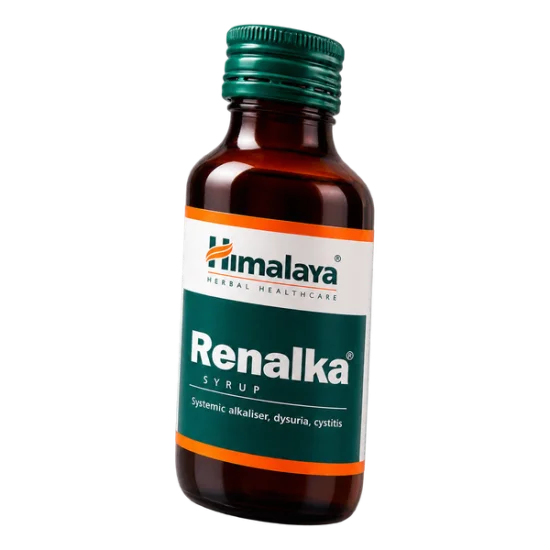
Renalka is a botanical urinary-health formulation supplied as syrup in a bottle. It is intended for adults seeking support for comfortable urination and normal urinary tract function.
Overview
Renalka is a botanical urinary-health formulation supplied as syrup in a bottle. It is an Ayurvedic herbal preparation from Himalaya intended for urinary-health support and belongs to the multi-ingredient botanical category.
Directions for use
Renalka is supplied in bottle form as a syrup. A liquid can be easier to swallow than a solid dosage form, although it requires consistent measuring and careful closure after use.
Liquid syrup use
The liquid should be measured with an appropriate oral measuring device rather than an ordinary kitchen spoon. Household spoons differ in volume and can lead to inconsistent amounts.
The regimen for the chosen strength should be confirmed with a healthcare professional before starting. Keep the dosing schedule consistent and avoid taking extra syrup to compensate for a missed dose.
If a dose is forgotten, take the next scheduled amount when it is due unless a healthcare professional has given different instructions. Do not double the amount without specific advice.
The syrup should not be poured into another bottle. A different container can cause identification errors, contamination, or loss of information about the product.
Dosage and administration principles
The correct regimen depends on the strength and presentation supplied. The chosen strength should be confirmed with a healthcare professional before starting.
Practical administration points include:
- Use the prescribed or professionally confirmed amount.
- Measure the syrup accurately.
- Take it at consistent times where possible.
- Keep the bottle closed between doses.
- Do not share the syrup with another person.
- Do not use an altered, leaking, or contaminated container.
- Continue only for the period agreed with the healthcare professional.
- Do not increase the amount because symptoms have not improved quickly.
UK clinical guidance treats fever, flank pain, systemic illness, and suspected urinary obstruction as reasons for prompt medical evaluation rather than prolonged self-care [2].

Formulation
Renalka is a multi-ingredient botanical formulation supplied as an Ayurvedic herbal syrup from Himalaya. The available information does not specify the individual botanical ingredients or their quantities, so the exact composition cannot be stated.
Mechanism of action
A urinary-support formulation may work through more than one proposed pathway:
- Supporting adequate fluid passage through the urinary tract
- Helping maintain comfortable urination
- Providing botanical compounds with antioxidant activity
- Supporting normal urinary tract function as part of hydration and regular voiding
These are supportive concepts rather than a diagnosis or treatment claim. The biological effect depends on the actual ingredients, their amounts, extraction method, and the person’s underlying condition.
Its framework does not mean that every herbal formulation has the same clinical evidence as a licensed prescription treatment [1].
Therapeutic indications
Renalka Syrup is an Ayurvedic herbal preparation from Himalaya intended for urinary-health support. Its liquid format may suit adults who prefer a syrup to tablets or capsules. The product is used as supportive care for urinary discomfort, altered urinary frequency, or a general need for urinary tract maintenance.
Therapeutic scope and target users
Renalka may be considered by adults looking for an oral herbal formulation focused on urinary comfort. It is not suitable as a substitute for antibacterial treatment when a clinician has diagnosed a urinary infection.
Clinical assessment becomes more important when urinary symptoms occur with:
- Fever, chills, or feeling faint
- Pain in the side or back below the ribs
- Visible blood in the urine
- Inability to pass urine
- Vomiting or marked dehydration
- New symptoms during pregnancy
- Symptoms in a child or teenager
A burning sensation during urination can reflect irritation, but it can also occur with infection. Symptoms alone do not establish the cause.
Common mistakes
Several practical errors can make a urinary-support product harder to assess:
- Measuring syrup with a large kitchen spoon
- Taking irregular amounts and then compensating with a larger dose
- Continuing self-treatment despite fever or flank pain
- Combining several urinary products without checking their ingredients
- Ignoring a prescribed fluid restriction
- Leaving the bottle in a hot bathroom or vehicle
- Sharing the bottle with another household member
- Stopping a prescribed antibiotic and using a herbal product alone
- Assuming persistent urinary symptoms are always caused by dehydration
One easy-to-miss issue is fluid restriction. Drinking more water may be reasonable for one person and unsuitable for another with cardiac or renal disease.
A second is symptom masking. Mild improvement in burning does not prove that an infection or obstruction has resolved.
Reasons not to use it
This product is not for you if:
- You have a known allergy to Renalka or any of its ingredients.
- You are unable to pass urine.
- You have severe kidney impairment or are receiving dialysis without specific clinical approval.
- You have severe heart failure with a prescribed fluid restriction.
- You are pregnant or breastfeeding and the regimen has not been reviewed by a clinician.
- The product is being considered for a child or young person without paediatric advice.
- You have fever, flank pain, vomiting, or visible blood in the urine and have not been assessed.
People taking diuretics, medicines affecting blood pressure, lithium, or treatments that alter kidney function should discuss Renalka before use.
When this is not for you
Renalka is not a suitable choice to start on your own if you have serious kidney problems, need dialysis, or have been told to restrict fluids because of heart failure. It should also not be self-started during pregnancy or breastfeeding, or given to a child or teenager without professional advice.
If you cannot pass urine, or have fever, pain in your side, vomiting, or blood in your urine, seek medical assessment instead of relying on the syrup. Anyone taking water tablets, blood-pressure medicines, lithium, or medicines that affect kidney function should speak with a healthcare professional first.
Unwanted effects
Herbal products can cause adverse reactions. Possible problems include stomach upset, nausea, loose stools, headache, dizziness, or an allergic response. Stop using the syrup and seek urgent help for facial swelling, wheezing, breathing difficulty, widespread hives, or collapse.
The MHRA advises that suspected adverse reactions to medicines and healthcare products should be reported through its Yellow Card system. This applies to herbal preparations as well as conventional medicines when a possible reaction occurs [3].
Comparison
Comparison of urinary-support approaches
Renalka belongs to the multi-ingredient botanical category. Its practical role differs from a single-herb extract and from a conventional urinary alkaliser.
| Approach | Main focus |
|---|---|
| Renalka syrup | Botanical urinary-health support in a liquid format |
| Single-herb liquid extract | One principal botanical with a narrower formulation |
| Urinary alkaliser | Changes urine acidity to relieve selected types of urinary burning |
An alkaliser does not treat every cause of dysuria, and a botanical syrup does not replace antibiotics when bacterial infection is diagnosed. A single-herb product may make its active botanical easier to identify, while a combination formulation may use several traditional ingredients, with the trade-off that the contribution of each component can be harder to assess.
The choice should follow the symptom pattern, medical history, and any medicines already being used. Product category alone does not establish suitability.
Multi-ingredient botanical formulations
The idea of botanical synergy means that several plant constituents may contribute to one intended physiological effect. This concept is plausible in pharmacognosy, yet it does not remove the need to assess dose, interactions, allergies, or evidence for the finished product.
A patient may find a syrup easier to use than tablets. Another may prefer a single-ingredient preparation because its composition is simpler to monitor. Neither format is automatically superior.
What doctors say
Doctors generally assess urinary symptoms before deciding whether supportive care is reasonable. Burning, frequency, urgency, weak flow, and pelvic discomfort can arise from different conditions, so the treatment plan depends on the pattern and duration.
A clinician would usually ask about previous urinary infections, kidney stones, prostate symptoms, pregnancy, fluid restrictions, allergies, and current medicines. Repeated symptoms deserve more than repeated short-term symptom management.
A realistic expectation is gradual symptom support rather than an immediate cure. If symptoms worsen, new warning signs appear, or there is no meaningful improvement within the agreed review period, the plan should be reassessed.
The European Medicines Agency distinguishes traditional-use evidence from stronger clinical evidence based on controlled studies. That distinction helps place herbal products within a sensible treatment plan rather than assuming that “natural” means risk-free [4].
What customers often ask
Can diet, exercise, or daily habits affect the result?
Hydration, regular urination, and avoiding personal bladder irritants may support urinary comfort, while strenuous exercise during fever or significant pain can worsen dehydration. The WHO’s traditional-medicine safety framework, described in WHO's 2019 global report, supports combining traditional products with sensible assessment of the person’s wider health status. Renalka cannot correct a urinary obstruction or replace treatment for infection. People with fluid restrictions should follow their clinical plan rather than increasing drinks independently. A clinician can help distinguish these situations.
Can alcohol be used while taking Renalka?
Alcohol may worsen dehydration, dizziness, stomach irritation, or poor judgement about urinary symptoms. The MHRA’s general medicines-safety advice in 2024 supports checking alcohol exposure when a product may affect tolerability or when the person is taking other medicines. Avoid alcohol if you feel unwell, dizzy, dehydrated, or are taking additional medicines with alcohol warnings. A healthcare professional should review regular alcohol use when urinary symptoms are recurrent.
What should be discussed with a doctor before starting Renalka?
Discuss kidney disease, heart failure, fluid restriction, pregnancy, breastfeeding, allergies, recurrent urinary infections, kidney stones, prostate symptoms, and all current medicines. NICE urinary-tract guidance updated in 2024 places emphasis on recognising systemic symptoms and selecting treatment according to the clinical presentation. Confirm the regimen for the chosen strength before starting. Mention any previous reaction to herbal products, even if the reaction appeared mild.
Which symptoms mean stopping Renalka and seeking urgent care?
Stop the syrup and seek urgent medical help for facial or throat swelling, breathing difficulty, widespread hives, fainting, or signs of a severe allergic reaction. Urgent assessment is also needed for fever, flank pain, vomiting, visible blood in the urine, confusion, or inability to pass urine. NHS clinical information available in 2025 treats these features as possible signs of a more serious urinary or systemic problem. Do not take an extra dose while waiting for assessment.
Which condition rules Renalka out?
Severe kidney impairment, dialysis, or a medically imposed fluid restriction rules out self-starting Renalka without direct clinical approval. EMA safety principles for herbal medicinal products, described in EMA's 2006 guideline, require special attention to vulnerable groups and possible interactions. Urinary retention is another situation requiring medical assessment rather than a supportive syrup. Pregnancy and breastfeeding also require a specific review before use.
How should Renalka be stored at home and while travelling?
Keep the bottle tightly closed, upright, dry, and away from direct sunlight, excessive heat, and children. NHS medicine-storage advice published in 2024 supports maintaining products in suitable conditions and avoiding heat damage during transport. Do not leave the bottle in a parked vehicle or beside a radiator. Carry it in a secure part of your luggage and keep it separate from food, cosmetics, and cleaning products.
Do you offer anonymous delivery?
Your order will be securely packed and shipped within 24 hours. This is exactly what your package will look like (images of an actual item sent). It has the size and look of a regular private letter (24x11x0.7 cm) and its contents cannot be seen.
Storage, stability, and shelf-life considerations
Keep Renalka in its original bottle, tightly closed and protected from excessive heat, direct sunlight, and moisture. Store it in a dry area away from children and pets.
Do not freeze the syrup unless the product information specifically permits it. Avoid storing it beside a radiator, in a hot car, or in a steamy bathroom. Temperature changes and moisture can affect liquid products.
The shelf life is defined by the manufacturer’s expiry information. Do not use the syrup after that date. Discard it if the liquid develops an unusual odour, visible particles, separation that does not resolve with normal gentle mixing, or a damaged closure.
Handling an opened bottle
Use a clean measuring device for every dose. Wipe the outside of the bottle if liquid spills, and close it immediately after measuring.
Do not pour unused syrup down the sink unless local disposal guidance permits this. A pharmacist can advise on safe disposal of unwanted medicines without requiring the bottle to be reused.
The same principles apply when a person is carrying several medicines: keep each product in its own clearly identified container and maintain the agreed dosing routine.
How Buyers Rate Renalka
the stated dose, several days, used Renalka during a period of frequent urination: “I liked the bottle format and found it straightforward to take. I did not notice a dramatic change in the first few days, so I stopped treating it as a quick fix and focused on getting the symptoms checked.”
the stated dose, several days, used the syrup for intermittent discomfort: “It was easy to swallow, but it caused mild stomach upset when I took it without food. The problem settled after I stopped, and I would check the ingredients more carefully before using another herbal product.”
Sources
- World Health Organization (2019). WHO global report on traditional and complementary medicine 2019.
- National Institute for Health and Care Excellence (2024). Urinary tract infection (lower): antimicrobial prescribing.
- Medicines and Healthcare products Regulatory Agency (2024). Yellow Card Scheme: report suspected side effects and adverse incidents.
- European Medicines Agency (2006). Guideline on the assessment of clinical safety of herbal medicinal products.