The first applications stung for less than a minute and my vision was misty afterwards. The redness settled over several days, but I avoided driving until the blur cleared.
Tobradex
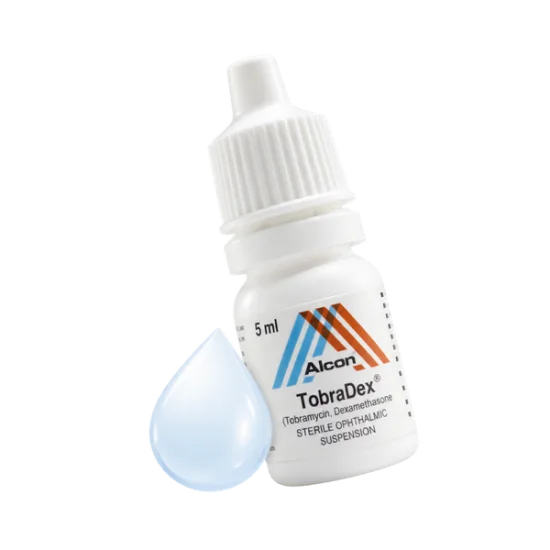
Tobradex is a sterile ophthalmic suspension combining tobramycin, an aminoglycoside antibiotic, with dexamethasone, a corticosteroid. It is intended for external eye use when a bacterial infection occurs with inflammation and corticosteroid treatment is appropriate; how much to use and how often depends on the purpose of use and is agreed with a doctor or pharmacist.
Overview
Tobradex is a sterile ophthalmic suspension that combines tobramycin, an aminoglycoside antibiotic, with dexamethasone, a corticosteroid. It belongs to the antibiotic–corticosteroid combination category and is intended for external ophthalmic use when bacterial infection and inflammation occur together.
Directions for use
The product sold on this page is Tobradex ophthalmic suspension in a 5 ml bottle. Its liquid formulation is placed into the conjunctival sac, the small space between the lower eyelid and the eye. Drops spread across the ocular surface and normally disperse more quickly than an ointment.
Tobradex is also known in clinical practice as an eye ointment formulation. Ointments remain on the ocular surface for longer, which may be useful when prolonged contact is desired. They can also cause temporary blurred vision because of their greasy base.
The formulations should not be treated as interchangeable. Different volumes, application schedules, and prescribing instructions apply to drops and ointments. This page concerns the bottle containing ophthalmic suspension.
The liquid may briefly blur vision immediately after application. That effect usually relates to the suspension itself and the tear film rather than a change in eyesight. Driving or operating machinery should wait until vision is clear.
The amount and frequency of Tobradex depend on the purpose of treatment and are agreed with a doctor or pharmacist. Treatment may differ according to the severity of inflammation, suspected bacteria, age, previous eye disease, and response during follow-up.
Administration involves the following practical steps:
- Wash and dry the hands before use.
- Shake the bottle gently and thoroughly.
- Tilt the head back or lie down.
- Pull the lower eyelid down to form a small pocket.
- Place the prescribed number of drops into the conjunctival sac.
- Keep the eye closed gently for a short period without forceful blinking.
- Avoid touching the dropper tip against the eye, eyelashes, eyelids, or fingers.
- Replace the cap promptly after use.
The dropper tip must remain clean. Contact with the eye can cause injury and may transfer bacteria into the bottle. Contact with the eyelashes can also make later applications less hygienic.
If a dose is missed, apply it when remembered unless the next scheduled dose is near. In that situation, skip the missed application and return to the usual schedule. Do not double the amount to compensate.
Do not extend treatment independently. Ophthalmic corticosteroids can cause complications when used for too long, even if the eye initially feels better.
A common practical error is stopping as soon as redness improves. Redness may reduce before the underlying condition has been reassessed. Another is squeezing the bottle repeatedly because no drop appears immediately, which can deliver more liquid than intended.

Formulation
Tobradex is a sterile ophthalmic suspension for application to the eye. It combines tobramycin, an aminoglycoside antibiotic, with dexamethasone, a corticosteroid. This antibiotic–steroid combination is used when a bacterial eye infection is accompanied by inflammatory symptoms and a clinician considers corticosteroid treatment appropriate.
The product is intended for external ophthalmic use. It is not an oral preparation, injection, or treatment for infections elsewhere in the body. The ophthalmic suspension is supplied in a bottle and should be used only according to the prescribed treatment plan.
Tobramycin provides antibacterial activity against susceptible organisms. Dexamethasone reduces inflammatory activity, which can ease swelling, redness, and discomfort. The corticosteroid component also creates an important limitation: it can mask or worsen certain infections if used when the diagnosis is wrong.
Tobradex is generally selected for a defined clinical situation rather than for unexplained red eye. A bacterial infection, inflammatory component, and absence of steroid-related contraindications all influence the prescribing decision.
Mechanism of action
Tobramycin 0.3% belongs to the aminoglycoside antibiotic class. It interferes with bacterial protein synthesis by binding to bacterial ribosomes. This disrupts the production of proteins required for bacterial survival and multiplication. Its action is directed at susceptible bacteria on the ocular surface. It does not treat inflammation directly.
Dexamethasone 0.1% is a synthetic fluorinated corticosteroid. It suppresses several inflammatory pathways, reducing the release of substances involved in swelling, redness, irritation, and immune-cell activity. The result is reduced inflammation, but not direct bacterial killing.
| Component | Pharmacological role | Main clinical effect |
|---|---|---|
| Tobramycin 0.3% | Aminoglycoside antibiotic | Acts against susceptible bacteria |
| Dexamethasone 0.1% | Corticosteroid | Reduces ocular inflammation and swelling |
The dual action explains why Tobradex may be chosen when infection and inflammation occur together. A single antibiotic may address bacteria without providing the same anti-inflammatory effect. A corticosteroid alone would not treat a bacterial cause.
The product information for tobramycin and dexamethasone ophthalmic suspension describes this combination as a treatment for steroid-responsive inflammatory eye conditions where bacterial infection is present or considered a risk [1].
Therapeutic indications
This antibiotic–steroid combination is used when a bacterial eye infection is accompanied by inflammatory symptoms and a clinician considers corticosteroid treatment appropriate.
Tobradex is generally selected for a defined clinical situation rather than for unexplained red eye. A bacterial infection, inflammatory component, and absence of steroid-related contraindications all influence the prescribing decision.
Common mistakes
Several practical mistakes can reduce treatment reliability or increase risk:
- using Tobradex for unexplained redness without a diagnosis;
- failing to shake the suspension before application;
- touching the dropper tip to the eye or lashes;
- applying extra drops because the first drop was not felt;
- stopping early when symptoms improve;
- continuing treatment beyond the agreed duration;
- wearing contact lenses while the eye remains inflamed;
- applying several eye products without a time interval;
- using the bottle for another person;
- driving while vision remains blurred after application.
One mistake is especially easy to make: blinking hard immediately after instillation. This can push some of the liquid out through the tear duct. Gentle eyelid closure gives the preparation more contact with the ocular surface.
Another is placing the drop directly on the central cornea. The lower-lid pocket is more comfortable and reduces the temptation to squeeze the bottle repeatedly.
Reasons not to use it
- epithelial herpes simplex keratitis, also called dendritic corneal infection;
- fungal infection of the eye;
- mycobacterial eye infection;
- known allergy to tobramycin, dexamethasone, aminoglycosides, or another component;
- an eye condition where corticosteroids are inappropriate;
- an untreated corneal injury requiring a different treatment plan.
Corticosteroids can worsen viral, fungal, and mycobacterial infections. They can also delay healing of corneal wounds.
When this is not for you
This medication is not for you if any of the following applies unless an eye specialist has specifically assessed the situation and prescribed it:
- you have epithelial herpes simplex keratitis, also called dendritic corneal infection;
- you have a fungal infection of the eye;
- you have a mycobacterial eye infection;
- you are allergic to tobramycin, dexamethasone, aminoglycosides, or another component;
- you have an eye condition where corticosteroids are inappropriate;
- you have an untreated corneal injury requiring a different treatment plan.
A diagnosis is needed before using an antibiotic–steroid combination for a red or painful eye. Patients with glaucoma, raised intraocular pressure, previous steroid response, corneal thinning, or recurrent eye infections may need closer monitoring. Pregnancy and breastfeeding require an individual assessment.
Unwanted effects
Short-term local reactions can include stinging, burning, irritation, itching, watery eyes, or temporary blurred vision after application. These effects are often brief, but persistent or worsening discomfort requires clinical assessment.
Dexamethasone creates risks linked to corticosteroid exposure. Prolonged or repeated use may increase intraocular pressure, contribute to glaucoma, delay corneal healing, or increase susceptibility to secondary infection. Long courses may also contribute to cataract formation in susceptible patients.
Tobramycin may cause local hypersensitivity reactions, including eyelid swelling, itching, redness, or a rash around the eye. Severe allergy is uncommon but requires urgent treatment if swelling affects breathing or spreads rapidly.
The FDA prescribing information describes increased intraocular pressure and delayed wound healing among the important risks associated with ophthalmic corticosteroid use [2]. The risk is more relevant when treatment lasts longer than planned or when the product is used repeatedly without eye-pressure monitoring.
One detail patients often miss is that a steroid can make an eye look calmer while an untreated viral or fungal infection progresses underneath. A quieter-looking eye does not always mean the underlying disease has resolved.
Comparison
Tobradex combines antibacterial and anti-inflammatory treatment. A single-agent tobramycin eye drop contains an antibiotic without dexamethasone, so it does not provide the same corticosteroid effect.
| Treatment approach | Active pharmacology | Main distinction |
|---|---|---|
| Tobradex | Tobramycin plus dexamethasone | Targets susceptible bacteria and associated inflammation |
| Single-agent tobramycin drops | Tobramycin alone | Provides antibacterial treatment without corticosteroid activity |
A clinician may prefer single-agent antimicrobial therapy when bacterial infection is suspected but steroid treatment is unnecessary or unsuitable. Tobradex may be considered when inflammation is clinically significant and the eye has been assessed for conditions that corticosteroids can worsen.
The choice is not based on redness alone. Pain, discharge, corneal appearance, contact-lens use, visual acuity, history of herpes eye disease, and intraocular pressure can all affect the decision.
The European Medicines Agency and national ophthalmic prescribing standards place emphasis on appropriate diagnosis and controlled corticosteroid use because masking infection can delay the correct treatment [3].
What doctors say
In clinical practice, doctors often focus first on the cause of the red eye, not only on the intensity of the redness. Bacterial conjunctivitis, allergic irritation, viral infection, corneal inflammation, and raised eye pressure can look similar to a patient but require different treatment.
An ophthalmologist would usually treat Tobradex as a targeted short-course option when the expected benefit of combining antimicrobial and anti-inflammatory action outweighs the steroid-related risks. Improvement in comfort is useful, but it does not replace assessment when symptoms persist.
The MHRA advises careful use of topical corticosteroids because intraocular pressure can rise during treatment, especially in steroid responders. Follow-up becomes more important when treatment is prolonged, repeated, or used in a patient with glaucoma risk.
Patients should report a history of herpes simplex eye disease before starting. That single detail can change the treatment choice.
What customers often ask
What should be discussed with a doctor before starting Tobradex?
Tell the prescriber about glaucoma, raised eye pressure, herpes simplex eye disease, previous corneal injury, contact-lens use, allergies to aminoglycosides, and all other eye treatments. The MHRA’s 2021 ophthalmic corticosteroid safety information supports checking these factors before treatment. A doctor may also need to know whether the eye has been examined for fungal, viral, or mycobacterial infection. This assessment determines whether an antibiotic–steroid combination is appropriate.
Which habits can help or hinder the result?
Handwashing, shaking the suspension, avoiding dropper-tip contact, and keeping the eye closed gently after application can support correct use. Contact lenses may irritate an infected eye and can interfere with treatment, so their use should follow the prescriber’s instruction. The WHO’s 2009 hand-hygiene guidance describes hand hygiene as a basic measure for reducing transfer of microorganisms during topical care. Rubbing the eye, sharing the bottle, or applying doses too close together can hinder treatment.
Which condition rules Tobradex out?
Epithelial herpes simplex keratitis is a clear condition in which Tobradex should not be used unless an eye specialist gives a specific alternative plan. Corticosteroids can allow viral corneal infection to worsen. EMA’s 2022 safety information for ophthalmic corticosteroids also identifies fungal and mycobacterial eye infections as important contraindication settings. A painful red eye with light sensitivity needs assessment rather than self-treatment with a steroid-containing drop.
How long does one application keep working?
The duration of effect varies with the ocular condition, tear production, severity of inflammation, and the prescribed schedule. Tobradex is intended to be used at regular intervals set by the prescriber, rather than repeated whenever discomfort returns. FDA’s 2023 ophthalmic product information explains that the suspension delivers the active ingredients to the ocular surface, but it does not make one application a substitute for the complete treatment plan. Do not increase the frequency because symptoms return before the next scheduled dose.
Which symptoms mean stopping and seeking urgent medical attention?
Seek urgent eye care for sudden reduced vision, severe or increasing pain, pronounced light sensitivity, marked swelling, a new corneal spot, or symptoms that rapidly worsen. Stop and obtain prompt medical advice if a severe allergic reaction develops, including facial swelling, breathing difficulty, or widespread rash. MHRA’s 2021 safety guidance treats significant visual change and serious hypersensitivity as symptoms requiring immediate assessment. Persistent deterioration also needs review because corticosteroids can mask progression of infection.
Does Tobradex cause blurred vision?
Temporary blurred vision can occur after applying the ophthalmic suspension, especially while the liquid spreads across the tear film. This effect should clear before driving or using machinery. The FDA’s 2023 prescribing information lists blurred vision and local irritation among possible ocular reactions. Persistent blur, reduced vision, halos, or pain requires medical assessment because those symptoms may indicate a complication rather than a brief application effect.
Do you offer anonymous delivery?
Your order will be securely packed and shipped within 24 hours. This is exactly what your package will look like (images of an actual item sent). It has the size and look of a regular private letter (24x11x0.7 cm) and its contents cannot be seen.
How Buyers Rate Tobradex
The irritation improved quickly, which made me want to stop early. The clinic told me to finish the agreed course instead. Remembering to shake the bottle was the part I nearly missed.
The eye felt calmer, but the follow-up check still mattered. I had no major trouble with the drops, although the bottle was awkward to handle with stiff fingers.
Sources
- U.S. Food and Drug Administration (2023). TOBRADEX (tobramycin and dexamethasone ophthalmic suspension) Prescribing Information.
- U.S. Food and Drug Administration (2023). Dexamethasone Ophthalmic Suspension: Prescribing Information and Safety Information.
- European Medicines Agency (2022). Guideline on the Clinical Investigation of Medicinal Products for the Treatment of Bacterial Eye Infections.