I had focal seizures for three months before my treatment settled. The seizures reduced, but I was more tired in the first part of the day and changed my evening routine so I could get enough sleep.
Keppra
Epilepsy often needs long-term treatment. Keppra contains levetiracetam. It binds to the synaptic vesicle protein SV2A, helping to stabilise nerve signalling.
Overview
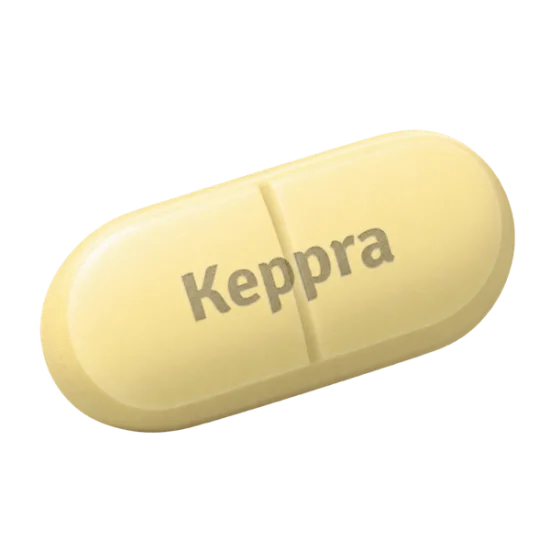
Keppra tablets contain levetiracetam, an anticonvulsant used either alone or alongside another antiseizure treatment.
Directions for use
Keppra tablets are taken by mouth, usually in two divided daily doses at regular intervals. The dose is decided individually, taking age, other medicines and health conditions into account. Treatment commonly begins with a lower dose and is adjusted by the prescriber according to seizure control and tolerability.
Swallow tablets whole with water. They may be taken with or without food, though taking them in the same way each day can make the routine easier to maintain.
- Take the prescribed morning dose at the same time each day.
- Take the prescribed evening dose at a consistent interval later.
- Continue treatment even when seizures have been absent for a long period.
- Use the missed-dose advice provided by the prescriber rather than doubling a later dose.
- Report new agitation, low mood, unusual aggression or suicidal thoughts promptly.
Formulation
Keppra tablets contain levetiracetam, an anticonvulsant used either alone or alongside another antiseizure treatment.
Mechanism of action
Levetiracetam works differently from older medicines that mainly alter sodium channels or GABA activity. It attaches to SV2A, a protein found on tiny nerve-cell vesicles that release chemical messengers. This interaction appears to moderate excessive neurotransmitter release during abnormal electrical firing, without broadly suppressing normal brain activity. [2]
The mechanism is targeted but not selective enough to remove all side effects. Sleepiness, dizziness and behavioural changes can still occur because seizure networks and mood-regulating brain circuits overlap.
Therapeutic indications
Keppra tablets contain levetiracetam, an anticonvulsant used either alone or alongside another antiseizure treatment. It is prescribed for focal-onset seizures, myoclonic seizures associated with juvenile myoclonic epilepsy, and primary generalised tonic-clonic seizures in appropriate age groups. The exact treatment plan depends on seizure type, age, kidney function, other medicines and previous seizure control. [1]
Approved seizure-management uses
Epilepsy is a neurological condition in which bursts of abnormal electrical activity trigger recurrent seizures. Keppra reduces the likelihood of these bursts developing into a clinical seizure, though it does not cure epilepsy.
Doctors may use levetiracetam as:
- Monotherapy for focal-onset seizures in suitable patients.
- Adjunctive treatment when seizures continue despite another antiseizure medicine.
- Treatment for myoclonic seizures in juvenile myoclonic epilepsy.
- Treatment for primary generalised tonic-clonic seizures in selected patients with generalised epilepsy.
A seizure diary can reveal patterns that memory misses. Record seizure type, duration, possible triggers, missed doses and changes in sleep.
Common mistakes
The most avoidable problems usually involve inconsistent dosing or delayed reporting of side effects.
- Stopping Keppra after a seizure-free period without a prescriber-led reduction plan.
- Taking an extra tablet after forgetting a dose.
- Assuming new anger, insomnia or low mood cannot be medicine-related.
- Drinking alcohol without recognising its effect on sleep, coordination and seizure threshold.
- Missing kidney-function reviews when there is known kidney disease.
- Driving before confirming that alertness, reaction time and seizure-control rules allow it.
Reasons not to use it
Keppra is contraindicated in people with known hypersensitivity to levetiracetam, other pyrrolidone derivatives, or any tablet ingredient.
- Kidney impairment: levetiracetam clearance falls when kidney function is reduced, so the prescriber adjusts treatment accordingly.
- Depression, severe anxiety or past suicidal thoughts: mood should be monitored before and during treatment.
- Pregnancy: seizure control remains essential during pregnancy. The MHRA advises that antiseizure treatment should be reviewed before conception where possible, without abruptly stopping therapy.
- Breastfeeding: levetiracetam passes into breast milk. Infant feeding, sleepiness and seizure control need individual clinical consideration.
- Older age: reduced kidney function and a higher fall risk can make dizziness or sedation more significant.
The EMA advises prescribers to balance the benefit of seizure prevention against potential fetal exposure when levetiracetam is used during pregnancy. [4]
When this is not for you
This may not be suitable for you if you have ever had an allergic reaction to levetiracetam, a related pyrrolidone medicine, or any ingredient in the tablets. Tell your clinician if you have kidney problems, depression, severe anxiety, previous suicidal thoughts, are pregnant or breastfeeding, or are older and at risk of falls. Do not stop treatment suddenly, particularly if pregnancy is planned or suspected.
Unwanted effects
Most people tolerate levetiracetam without severe physical complications, yet its effects on alertness and mood deserve real attention. Sleepiness and dizziness often appear early in treatment or after a dose increase. Some patients also describe fatigue, headache, reduced appetite, nausea or disturbed sleep.
Behavioural changes are the side effect clinicians watch most closely. Irritability, agitation, anxiety, low mood, hostility and aggression have all been reported. These changes can emerge even in someone who has not previously had a mental-health condition. [3]
| Frequency group | Possible effects |
|---|---|
| Very common | Sleepiness, inflammation of the nose and throat |
| Common | Dizziness, fatigue, headache, irritability, insomnia, nausea, diarrhoea, rash |
| Uncommon or rare | Depression, aggression, hallucinations, serious skin reactions, reduced blood-cell counts, suicidal thoughts or behaviour |
Seek urgent medical help for facial swelling, breathing difficulty, blistering or peeling skin, a widespread rash with fever, severe confusion, or thoughts of self-harm. Sudden behavioural deterioration should be treated as a medical concern, not as a personality change to tolerate.
Sleepiness may settle after the early adjustment period. Persistent dizziness, falls, worsening mood or aggression needs a prompt medication review.

Comparison
Keppra is one option among several antiseizure medicines. The best choice depends on seizure classification, age, sex, pregnancy potential, mental-health history, kidney and liver function, and the medicines already being used.
| Treatment approach | Main clinical distinction | Practical limitation |
|---|---|---|
| Levetiracetam | SV2A binding; limited liver-enzyme interactions | Mood and behavioural adverse effects can be troublesome |
| Lamotrigine | Sodium-channel modulation; often used for focal and generalised seizure types | Must be increased gradually because of rash risk |
| Sodium valproate | Broad antiseizure activity | Major pregnancy-prevention restrictions and metabolic adverse effects |
NICE guidance places seizure classification at the centre of treatment selection, since a medicine that suits one epilepsy syndrome may be unsuitable for another. [5]
Keppra can be a practical option where interaction risk is a concern, including for people taking several long-term medicines. Its limitation is clear: irritability or low mood may outweigh that advantage for some patients. A change in treatment is based on seizure pattern, tolerability and clinical history, rather than on one isolated bad day.
What doctors say
In epilepsy clinics, doctors usually focus first on seizure control, missed doses, sleep disruption and medication tolerance. Keppra is valued for its predictable absorption and relatively limited enzyme interactions, especially when several medicines are needed. The same clinicians ask directly about anger, anxiety and depression because patients do not always connect these changes with an antiseizure tablet.
WHO epilepsy guidance published in 2023 stresses the value of continuous treatment and regular clinical follow-up for people with recurrent seizures. A seizure-free period is encouraging, yet it does not automatically mean treatment can be stopped.
Comparison
Keppra Current
Lamictal
Tegretol
Topamax
What customers often ask
Can Keppra tablets be split, crushed or chewed?
Keppra tablets should be swallowed whole unless a prescriber has given specific alternative instructions. Crushing or chewing makes it harder to ensure that the intended amount has been taken, especially if part of a tablet is lost. The MHRA’s 2024 medicines-safety advice supports using the prescribed formulation as directed when swallowing problems arise. A clinician can assess whether another suitable levetiracetam formulation is needed.
Which diet, exercise and lifestyle habits support Keppra treatment?
Regular sleep, reliable tablet timing and moderation with alcohol can support seizure control. Skipped meals do not cause seizures for everyone, yet dehydration, exhaustion and heavy alcohol intake can be relevant triggers for some people. WHO guidance from 2023 recognises that epilepsy management includes identifying personal seizure triggers alongside medicine use. Exercise is often beneficial when chosen with sensible safety measures for the individual’s seizure pattern.
What should happen after a missed Keppra dose?
Take a missed dose when remembered unless it is nearly time for the next scheduled dose. Do not take two doses together to compensate, as this can increase adverse effects without reliably restoring seizure protection. The NHS epilepsy guidance reviewed in 2024 advises seeking individual prescriber advice when missed doses occur repeatedly. Frequent missed doses should prompt a practical change, such as alarms or a fixed link with meals.
What happens when Keppra is stopped, and does it need tapering?
Keppra should not be stopped abruptly unless urgent medical circumstances require it. Sudden withdrawal can increase seizure frequency or provoke severe seizures, even after a long seizure-free interval. EMA product information updated in 2024 advises gradual withdrawal under clinical direction. The tapering schedule is individual because seizure type, treatment duration and other antiseizure medicines all matter. NICE guidance from 2025 also supports clinician-led withdrawal.
Can Keppra affect driving, concentration or machinery work?
Keppra can cause sleepiness, dizziness, fatigue and reduced concentration, especially at the start of treatment or after dose changes. Driving decisions must also follow UK epilepsy rules concerning seizure history and medical fitness, not simply how alert someone feels on one day. The DVLA’s 2025 guidance states that seizure conditions can affect licensing eligibility. Avoid hazardous machinery until the personal effect of treatment is clear.
Do you offer anonymous delivery?
Your order will be securely packed and shipped within 24 hours. This is exactly what your package will look like (images of an actual item sent). It has the size and look of a regular private letter (24x11x0.7 cm) and its contents cannot be seen.
How Buyers Rate Keppra
Keppra fitted around my other medicines without much difficulty. My wife noticed I was short-tempered during the early phase, which I had not really recognised myself, so we raised it at my appointment.
I took it for several months after repeated seizures. I liked the straightforward twice-daily routine, though dizziness made me more careful on stairs until it eased.
My seizure diary showed fewer episodes, but my mood became low and irritable. The specialist took that seriously and reviewed the plan rather than telling me to wait it out.
Sources
- FDA (2023). Keppra (levetiracetam) prescribing information.
- EMA (2024). Keppra: EPAR – Product information.
- MHRA (2024). Levetiracetam: medicines safety information.
- NICE (2025). Epilepsies in children, young people and adults.
- WHO (2023). Mental Health Gap Action Programme guideline for mental, neurological and substance use disorders.