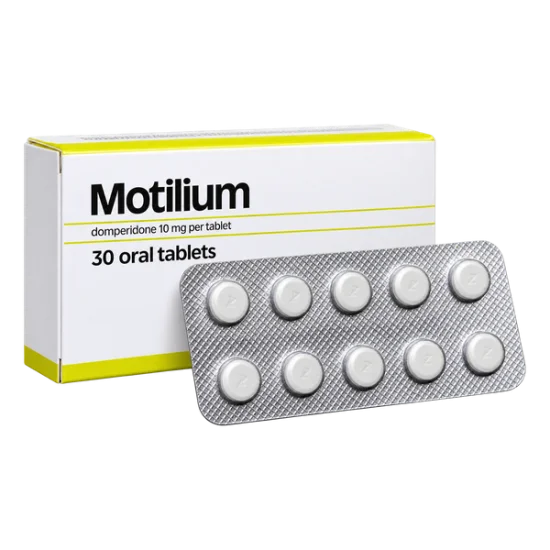
I used it during a stomach bug when I could not face food. The nausea settled enough for me to drink and eat toast by the second day. My mouth felt dry, so I kept water nearby.
Motilium
By blocking dopamine signals that trigger nausea and can slow stomach movement, Motilium helps relieve nausea and vomiting in adults. It is intended for short-term symptom control, with cardiac safety limits guiding its use [1].
Overview
Motilium is an oral antiemetic medicine containing domperidone. It belongs to the dopamine D2 receptor antagonist class and is used for short-term control of nausea and vomiting in adults.
Directions for use
For adults, dosing differs between strengths and between users, so there is no single amount that suits everyone. Treatment should generally be limited to the shortest possible duration appropriate for the symptoms.
Take the tablet by mouth with water.
- Take it 15 to 30 minutes before a meal.
- Space doses across the day rather than taking them close together.
- Use the lowest dose that controls symptoms.
- Do not take more than the recommended amount in 24 hours.
- Do not continue treatment without a prescriber reviewing the reason for ongoing nausea.
Food can delay domperidone absorption. Taking it before meals gives the medicine a better chance to work before nausea worsens after eating. Dosing differs between strengths and between users, so there is no single amount that suits everyone.
A missed dose does not need to be doubled. Take the next scheduled dose when it is due, unless there is enough time before the next meal for the missed tablet. Never take two tablets together to compensate.
Formulation
Motilium contains domperidone. It is supplied as oral tablets and is classified as an antiemetic, meaning it reduces nausea and vomiting.
Domperidone blocks dopamine D2 receptors mainly in the upper digestive tract and in the brain area involved in the vomiting reflex. This can reduce the sensation of nausea while helping the stomach pass its contents onwards into the small intestine. The benefit is symptom control.
Motilium is used for adults with nausea or vomiting where a clinician considers domperidone appropriate. It is not intended as a long-term treatment for indigestion, bloating, or unexplained recurrent sickness.
Mechanism of action
Domperidone blocks dopamine D2 receptors mainly in the upper digestive tract and in the brain area involved in the vomiting reflex. This can reduce the sensation of nausea while helping the stomach pass its contents onwards into the small intestine. Domperidone may increase gastric motility, which means the stomach can empty more efficiently.
Therapeutic indications
Motilium is used for short-term relief of nausea and vomiting. In clinical practice, doctors may consider it when nausea follows a short-lived stomach illness, migraine, some medicines, or impaired stomach movement.
Domperidone may increase gastric motility, which means the stomach can empty more efficiently. That effect can ease nausea in some people, though it does not treat the underlying cause of every digestive symptom. Persistent upper-abdominal discomfort needs a clear diagnosis because reflux disease, ulcer disease, gallbladder problems, infection, and medicine-related irritation require different care.
| Clinical purpose | Role of Motilium |
|---|---|
| Acute nausea | Reduces dopamine-driven nausea signals |
| Vomiting | May lower the urge to vomit when clinically appropriate |
| Slow gastric movement linked to nausea | Can support stomach emptying for short-term symptom relief |
The medicine works best when its use remains focused and brief. Long courses increase exposure without necessarily improving the result.
Common mistakes
Several patterns can make Motilium less useful or less safe.
- Taking it after eating: absorption may be slower, so relief can arrive later.
- Doubling a missed dose: this increases exposure without improving the missed dose.
- Using it for weeks: ongoing nausea needs investigation rather than repeated short courses.
- Ignoring a new racing heartbeat: rhythm symptoms require urgent attention.
- Combining it with antibiotics without reviewing interactions: clarithromycin and erythromycin are key examples.
- Assuming nausea is always stomach-related: migraine, vestibular problems, pregnancy, metabolic illness, and medicine effects can all contribute.
One detail patients often miss is that an over-the-counter cold or travel remedy may also cause drowsiness or contain ingredients that affect concentration. Check the active ingredients of every medicine used during an episode of nausea.
Reasons not to use it
Motilium is contraindicated in:
- Known allergy to domperidone.
- Diagnosed heart-rhythm disorder or prolonged QT interval.
- Significant heart disease.
- Moderate to severe liver impairment.
- Prolactin-secreting pituitary tumour.
- Bowel blockage.
- Gastrointestinal bleeding.
- Suspected gastrointestinal perforation.
- Concomitant use of macrolide antibiotics such as clarithromycin and erythromycin.
- Concomitant use of azole antifungals, including ketoconazole, itraconazole, and fluconazole.
- Concomitant use of medicines that prolong the QT interval.
- Concomitant use of diuretics that can lower potassium or magnesium.
- Concomitant use of apomorphine unless a specialist has judged that the combination is appropriate.
The British National Formulary lists these interaction concerns alongside dose and duration restrictions for domperidone [3].
When this is not for you
This is not for you if you have a known allergy to domperidone, a heart-rhythm problem, a prolonged QT interval, significant heart disease, or moderate to severe liver impairment. You should also avoid it if you have a pituitary tumour that produces prolactin, a bowel blockage, gastrointestinal bleeding, or a suspected perforation. Do not combine it with medicines such as clarithromycin, erythromycin, ketoconazole, itraconazole, fluconazole, other QT-prolonging medicines, certain diuretics, or apomorphine unless a specialist has assessed the combination.
Unwanted effects
Most people who use domperidone for a short period do not experience serious problems. Possible side effects include dry mouth, headache, diarrhoea, abdominal cramps, drowsiness, dizziness, and breast tenderness. Some people may notice increased prolactin, a hormone that can cause breast enlargement, milk production, menstrual changes, or reduced libido.
Its cardiac risks matter.
Domperidone can prolong the QT interval, which is the period during which the heart’s lower chambers reset electrically between beats. In susceptible people, QT prolongation can lead to dangerous rhythm disturbances. The risk rises with higher doses, longer treatment, age above 60, existing heart disease, low potassium or magnesium, and combinations with medicines that affect heart rhythm or domperidone metabolism [2].
Stop using Motilium and seek urgent medical help for:
- fast, irregular, or forceful heartbeat;
- fainting or near-fainting;
- unexplained severe dizziness;
- chest pain;
- swelling of the face, lips, tongue, or throat;
- a severe rash or breathing difficulty.
A practical issue is that nausea itself can cause dehydration and low electrolytes. Vomiting, diarrhoea, diuretics, or poor fluid intake may lower potassium or magnesium, which can add to domperidone’s rhythm risk.
Comparison
Motilium and a generic domperidone tablet contain the same active ingredient when both are labelled as domperidone 10 mg. Their therapeutic purpose and core mechanism are therefore the same.
| Feature | Motilium | Generic domperidone |
|---|---|---|
| Active ingredient | Domperidone | Domperidone |
| Main action | Dopamine D2 receptor blockade | Dopamine D2 receptor blockade |
| Possible difference | Tablet appearance and inactive ingredients | Tablet appearance and inactive ingredients |
Inactive ingredients can differ between products. This matters for people with a known allergy, lactose intolerance, or sensitivity to a colouring agent or other excipient. It does not mean one domperidone product should be taken at a higher dose than another.
The closest alternative by mechanism is metoclopramide. Both medicines can help nausea and promote gastric movement, yet metoclopramide enters the brain more readily and is more associated with restlessness, muscle spasms, and other movement-related adverse effects. Domperidone has less risk of these neurological effects, while its heart-rhythm precautions are stricter.
What doctors say
Doctors usually focus on the cause of nausea before relying on an antiemetic. A short episode after a viral illness may need fluids and brief symptom relief. Recurrent nausea can point to migraine, reflux, medication effects, diabetes-related slow gastric emptying, pregnancy, or another condition needing targeted treatment. Assessment may include a medication review, examination, and targeted tests. Treatment should address the cause as well as the symptom.
In clinical practice, the most useful expectation is modest and timely relief. Motilium may reduce nausea within the same day, yet it should not be used to mask worsening abdominal pain or repeated vomiting. The MHRA’s 2014 restrictions emphasised lower doses and short courses because cardiac risk increases as exposure rises.
The balance is straightforward: domperidone has a clear role for short-term nausea, but it is not a casual daily remedy for ongoing digestive discomfort.
Comparison
What customers often ask
Best time of day for Motilium
Take Motilium 15 to 30 minutes before meals, because food can slow domperidone absorption. If it is prescribed up to three times daily, doses are usually timed before the main meals rather than taken together. EMA recommendations published in 2014 support using the lowest dose for the shortest period, so timing should improve each dose’s usefulness rather than lead to extra doses.
Missed-dose management
If you miss a dose, take the next dose at its usual time. Do not take a double dose or take tablets close together. MHRA guidance from 2014 set a maximum adult daily dose of 30 mg because higher exposure can increase cardiac risk, so keeping to the planned schedule matters.
Differences between domperidone and metoclopramide
Both domperidone and metoclopramide reduce nausea through dopamine receptor blockade and can influence stomach movement. Metoclopramide reaches the central nervous system more readily, so involuntary movements, agitation, and dystonic reactions are more prominent concerns. The EMA’s 2014 domperidone review focused more on QT prolongation and rhythm effects, while metoclopramide has separate restrictions related to neurological adverse effects.
Driving, concentration, and machinery
Motilium can cause dizziness, drowsiness, or reduced alertness in some users. Do not drive, cycle in traffic, or operate machinery if you feel sleepy, light-headed, or unable to concentrate after a dose. The NHS information on domperidone, reviewed in 2023, advises avoiding potentially hazardous tasks when these effects occur.
Combining Motilium with macrolide antibiotics
Avoid combining Motilium with macrolide antibiotics such as clarithromycin or erythromycin unless a prescriber has specifically assessed the combination. These antibiotics can increase domperidone exposure through CYP3A4 inhibition and may also affect the QT interval. The MHRA’s 2014 safety communication identifies interacting medicines and cardiac vulnerability as key factors in domperidone-associated rhythm risk.
Do you offer anonymous delivery?
Your order will be securely packed and shipped within 24 hours. This is exactly what your package will look like (images of an actual item sent). It has the size and look of a regular private letter (24x11x0.7 cm) and its contents cannot be seen.
How Buyers Rate Motilium
It helped with nausea after a new pain medicine upset my stomach. I was careful with the timing before meals. I stopped once the nausea passed rather than finishing every tablet.
It reduced the sick feeling after a migraine, though it did not touch the headache itself. I felt slightly light-headed the first evening, so I did not drive.
The tablets worked after a bout of vomiting, but I had loose stools and a headache. I did not continue once my appetite came back.
It was useful for nausea, but I realised my symptoms kept returning after meals. I arranged an appointment rather than continuing with it, and the cause turned out to need a different treatment.
Sources
- European Medicines Agency (2014). CMDh confirms recommendations on restricting use of domperidone-containing medicines.
- Medicines and Healthcare products Regulatory Agency (2014). Domperidone: risks of cardiac side effects.
- British National Formulary (2025). Domperidone.