Skip to content
Atrovent

Atrovent

Quality products
24/7 Support
Fast delivery
Delivery from 4 days
Active ingredient Ipratropium bromide

Free delivery on orders from £ 166.00, free express delivery from £ 249.00

By blocking acetylcholine signals in the airway muscles, Atrovent helps widen narrowed bronchial passages and reduce breathlessness linked to reversible airway obstruction. The inhaler contains ipratropium and is used by people with chronic obstructive pulmonary disease (COPD) or, in selected cases, asthma where an anticholinergic bronchodilator is appropriate.

Overview

Atrovent is a metered-dose inhaler containing ipratropium, an antimuscarinic bronchodilator. Ipratropium acts mainly in the lungs, where it blocks muscarinic receptors that would otherwise trigger tightening of airway smooth muscle and increased mucus production.

Directions for use

Inhaler use and individual dosing

The amount per intake is set individually for each person rather than being one fixed number. Use Atrovent by inhaling the prescribed number of actuations through the mouth at the prescribed times.

  • Remove the cap and hold the inhaler upright.
  • Breathe out fully, away from the mouthpiece.
  • Seal your lips around the mouthpiece.
  • Begin a slow, deep inhalation and press the canister once as you breathe in.
  • Hold your breath briefly, then breathe out gently.
  • If more than one actuation is prescribed, allow time between puffs as directed by the prescriber.
A spacer can be useful when coordinating pressing and breathing is difficult. It reduces medicine settling on the tongue and can make each actuation more consistent.

A missed dose does not need doubling. Take the next planned dose at the usual time unless the prescriber has given a different rescue plan.

Formulation

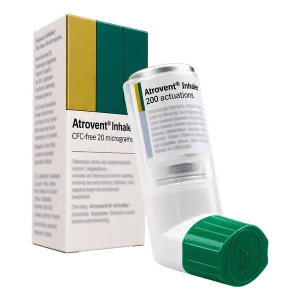
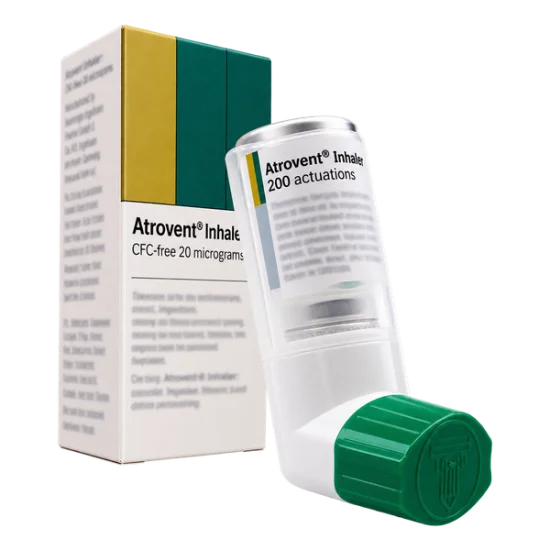
Atrovent is a metered-dose inhaler containing ipratropium, an antimuscarinic bronchodilator. Each inhaler provides 200 measured actuations.

The effect is local rather than strongly systemic because only a small proportion reaches the bloodstream after correct inhalation. This helps explain why Atrovent does not usually cause the tremor or racing heartbeat associated with some beta-2 agonist inhalers. Dry mouth can still occur.

Use a slow, deep breath while pressing the canister. A fast, sharp inhalation often leaves more medicine in the mouth and less in the lower airways.

Ipratropium bromide is also used in Atrovent nasal spray formulations for excessive watery nasal discharge. The nasal spray is a separate route of administration and is used for rhinitis symptoms, while Atrovent inhaler is intended for the airways.

Treatment approach Main action Typical clinical role
Atrovent inhaler with ipratropium Blocks muscarinic airway narrowing COPD maintenance or add-on bronchodilation
Short-acting beta-2 agonist Relaxes airway muscle through beta-2 receptors Fast symptom relief
Inhaled corticosteroid Reduces airway inflammation Preventer treatment for asthma

The Medicines and Healthcare products Regulatory Agency describes ipratropium as an anticholinergic bronchodilator for reversible bronchospasm associated with COPD and asthma [1].

Mechanism of action

By blocking acetylcholine signals in the airway muscles, Atrovent helps widen narrowed bronchial passages and reduce breathlessness linked to reversible airway obstruction. Ipratropium acts mainly in the lungs, where it blocks muscarinic receptors that would otherwise trigger tightening of airway smooth muscle and increased mucus production. Ipratropium bromide has an antisecretory action when delivered into the nose. It reduces stimulation of seromucous glands in the nasal mucosa, which can lessen rhinorrhoea, meaning a persistently runny nose.

Therapeutic indications

Atrovent Inhaler is used for airflow limitation, where airway muscle contraction and secretions make breathing feel restricted. In COPD, it can reduce bronchoconstriction and support day-to-day symptom control. Its onset is less rapid than that of many short-acting beta-2 agonists, so it is not normally the first-choice inhaler for sudden severe breathlessness.

For asthma, clinicians may add ipratropium during an acute exacerbation when symptoms are significant or when a person does not respond sufficiently to initial reliever treatment. Asthma Relief Inhalers work quickly by stimulating beta-2 receptors. Asthma Preventer Inhalers work differently by controlling inflammation over time. Atrovent does neither job in exactly the same way; it provides bronchodilation through muscarinic receptor blockade. Treatment choices depend on the clinical situation and prescribed plan.

NICE guidance for COPD includes short-acting bronchodilators such as antimuscarinics as options for managing breathlessness, chosen according to symptoms, inhaler technique, and the person’s broader treatment plan [2].

Atrovent nasal spray is used for nasal conditions such as perennial rhinitis in appropriate formulations. It does not replace the respiratory role of Atrovent Inhaler. The inhaler should only be used through the mouth for lower-airway symptoms.

Common mistakes

Several avoidable errors reduce the benefit of Atrovent:

  • Pressing the canister before starting to breathe in.
  • Inhaling too quickly, which deposits aerosol in the throat.
  • Skipping maintenance doses because symptoms seem quieter for a few days.
  • Using Atrovent as the sole response to a severe asthma flare.
  • Spraying near the eyes.
  • Continuing to use an inhaler that no longer produces a measured aerosol.

Another frequent mistake is assuming every wheeze needs the same inhaler. COPD and asthma can overlap, yet their long-term inhaler plans may differ. A written treatment plan helps prevent accidental duplication of anticholinergic medicines.

Reasons not to use it

  • Narrow-angle glaucoma or a history of acute glaucoma.
  • Difficulty passing urine, prostate enlargement, or bladder-neck obstruction.
  • Cystic fibrosis, where gastrointestinal effects may be more relevant.
  • Existing treatment with other anticholinergic medicines, including some bladder medicines, medicines for Parkinson’s disease, and certain travel-sickness treatments.
  • Severe or rapidly worsening breathlessness that is not responding to the prescribed plan.

Anticholinergic effects can add up when several medicines with the same action are used together. The FDA prescribing information for inhaled ipratropium highlights hypersensitivity reactions, paradoxical bronchospasm, eye complications, and urinary retention as clinically significant risks [4].

When this is not for you

Atrovent is not for you if you have had an allergic reaction to ipratropium, atropine-like substances, or any ingredient in the inhaler. Sudden wheeze, swelling of the lips or face, widespread rash, or difficulty breathing after use requires urgent medical help.

Unwanted effects

Most people tolerate inhaled ipratropium without major difficulty. The more common effects are dry mouth, throat irritation, cough after inhalation, unpleasant taste, headache, and occasional nausea. These effects are often mild and may improve once technique is settled.

Eye exposure needs care. If aerosol reaches the eyes, it may cause eye pain, blurred vision, red eyes, halos around lights, or worsening narrow-angle glaucoma. This is more likely when using poorly fitted face masks with nebulised medicines, though it can also occur with incorrect inhaler positioning.

Keep the mouthpiece aimed into the mouth, not toward the face. If the spray reaches the eyes and eye pain or visual changes follow, seek urgent medical assessment.

The Global Initiative for Asthma’s 2025 strategy report lists inhaled ipratropium as an adjunct bronchodilator in acute asthma care rather than a substitute for anti-inflammatory preventer therapy [3].

Comparison

The inhaler contains ipratropium and is used by people with chronic obstructive pulmonary disease (COPD) or, in selected cases, asthma where an anticholinergic bronchodilator is appropriate.

Treatment approach Main action Typical clinical role
Atrovent inhaler with ipratropium Blocks muscarinic airway narrowing COPD maintenance or add-on bronchodilation
Short-acting beta-2 agonist Relaxes airway muscle through beta-2 receptors Fast symptom relief
Inhaled corticosteroid Reduces airway inflammation Preventer treatment for asthma

What doctors say

In clinical practice, prescribers often view Atrovent as a useful bronchodilator when cholinergic airway tone is contributing to symptoms. COPD patients may value its steady symptom relief, while people with asthma are more likely to use it as an add-on in specific situations rather than as their only inhaler.

Doctors also focus on what the inhaler cannot do. It does not treat the airway inflammation that drives many asthma attacks. A person relying frequently on Atrovent for escalating asthma symptoms may need their preventer treatment and action plan reviewed.

The practical question is whether breathing becomes easier after correctly delivered doses. If there is no benefit, repeated extra use without assessment can delay appropriate treatment.

Comparison

Atrovent Current

Active ingredient: Ipratropium bromide
20mcg
From £ 27.39
inhalers
4.1 (5)

Spiriva

Active ingredient: Tiotropium
18mcg
From £ 74.70
capsules
4.3 (5)

Comparison table: Chronic Obstructive Pulmonary Disease

What customers often ask

Can Atrovent be combined with other anticholinergic medicines?

Combining Atrovent with other anticholinergic medicines can increase dry mouth, constipation, blurred vision, and urinary difficulty. This includes some medicines used for overactive bladder, Parkinson’s disease, motion sickness, and certain sedating antihistamines. The MHRA’s 2023 clinical information on ipratropium supports checking the full medicine list where anticholinergic effects may overlap. Do not add or stop prescribed inhalers without discussing the specific combination with the prescriber.

Which symptoms mean I should stop Atrovent and seek urgent medical help?

Stop using Atrovent and seek urgent help for swelling of the face, tongue, or throat, severe rash, fainting, or sudden worsening wheeze immediately after inhalation. Urgent assessment is also needed for severe eye pain, coloured halos around lights, sudden blurred vision, or inability to pass urine. WHO respiratory-care materials updated in 2024 identify rapidly worsening breathlessness and poor response to prescribed rescue treatment as warning signs requiring prompt medical assessment. These symptoms can reflect an acute respiratory emergency or a serious anticholinergic complication.

Can I drink alcohol while using Atrovent?

Alcohol has no established direct interaction with inhaled ipratropium. It can still worsen sleep, reflux, dehydration, and judgement around inhaler use, which may make respiratory symptoms harder to manage. NHS alcohol guidance published in 2024 advises moderation because alcohol can aggravate health conditions and interact with many concurrent medicines. If alcohol reliably worsens breathlessness or coughing, avoiding it is sensible.

Does Atrovent cause dry mouth?

Yes, dry mouth is one of the best-known effects of Atrovent because ipratropium blocks cholinergic stimulation of salivary glands as well as airway receptors. Sipping water after use and using careful inhaler technique can reduce the annoyance. The European Medicines Agency’s 2023 information on anticholinergic medicines recognises dry mouth as a predictable pharmacological effect. Persistent dry mouth with mouth soreness, dental problems, or swallowing difficulty merits clinical advice.

Can Atrovent be used during pregnancy or breastfeeding?

Pregnancy and breastfeeding decisions need an individual assessment of respiratory control and treatment benefit. Poorly controlled asthma or COPD can itself create risks, so stopping an inhaler without a replacement plan may be harmful. LactMed’s 2024 review of ipratropium states that the low systemic absorption expected after inhalation makes transfer into breast milk unlikely to be clinically significant. A prescriber should review the inhaler plan during pregnancy, especially if symptoms are changing or several respiratory medicines are being used.

Do you offer anonymous delivery?

Your order will be securely packed and shipped within 24 hours. This is exactly what your package will look like (images of an actual item sent). It has the size and look of a regular private letter (24x11x0.7 cm) and its contents cannot be seen.

Aerosol delivery via nebulisers and vaporizers

Nebulisers convert a prescribed liquid medicine into a fine aerosol that can be inhaled during relaxed tidal breathing. They may be used in hospital care, emergency treatment, or when a person cannot coordinate a metered-dose inhaler effectively. Nebulised ipratropium is a distinct presentation and needs its own prescribed solution and equipment.

Atrovent Inhaler is already a measured aerosol device. It should not be emptied, altered, or attached to a nebuliser. A vaporiser does not produce a controlled medicinal dose and is not a method for administering ipratropium.

If inhalation feels awkward, ask for an inhaler-technique review during a routine clinical appointment. Small changes in timing often improve lung delivery more than changing medicines.

How Buyers Rate Atrovent

4.1
Based on 5 reviews
Neil V., 57
Cardiff
Several months of use
Verified
Rating: 4.5 out of 5

I found it easier to walk up the hill near my flat after using it regularly. The first few times left my mouth dry, so I started keeping water nearby. I needed a nurse to correct how slowly I was meant to breathe in.

22 Oct 2026
James, 42
Dundee
Two weeks of use
Verified
Rating: 4 out of 5

It was added when my usual reliever was not doing enough. It helped the tight feeling, though it was not as immediate as I expected. I noticed a bitter taste for a few minutes after each dose.

31 Oct 2026
Ben, 42
Stoke-on-Trent
Four months of use
Verified
Rating: 5 out of 5

The inhaler fitted into my routine well once I used a spacer. I had fewer mornings where I felt chesty before getting dressed. I did not get shaking like I had with another type of inhaler.

5 Nov 2026
Thomas, 55
Newcastle upon Tyne
Six weeks of use
Verified
Rating: 3.5 out of 5

My breathing was better on ordinary days, but I accidentally sprayed too close to my eye once and it stung badly. I changed my technique after that. Dry mouth was the main nuisance.

10 Nov 2026
Jonathan, 40
Luton
One month of use
Verified
Rating: 3.5 out of 5

It helped as an extra inhaler during a difficult spell, though I still needed my regular preventer. I had expected it to replace everything else, which was not how my clinician explained it later.

19 Nov 2026

Sources

  1. MHRA (2023). Summary of Product Characteristics: Atrovent Inhaler.
  2. NICE (2019). Chronic obstructive pulmonary disease in over 16s: diagnosis and management.
  3. Global Initiative for Asthma (2025). Global Strategy for Asthma Management and Prevention.
  4. FDA (2023). Atrovent HFA Prescribing Information.
Get our free app Shop faster and track your orders 3.9 · 561 reviews Install