Skip to content
Ditropan

Ditropan

Quality products
24/7 Support
Fast delivery
Delivery from 4 days
Active ingredient Oxybutynin

Free delivery on orders from £ 166.00, free express delivery from £ 249.00

Urinary urgency, urge incontinence and frequent urination can result from involuntary bladder contractions. Ditropan helps relax the bladder muscle, supporting greater bladder capacity and improved control for people with overactive bladder symptoms.

Overview

Ditropan contains oxybutynin hydrochloride, an antimuscarinic that relaxes the detrusor muscle and increases bladder capacity. It is prescribed for adults and selected younger patients with overactive bladder symptoms.

Directions for use

Ditropan tablets are taken orally. The amount per intake is set individually, rather than being one fixed dose for every person. Prescribers usually balance bladder symptom control against anticholinergic effects and may adjust the regimen gradually.

A practical administration plan includes:

  • Take the prescribed number of tablets at the prescribed frequency.
  • Swallow tablets with water unless a clinician has given different instructions.
  • Take doses at consistent times to maintain a predictable routine.
  • Do not take extra tablets to compensate for a missed dose.
  • If a dose is missed, take it when remembered unless the next scheduled dose is near; skip the missed dose when taking both would bring doses too close together.
  • Do not alter the schedule when changing from standard-release to modified-release oxybutynin.
  • Continue bladder training, pelvic-floor exercises or fluid adjustments when these form part of the treatment plan.

The duration of treatment depends on the reason for prescribing and the response over time. Some people notice fewer urgent episodes after treatment begins, while the best balance between benefit and adverse effects may require gradual adjustment.

The Royal College of Physicians and NICE describe behavioural measures such as bladder training and pelvic-floor work as useful components of urinary symptom management; medicine may be used alongside these measures rather than replacing them [3].

Constipation deserves attention before and during treatment. A full bowel can press on the bladder and intensify urgency, while oxybutynin can slow bowel movement further. Fibre, suitable fluid intake and movement may help when medically appropriate.

Formulation

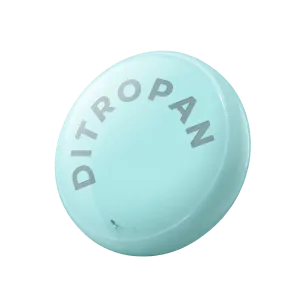
Ditropan tablets contain oxybutynin hydrochloride, which belongs to the anticholinergic group of medicines.

Mechanism of action

Oxybutynin is an antimuscarinic agent. Acetylcholine normally activates muscarinic receptors in the detrusor muscle during bladder contraction. Oxybutynin reduces this signalling, so the bladder muscle relaxes during the storage phase.

The practical result is greater bladder capacity and fewer involuntary contractions. The same anticholinergic activity can affect salivary glands, the bowel, the eyes and the central nervous system. This explains why dry mouth, constipation, blurred vision and drowsiness can occur alongside urinary improvement.

The European Medicines Agency’s pharmacological information on antimuscarinic treatment explains the link between muscarinic receptor blockade and reduced smooth-muscle activity [2]. The effect is not limited to the bladder, which is why dose adjustment may be needed when unwanted effects become troublesome.

Oxybutynin also has direct smooth-muscle relaxing activity. Its clinical action therefore involves both antimuscarinic effects and relaxation of bladder smooth muscle, although receptor blockade remains the main therapeutic explanation.

Therapeutic indications

Ditropan may be prescribed for:

  • Overactive bladder with sudden, difficult-to-control urges.
  • Urge incontinence caused by involuntary detrusor contractions.
  • Frequent urination linked to bladder muscle overactivity.
  • Certain forms of neurogenic bladder dysfunction, when specialist assessment identifies detrusor overactivity.
  • Bladder symptoms in children when a clinician has established an appropriate indication.

Stress incontinence is different. Leakage caused by coughing, lifting or exercise does not usually result from detrusor overactivity, so oxybutynin may not address its main mechanism.

The medicine can reduce urgency without correcting every cause of urinary frequency. Excess caffeine, urinary infection, uncontrolled diabetes, constipation and certain diuretics can also increase urinary symptoms and may need separate management.

Common mistakes

Several practical errors can reduce benefit or increase adverse effects:

  • Taking an extra tablet after an episode of leakage.
  • Changing the timing every day, making benefit and side effects difficult to judge.
  • Crushing a tablet without confirming its release design.
  • Ignoring constipation until urinary symptoms become worse.
  • Continuing to drive after blurred vision or marked drowsiness develops.
  • Taking another anticholinergic medicine without considering the combined burden.
  • Drinking large volumes late at night while expecting oxybutynin alone to prevent nocturia.
  • Stopping abruptly after one or two doses because the bladder symptoms have not yet improved.
  • Treating burning urination or fever as ordinary overactive bladder symptoms.
Record the timing of dry mouth, blurred vision and urgency for several days. A pattern linked to each dose gives the prescriber more useful information than a general statement that the tablets feel strong.

One common misconception is that all urinary frequency represents overactive bladder. Diuretics, infection, diabetes, excess caffeine and sleep disorders can create similar complaints. Oxybutynin will not correct every cause of frequent urination.

Reasons not to use it

Ditropan is not suitable for everyone. The medicine should not be used in people with a known allergy to oxybutynin or any tablet ingredient, and it is unsuitable in several conditions where antimuscarinic effects could create immediate harm.

  • Untreated urinary retention or inability to empty the bladder.
  • Gastric retention, severe gastrointestinal motility problems or paralytic ileus.
  • Uncontrolled narrow-angle or angle-closure glaucoma.
  • Severe ulcerative colitis or toxic megacolon.
  • Serious allergy to oxybutynin.
  • Medical history that makes anticholinergic treatment unsuitable.

Drug interactions can increase anticholinergic effects. Relevant medicines include other antimuscarinics, some antihistamines, tricyclic antidepressants, certain antipsychotics, medicines for Parkinson’s disease and drugs that slow bowel movement. Some medicines that inhibit CYP3A4 may increase oxybutynin exposure.

Alcohol and sedating medicines may add to drowsiness or reduced concentration. Combining several medicines with anticholinergic activity can produce severe dry mouth, constipation, blurred vision, urinary retention or confusion even when each medicine is tolerated alone.

When this is not for you

This medication is not for you if

  • You have untreated urinary retention or are unable to empty the bladder.
  • You have gastric retention, severe gastrointestinal motility problems or paralytic ileus.
  • You have uncontrolled narrow-angle or angle-closure glaucoma.
  • You have severe ulcerative colitis or toxic megacolon.
  • You have a serious allergy to oxybutynin.
  • A clinician has advised that anticholinergic treatment is unsuitable because of your medical history.

Tell the prescriber about prostate-related difficulty passing urine, bowel obstruction, reflux disease, autonomic neuropathy, glaucoma, heart rhythm problems, myasthenia gravis and cognitive impairment. Oxybutynin can worsen urinary retention, constipation, blurred vision and confusion in susceptible people.

The WHO highlights anticholinergic burden as a clinically relevant issue in older adults, especially when several medicines with similar effects are taken together [4]. Geriatric prescribing tools such as the Beers Criteria also identify oral oxybutynin as a medicine requiring caution because of its strong anticholinergic activity and potential cognitive effects.

Pregnancy and breastfeeding require individual assessment. Oxybutynin passes into breast milk in small amounts, and treatment decisions should consider the infant’s age, feeding pattern and the severity of the parent’s symptoms.

Unwanted effects

Anticholinergic adverse effects are the main limitation of oxybutynin treatment. Dry mouth is common because salivary secretion depends partly on muscarinic signalling. Reduced sweating can also occur, especially in hot conditions or during physical exertion.

Possible adverse effects include:

  • Dry mouth, dry eyes or dry skin.
  • Constipation, nausea or abdominal discomfort.
  • Blurred vision or difficulty focusing.
  • Dizziness, drowsiness or headache.
  • Palpitations or a faster heartbeat.
  • Reduced sweating and increased sensitivity to heat.
  • Difficulty passing urine.
  • Confusion, agitation, hallucinations or memory changes, especially in vulnerable people.

Blurred vision and dizziness matter when driving, cycling, working at height or operating machinery. The MHRA safety information for anticholinergic medicines advises attention to central nervous system effects, urinary retention and visual symptoms [1].

Seek urgent medical assessment for inability to pass urine, severe eye pain with visual disturbance, marked confusion, fainting, severe palpitations, swelling of the face or breathing difficulty. These symptoms may indicate urinary retention, acute angle-closure glaucoma, a significant cardiovascular reaction or an allergic response.

Oxybutynin can make overheating more likely by reducing sweating. This is easy to miss because the person may feel dry rather than sweaty. Extra caution is sensible during hot weather, strenuous exercise and fever.

If your mouth becomes dry, check for mouth soreness, difficulty eating or new dental sensitivity. Persistent dryness can be managed more effectively when reported early rather than after dental problems develop.

Older adults may experience confusion or drowsiness before they notice a clear bladder benefit. A lower starting exposure and regular review are often preferred when anticholinergic sensitivity is a concern.

Comparison

Treatment selection depends on symptom pattern, bowel function, eye health, cognitive risk, blood pressure and previous response. Oxybutynin is an established antimuscarinic option, but its broader anticholinergic effects can make another mechanism more suitable for some patients.

Treatment category Main mechanism Practical distinction
Oxybutynin Antimuscarinic; reduces acetylcholine activity in the detrusor Effective bladder relaxation, with a higher burden of dry mouth, constipation and cognitive effects
Other antimuscarinics, such as solifenacin, tolterodine, darifenacin or propiverine Muscarinic receptor blockade Receptor selectivity and tolerability vary; constipation, dry mouth and visual effects remain possible
Mirabegron Beta-3 adrenergic receptor agonist Relaxes the detrusor during bladder filling without directly blocking muscarinic receptors; blood pressure monitoring may be needed

Tolterodine is available in immediate-release and modified-release approaches. Solifenacin and darifenacin have greater receptor selectivity for some muscarinic subtypes, though selectivity does not remove the possibility of adverse effects. Propiverine combines antimuscarinic activity with direct smooth-muscle effects.

Mirabegron may be considered when anticholinergic effects are unacceptable or when cognitive risk is a concern. It is not suitable for people with certain blood-pressure problems, and its interaction profile differs from that of oxybutynin.

Flavoxate is another bladder smooth-muscle treatment used in some clinical settings, though treatment choice depends on local prescribing practice and the confirmed cause of symptoms. A clinician may also consider bladder training, pelvic-floor rehabilitation, continence products or specialist procedures when medicines provide insufficient control.

What doctors say

In clinical practice, prescribers usually judge success by fewer urgency episodes, fewer leaks and improved ability to delay urination. A completely dry mouth is not a marker of stronger bladder control; it is an adverse effect that may signal excessive anticholinergic exposure.

Doctors also look for the cause of new urinary symptoms before continuing long-term treatment. Burning urination, fever, blood in the urine, new pelvic pain or sudden worsening may require assessment for another condition rather than simply increasing oxybutynin.

A useful review covers bowel function, eyesight, sleep, alertness, urinary emptying and the full medicine list. Patients sometimes mention dry mouth but forget to mention new constipation or difficulty focusing their eyes, even though these effects can influence whether treatment remains suitable.

The balance is individual. Someone with severe urgency may value the benefit, while someone with mild symptoms and high cognitive vulnerability may experience more disadvantage from anticholinergic effects. Review should include symptom benefit and daily function. Cognitive changes or urinary retention warrant prompt clinical advice. A shared decision can then guide continuation or change.

Comparison

Comparison table: Overactive Bladder

What customers often ask

How long does one Ditropan dose keep working?

The duration depends on the tablet’s release characteristics, the prescribed schedule and individual absorption. Standard-release oxybutynin generally acts over a shorter interval than modified-release formulations, so the two forms should not be treated as interchangeable. MHRA prescribing information reviewed in 2025 describes dosing frequency as formulation-dependent, and the treatment plan should follow the prescribed regimen.

What is the best time of day to take Ditropan?

There is no single best time for every person because the amount per intake and dosing frequency are individualised. A consistent schedule can help match treatment with the times when urgency is most troublesome, while evening dosing may be unsuitable if it causes blurred vision, drowsiness or dry mouth overnight. NHS clinical practice in 2025 continued to emphasise taking prescribed medicines at regular times and reviewing troublesome adverse effects rather than changing timing independently.

Can Ditropan tablets be split, crushed or chewed?

Do not split, crush or chew a Ditropan tablet unless the prescriber or dispensing pharmacist has confirmed that the specific tablet can be altered. Crushing can change the release of oxybutynin and may increase the amount absorbed at once. EMA product information available in 2025 distinguishes immediate-release and modified-release formulations, so the tablet design must be considered before altering it.

How does Ditropan differ from the closest alternative?

Ditropan contains oxybutynin, an antimuscarinic that reduces acetylcholine activity in the bladder. Mirabegron uses beta-3 adrenergic stimulation instead, while solifenacin, tolterodine, darifenacin and propiverine are other antimuscarinic approaches with different receptor profiles. NICE guidance current in 2025 supports choosing treatment according to urinary symptoms, adverse effects, comorbidities and the person’s response.

Can people under 18 use Ditropan?

Children and adolescents should use oxybutynin only when a clinician has established a suitable indication and selected the formulation and amount. Paediatric treatment requires attention to body size, bladder function, constipation, neurological conditions and the ability to report visual or cognitive effects. WHO paediatric prescribing principles reviewed in 2025 support weight- and condition-appropriate dosing rather than transferring an adult regimen to a younger patient.

Do you offer anonymous delivery?

Your order will be securely packed and shipped within 24 hours. This is exactly what your package will look like (images of an actual item sent). It has the size and look of a regular private letter (24x11x0.7 cm) and its contents cannot be seen.

Available formulations and brand equivalency

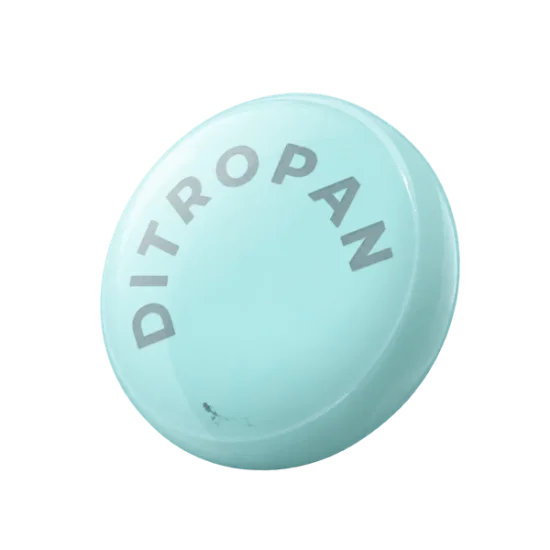
The product sold on this page is Ditropan in tablet form. Oxybutynin hydrochloride is the active substance, while Ditropan is the product name used for those tablets.

Oxybutynin may also exist in other pharmaceutical forms, including modified-release tablets, oral liquid and transdermal systems. These forms are not interchangeable on a milligram-for-milligram basis without clinical direction because absorption, peak concentration and dosing frequency can differ.

Standard-release tablets release oxybutynin over a shorter period than modified-release preparations. Modified-release oxybutynin is designed to provide a more gradual exposure, which may reduce peak-related adverse effects for some people. A transdermal system delivers the substance through the skin and has a different absorption profile.

Generic oxybutynin contains the same active substance as Ditropan when the strength and release characteristics match. The inactive ingredients, tablet appearance and release design may differ. Those differences can affect swallowing, tolerability or the way a tablet must be taken.

Do not substitute a modified-release tablet for a standard tablet without a revised dosing plan. The formulation determines how quickly oxybutynin enters the bloodstream.

How Buyers Rate Ditropan

3.3
Based on 3 reviews
Elaine, 39
Bradford
About four weeks
Verified
Rating: 3.5 out of 5

The sudden urges became easier to manage and I had fewer accidents at work. My mouth was dry during the first week, so I kept water nearby and reduced coffee. Constipation became annoying, but it improved after I dealt with it rather than ignoring it.

11 Nov 2026
Stephen, 68
Manchester
Several weeks
Verified
Rating: 3 out of 5

The night-time trips reduced, which helped me sleep. I also noticed blurred vision in the evening and felt less sharp after some doses. My treatment was reviewed because of that, and the bladder benefit did not justify carrying on unchanged.

15 Oct 2026
Hannah, 55
Brighton
Around three months
Verified
Rating: 3.5 out of 5

Urgency was better, especially when I was away from home. The tablets did not stop every leak, and the dry mouth stayed noticeable. I found the routine manageable once I took the doses at consistent times and kept an eye on constipation.

29 Oct 2026

Sources

  1. MHRA (2023). Oxybutynin hydrochloride tablets: Summary of Product Characteristics (SmPC)
  2. EMA (2022). Summary of Product Characteristics (SmPC) — oxybutynin
  3. NICE (2018). Lower urinary tract symptoms in men: management (NG97)
  4. WHO (2019). Medication Safety in Polypharmacy: Technical Report
Get our free app Shop faster and track your orders 3.9 · 425 reviews Install