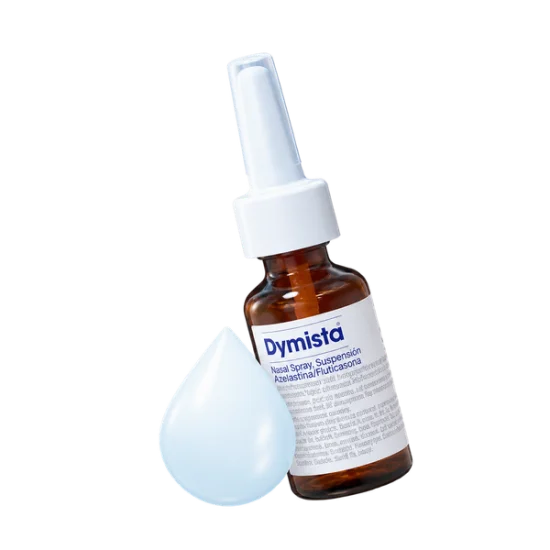
The blocked nose and sneezing eased after the first few days. I noticed a bitter taste when I leaned my head back, so I changed the angle. Nosebleeds appeared once or twice, but they stopped after I corrected the direction of the nozzle.
Dymista
By combining a local antihistamine with an intranasal corticosteroid, Dymista Nasal Spray targets both allergy symptoms and nasal inflammation. It is prescribed for adults and adolescents aged 12 years and over with moderate to severe allergic rhinitis when treatment with one nasal medicine has not provided enough control. The spray acts inside the nose, helping relieve blockage, sneezing, itching and watery discharge.
Overview
Dymista is a prescription combination of azelastine hydrochloride and fluticasone propionate. Azelastine is an intranasal antihistamine, while fluticasone propionate is an intranasal corticosteroid. The combination is intended for allergic rhinitis caused by seasonal allergens, such as pollen, or year-round triggers, such as house-dust mites and animal dander.
Directions for use
The dose depends on the reason for treatment and is agreed with a doctor or pharmacist. For allergic rhinitis in adults and adolescents aged 12 years and over, the usual regimen is one spray into each nostril twice daily. A clinician may adjust the plan when symptoms are controlled or when treatment needs to continue through a longer allergy season.
Use the spray as follows:
- Gently blow the nose to clear excessive mucus.
- Shake the bottle carefully before each use.
- Remove the protective cap.
- Prime the pump before first use by pressing it several times until a fine, even mist appears.
- Keep the head slightly forward rather than tipped backwards.
- Close one nostril with a finger.
- Place the nozzle just inside the other nostril.
- Aim towards the outer wall of the nostril, away from the septum.
- Press the pump once while breathing in gently through the nose.
- Breathe out through the mouth.
- Repeat the process in the other nostril.
- Wipe the nozzle and replace the cap.
If a dose is missed, use it when remembered unless the next scheduled dose is close. Do not use two doses together to compensate. If several doses have been missed, the pump may need re-priming before it delivers a consistent mist.
Do not spray forcefully. A strong inhalation can pull the suspension into the throat, increasing bitter taste and reducing the amount that remains on the nasal mucosa.
Formulation
Dymista combines two active substances with different local actions. Each spray delivers azelastine hydrochloride and fluticasone propionate to the nasal mucosa, where allergic inflammation develops.
The standard presentation contains 137 micrograms of azelastine hydrochloride and 50 micrograms of fluticasone propionate per spray. The product information describes Dymista as a fixed-dose combination of an intranasal antihistamine and a corticosteroid [1].
| Component | Main local action | Symptoms addressed |
|---|---|---|
| Azelastine hydrochloride | Blocks histamine H1 receptors | Sneezing, itching and watery discharge |
| Fluticasone propionate | Reduces inflammatory signalling | Swelling, congestion and ongoing nasal inflammation |
Mechanism of action
Azelastine is an antihistamine. During an allergic reaction, immune cells release histamine, which binds to H1 receptors and contributes to sneezing, itching and increased nasal secretions. Azelastine blocks these receptors locally.
Fluticasone propionate is a corticosteroid with a local anti-inflammatory effect. It reduces the activity of inflammatory cells and decreases the release of chemical mediators that contribute to swelling, mucus production and nasal sensitivity.
The local route limits systemic exposure compared with corticosteroid tablets, although absorption is not completely absent. The MHRA product information therefore includes precautions for prolonged treatment, high doses and people with conditions that increase corticosteroid-related risk [2].
Therapeutic indications
Doctors may consider a combination nasal spray when a single antihistamine or corticosteroid has not controlled the full symptom pattern. Dymista addresses several symptoms at the same time:
- Blocked or congested nose
- Sneezing
- Nasal itching
- Watery nasal discharge
- Inflammation and swelling inside the nasal passages
- Allergy-related irritation affecting sleep or daytime concentration
Dymista is designed for allergic rhinitis. It does not treat a bacterial sinus infection, and persistent facial pain, fever or thick discoloured nasal discharge needs separate clinical assessment.
Common mistakes
Several practical mistakes reduce the amount of Dymista reaching the nasal lining:
- Aiming the nozzle towards the septum
- Tilting the head backwards
- Sniffing sharply after pressing the pump
- Failing to shake the suspension
- Forgetting to prime a new or unused pump
- Blowing the nose hard immediately after administration
- Using extra sprays because relief was not immediate
- Sharing the bottle with another person
- Continuing through repeated nosebleeds without review
- Adding another antihistamine that causes drowsiness without checking for additive effects
One detail patients often miss is that a nasal suspension needs shaking. Without it, the active substances may not be distributed evenly through the liquid, and the delivered spray may not represent the intended mixture.
Another frequent problem is treating the nozzle like a deep applicator. It only needs to enter the nostril slightly. The spray should coat the side wall, not hit the central cartilage.
Reasons not to use it
- Previous serious allergic reaction to azelastine, fluticasone or an excipient
- Recent nasal surgery or nasal injury
- An untreated local nasal infection
- Nasal ulcers, repeated nosebleeds or an exposed nasal septum
- Glaucoma or cataracts
- Tuberculosis or another untreated infection
- Severe liver impairment
- Current use of several corticosteroid products
- A history of adrenal or immune-system problems
Severe hepatic impairment may increase exposure to azelastine because the substance is metabolised in the liver. The product information advises additional caution in this situation [4].
When this is not for you
This medication is not for you if you have had a serious reaction to azelastine or fluticasone, especially facial swelling, wheezing or collapse. Treatment should also be reviewed if you have recently had nasal surgery, an untreated infection, repeated nosebleeds, glaucoma, cataracts, liver disease or another condition affected by corticosteroids. Tell the prescriber if you use inhaled, topical, injected or oral corticosteroids.
Unwanted effects
The most characteristic unwanted effects are a bitter taste, unpleasant taste, headache, nosebleed and irritation inside the nose. These effects relate mainly to local nasal administration and the known actions of azelastine and fluticasone.
| Frequency or concern | Possible effects | Practical response |
|---|---|---|
| Common | Bitter taste, headache, nosebleed, nasal irritation or sneezing | Improve spray direction, avoid forceful inhalation and keep the head slightly forward |
| Less common | Dryness, throat irritation, cough, nausea, fatigue or drowsiness | Monitor the pattern and avoid driving if alertness is affected |
| Rare or serious | Persistent nasal ulceration, visual disturbance, severe allergic reaction or significant breathing difficulty | Stop using the spray and obtain urgent medical assessment |
A bitter aftertaste is usually reduced when the spray is aimed away from the septum and inhaled gently. Drinking water immediately after use may help, although it does not correct poor technique.
Nosebleeds often occur when the nozzle repeatedly hits the septum. Directing the nozzle towards the outer side of the nostril reduces mechanical irritation. Recurrent bleeding, crusting or sores require review before continued use.
Intranasal corticosteroids can rarely contribute to nasal septum damage, raised eye pressure, cataracts or systemic corticosteroid effects, especially with prolonged treatment, high exposure or additional steroid medicines. Children and adolescents may require monitoring of growth when treatment is prolonged. The European Medicines Agency describes local nasal reactions and corticosteroid precautions within the regulatory information for intranasal corticosteroid products [3].
Comparison
Dymista combines an intranasal antihistamine with an intranasal corticosteroid, so it addresses allergy symptoms and nasal inflammation through two local mechanisms. This differs from single-ingredient nasal treatment, which uses either an antihistamine or a corticosteroid alone, and from oral allergy medicines, which act throughout the body rather than mainly inside the nose.
What doctors say
In clinical practice, doctors usually judge nasal spray treatment by symptom control across the day and night, not by whether the nose opens immediately after the first dose. A combination product is most useful when both histamine symptoms and persistent mucosal inflammation are present.
A common prescribing error is to assess the corticosteroid component too early. Azelastine may help rapidly, while the anti-inflammatory benefit from fluticasone depends more on regular administration. Poor nozzle direction can make a good medicine seem ineffective.
Doctors also look for a reason behind ongoing congestion. Allergy is one possibility, but structural blockage, nasal polyps, infection and overuse of topical decongestants can produce similar symptoms. A review is appropriate if symptoms remain one-sided, bleeding continues or smell becomes persistently reduced.
The treatment plan may change after the allergy season, after exposure to a trigger decreases or when symptoms have remained controlled. Stopping or reducing treatment should follow the agreed clinical plan, especially after prolonged corticosteroid exposure.
Comparison
What customers often ask
Which diet, exercise or daily habits can help allergic rhinitis treatment?
Reducing exposure to known allergens can support Dymista treatment, consistent with guidance from NICE published in 2023, the World Allergy Organization and the American Academy of Allergy, Asthma & Immunology. Keeping windows closed during high-pollen periods, showering after outdoor exposure and changing clothes after gardening may reduce allergen contact. Exercise is usually possible, although outdoor training during high pollen exposure can worsen symptoms for some people. Alcohol may increase drowsiness when combined with azelastine, so caution is sensible if the spray causes reduced alertness.
What is the correct technique for using the Dymista device?
The MHRA product information published in 2024 describes a metered nasal spray that should be shaken, primed when required and directed away from the septum. Keep the head slightly forward and breathe in gently during the actuation. Avoid a hard sniff, because this can draw the suspension into the throat and increase the bitter taste. Cleaning the nozzle according to the product instructions helps maintain a consistent spray pattern.
What should be discussed with a doctor before starting Dymista?
The EMA safety information available in 2024 supports discussion of previous nasal surgery, recurrent nosebleeds, glaucoma, cataracts, infections, liver disease and other corticosteroid treatment. Provide a complete list of medicines, including inhalers, creams, injections and supplements. Mention any previous reaction to antihistamines or corticosteroids. Pregnancy, breastfeeding and treatment with ritonavir, cobicistat or azole antifungals also need to be discussed before use.
Can Dymista affect driving, concentration or machinery work?
Azelastine can cause drowsiness or reduced alertness in some people, as recognised in MHRA medicine safety information published in 2024. Do not drive, operate machinery or work at height until you know how the spray affects you. Alcohol, sleeping tablets, opioids and sedating antihistamines can make impairment more likely. If you remain unusually sleepy, confused or slow to react, seek a medication review.
Can Dymista be combined with ritonavir or another medicine group?
Ritonavir and cobicistat can inhibit CYP3A4, the enzyme pathway involved in fluticasone metabolism, as described by the EMA in corticosteroid interaction guidance available in 2024. This combination may raise systemic corticosteroid exposure, especially when several steroid products are used together. Azole antifungals such as ketoconazole and itraconazole can create a similar concern. The prescriber should decide whether to continue, adjust or replace treatment.
Do you offer anonymous delivery?
Your order will be securely packed and shipped within 24 hours. This is exactly what your package will look like (images of an actual item sent). It has the size and look of a regular private letter (24x11x0.7 cm) and its contents cannot be seen.
How Buyers Rate Dymista
Night-time congestion improved and I slept more comfortably. The first week brought a dry nose and an unpleasant taste. The taste became manageable when I breathed in gently instead of pulling the spray straight down my throat.
The sneezing was better, but the result was not immediate for congestion. I had missed doses on busy mornings and assumed the treatment was failing. Taking it consistently helped more than adding extra sprays.
The spray reduced the watery discharge, although I felt slightly sleepy after the first few applications. I stopped driving until I knew how it affected me and discussed the timing with my prescriber.
Sources
- MHRA (2024). Dymista 50 micrograms/137 micrograms per spray, nasal spray suspension: Summary of Product Characteristics.
- MHRA (2024). Dymista nasal spray: Patient Information Leaflet.
- European Medicines Agency (2019). Guideline on the pharmaceutical quality of inhalation and nasal medicinal products.
- European Medicines Agency (2018). Guideline on the clinical development of medicinal products for the treatment of allergic rhinitis.