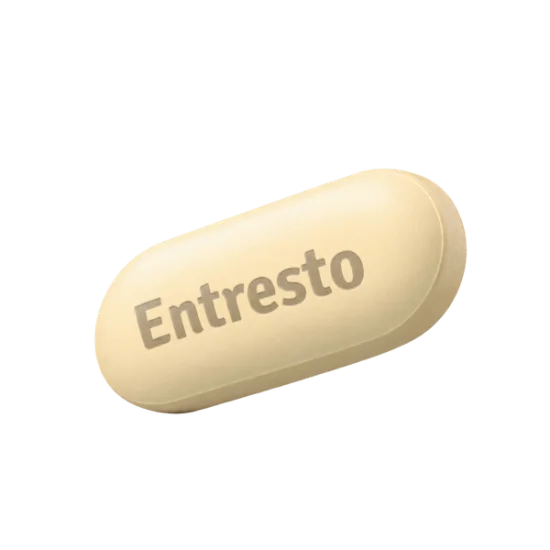
I had dizziness during the first week, mainly when I got up quickly. My heart-failure nurse adjusted another tablet and asked me to log my blood pressure. By the second month I was walking further without stopping, although I still had to pace myself.
Entresto
Sacubitril/valsartan, the active combination in Entresto, combines a neprilysin inhibitor with an angiotensin II receptor blocker. It is used for adults with chronic heart failure to reduce cardiovascular death and heart-failure hospitalisation.
Overview
Entresto tablets contain sacubitril and valsartan in a fixed-dose combination. Sacubitril is a prodrug, meaning the body converts it into the active neprilysin-inhibiting compound sacubitrilat. Valsartan is an angiotensin II receptor blocker, also called an ARB.
Together, these medicines form an angiotensin receptor–neprilysin inhibitor, often shortened to ARNI.
Directions for use
Entresto treatment is started and adjusted by a clinician according to blood pressure, kidney function, potassium level, previous heart-failure treatment, and tolerance. Tablets are taken by mouth, commonly as a twice-daily regimen, with the individual dose and frequency agreed with a doctor or pharmacist.
Dose increases are usually gradual. This gives the body time to adapt and allows clinicians to identify low blood pressure, rising potassium, or worsening renal function before reaching a maintenance regimen.
A usual treatment plan includes:
- taking the tablets at consistent times each day;
- swallowing tablets whole with water;
- attending planned blood-pressure, kidney-function, and potassium checks;
- reporting dizziness, fainting, persistent vomiting, diarrhoea, or a major reduction in urine output;
- taking the next scheduled dose if one is missed, rather than taking two doses together.
Do not stop Entresto abruptly because you feel better. Heart-failure symptoms may be controlled because treatment is working, not because the underlying condition has disappeared.
Formulation
Entresto tablets contain sacubitril and valsartan in a fixed-dose combination. Sacubitril is a prodrug, meaning the body converts it into the active neprilysin-inhibiting compound sacubitrilat. Valsartan is an angiotensin II receptor blocker, also called an ARB.
Together, these medicines form an angiotensin receptor–neprilysin inhibitor, often shortened to ARNI. This class is used as part of guideline-directed treatment for chronic heart failure, most often heart failure with reduced ejection fraction.
The treatment goal is practical: fewer admissions due to worsening heart failure and a lower risk of cardiovascular death.
Mechanism of action
Heart failure activates compensatory systems that may initially support blood pressure but can gradually place extra strain on the heart. One is the renin–angiotensin–aldosterone system. Angiotensin I is converted through this pathway into angiotensin II, which narrows blood vessels and promotes sodium retention.
Valsartan blocks the angiotensin II receptor. This reduces vasoconstriction, aldosterone-driven fluid retention, and some of the adverse remodelling that can weaken the heart over time. It also counterbalances effects linked with endothelin-1, a substance that can constrict blood vessels.
Sacubitril inhibits neprilysin, an enzyme that breaks down natriuretic peptides. Higher levels of these peptides encourage sodium excretion through the kidneys, widen blood vessels, and reduce pressure inside the heart. Neprilysin also breaks down other peptides, which explains why Entresto must not overlap with ACE inhibitor treatment. [2]
The two mechanisms need each other. Blocking neprilysin alone could leave angiotensin II activity unchecked, while valsartan provides protection against that pathway.
Therapeutic indications
It is used for adults with chronic heart failure to reduce cardiovascular death and heart-failure hospitalisation.
Common mistakes
- Taking an ACE inhibitor too close to the first Entresto dose. A full 36-hour gap is required after stopping an ACE inhibitor.
- Doubling a missed dose. This can cause excessive blood-pressure reduction.
- Using potassium salt substitutes without mentioning them. They can contribute to hyperkalaemia.
- Taking anti-inflammatory painkillers frequently. Regular NSAID use may compromise kidney function and fluid balance.
- Stopping tablets after a few low blood-pressure readings. A clinician needs the readings, symptoms, and medication list to decide whether an adjustment is needed.
- Ignoring rapid weight gain. Increasing ankle swelling, abdominal bloating, or a rapid rise in weight may reflect fluid retention rather than ordinary weight change.
Reasons not to use it
This medicine is not for you if you have had angioedema related to an ACE inhibitor or an ARB, use an ACE inhibitor at the same time, or have hereditary or idiopathic angioedema.
Entresto must not be taken within 36 hours of the last ACE inhibitor dose. This washout period reduces the risk of angioedema. It is also unsuitable during pregnancy because medicines acting on the renin–angiotensin system can harm fetal kidney development.
Clinical caution is needed in people with:
- very low blood pressure or recurrent fainting;
- severe kidney impairment or narrowing of the renal arteries;
- high potassium levels;
- severe liver impairment;
- previous angioedema;
- substantial fluid loss from illness, diuretics, or poor fluid intake.
Breastfeeding should be discussed with the prescriber before treatment begins. The MHRA advises careful review of medicines affecting the renin–angiotensin system in pregnancy and in people at risk of kidney complications. [3]
When this is not for you
This medicine is not for you if you have had angioedema related to an ACE inhibitor or an ARB, use an ACE inhibitor at the same time, or have hereditary or idiopathic angioedema.
It is also unsuitable during pregnancy because medicines acting on the renin–angiotensin system can harm fetal kidney development.
Unwanted effects
Low blood pressure is among the most frequent unwanted effects of sacubitril/valsartan, especially during early treatment or after a dose increase. Dizziness, tiredness, fainting, and blurred vision can follow if blood pressure drops too far. The risk rises with dehydration, diarrhoea, vomiting, or other medicines that lower blood pressure.
Raised blood potassium, called hyperkalaemia, can occur because valsartan reduces aldosterone activity. Kidney function may also change, especially in people with chronic kidney disease, dehydration, severe heart failure, or medicines that affect renal blood flow. Cough may occur, though it is generally less characteristic than with ACE inhibitors.
Seek urgent medical help for swelling of the lips, tongue, face, or throat; difficulty breathing; collapse; or severe faintness. These may indicate angioedema or a serious fall in blood pressure. The EMA product information also identifies renal impairment and hyperkalaemia as key monitoring concerns. [1]
Entresto should never be combined with an ACE inhibitor. Combining treatments in this way increases the risk of angioedema. Other medicines require a deliberate review rather than automatic avoidance.
Potassium supplements, potassium-containing salt substitutes, and potassium-sparing diuretics may increase the chance of hyperkalaemia. Mineralocorticoid receptor antagonists such as eplerenone can be valuable in heart-failure care, yet potassium and renal function need closer monitoring when treatments are used together.
Non-steroidal anti-inflammatory drugs, including ibuprofen and naproxen, can reduce kidney blood flow. In a person who is dehydrated or has impaired kidney function, this combination may contribute to acute kidney injury. Lithium concentrations can rise with medicines that affect the renin–angiotensin system, so lithium monitoring may be required.
Other blood-pressure-lowering treatments can add to dizziness or fainting. This includes some diuretics, nitrates, and alpha-blockers.
Comparison
Modern heart-failure treatment often combines medicines that act through different pathways. Entresto may replace an ACE inhibitor or an ARB in suitable patients with chronic symptomatic heart failure and reduced ejection fraction; it is not ordinarily combined with either class.
| Treatment class | Main action | Place in heart-failure care |
|---|---|---|
| Entresto: sacubitril/valsartan | Increases natriuretic peptides and blocks angiotensin II receptors | Reduces cardiovascular death and hospitalisation in suitable chronic heart-failure patients |
| ACE inhibitors or ARBs | Suppress the renin–angiotensin system | Alternatives when ARNI treatment is not suitable |
| Mineralocorticoid receptor antagonists or SGLT2 inhibitors | Reduce aldosterone effects or alter renal glucose-sodium handling | Often used alongside other guideline-directed therapies |
Losartan and valsartan are ARBs. They block angiotensin II receptors but do not inhibit neprilysin, so they do not provide the same dual pathway as Entresto. Eplerenone is a mineralocorticoid receptor antagonist that may be used alongside Entresto, subject to potassium and renal monitoring.
Dapagliflozin and empagliflozin are SGLT2 inhibitors. They work through a different kidney-mediated pathway and are used in heart failure regardless of whether a person has diabetes. NICE guidance places ARNI therapy within a broader plan that can include beta-blockers, mineralocorticoid receptor antagonists, and SGLT2 inhibitors. [4]
What doctors say
In clinical practice, prescribers focus less on a single tablet and more on whether the entire heart-failure plan is tolerated. Blood pressure, pulse, body weight, kidney function, potassium, congestion, and symptom pattern all matter.
A common expectation problem is assuming that improved energy will be immediate. Entresto changes neurohormonal stress on the heart over time. Some people notice less breathlessness or better exercise tolerance after stabilisation, while others mainly benefit through a lower risk of future deterioration.
Doctors also look for patterns rather than isolated readings. A brief spell of dizziness after standing may call for fluid-status or diuretic review. Persistent dizziness, repeated fainting, or a marked drop in urine output needs prompt assessment.
Comparison
What customers often ask
What should be discussed with a doctor before starting Entresto?
A doctor needs to know about current ACE inhibitor use, previous angioedema, low blood pressure, kidney disease, liver disease, and raised potassium levels. Mention all diuretics, potassium supplements, salt substitutes, anti-inflammatory painkillers, and lithium. Pregnancy plans and breastfeeding also need discussion because renin–angiotensin system medicines carry fetal risk. The MHRA’s 2024 safety guidance on renin–angiotensin system medicines supports this focused pre-treatment review.
Can Entresto affect driving, concentration, or machinery work?
Entresto may cause dizziness, low blood pressure, fatigue, or fainting, most often near treatment initiation or after a dose change. Do not drive, cycle in traffic, operate machinery, or work at height if you feel dizzy, weak, faint, or unable to concentrate normally. Alcohol can worsen light-headedness in some people because it may lower blood pressure or contribute to dehydration. The EMA described dizziness and hypotension among recognised adverse reactions in its 2024 Entresto product information.
How soon can the effect of Entresto become noticeable?
Blood-pressure effects may appear early, while changes in exercise tolerance and breathlessness can take weeks and vary between individuals. The more meaningful benefit is often prevention: lower risk of deterioration, hospitalisation, and cardiovascular death over sustained treatment. The PARADIGM-HF trial, published in 2014 in the New England Journal of Medicine, demonstrated outcome benefits of sacubitril/valsartan compared with enalapril in heart failure with reduced ejection fraction. Follow-up reviews in 2025 still treat long-term adherence and dose tolerance as central to benefit.
Can Entresto be taken with food or on an empty stomach?
Entresto tablets may be taken with or without food. Pick a routine that supports consistent twice-daily use, such as taking doses with regular meals or at fixed morning and evening times. Food does not remove the need to monitor dizziness, blood pressure, kidney function, and potassium. The EMA product information updated in 2024 permits administration without a food requirement.
Is Entresto suitable for older adults?
Age alone does not prevent Entresto use. Older adults may be more vulnerable to low blood pressure, dehydration, kidney-function changes, and high potassium, especially when taking several cardiovascular medicines. Clinicians commonly use slower dose adjustment and closer laboratory monitoring where frailty, falls, or reduced kidney function are present. WHO cardiovascular disease information updated in 2023 also recognises heart failure as a major cause of illness in older populations, making individualised treatment review essential.
Do you offer anonymous delivery?
Your order will be securely packed and shipped within 24 hours. This is exactly what your package will look like (images of an actual item sent). It has the size and look of a regular private letter (24x11x0.7 cm) and its contents cannot be seen.
How Buyers Rate Entresto
The routine was manageable once I put the morning and evening tablets beside my toothbrush. I felt less breathless on stairs after a while. The blood tests were more frequent than I expected, but they explained the potassium checks.
The first dose increase did not suit me because I felt washed out and light-headed. My dose was stepped back rather than abandoned. It was frustrating, but the slower increase was easier to tolerate.
Sources
- European Medicines Agency (2024). Entresto: EPAR – Product information.
- McMurray JJV, Packer M, Desai AS, et al. (2014). Angiotensin–Neprilysin Inhibition versus Enalapril in Heart Failure.
- Medicines and Healthcare products Regulatory Agency (2024). ACE inhibitors and angiotensin II receptor antagonists: not for use in pregnancy.
- National Institute for Health and Care Excellence (2025). Chronic heart failure in adults: diagnosis and management.