Skip to content
Lanoxin

Lanoxin

Quality products
24/7 Support
Fast delivery
Delivery from 4 days
Active ingredient Digoxin

Free delivery on orders from £ 166.00, free express delivery from £ 249.00

Digoxin in Lanoxin strengthens cardiac contraction and slows electrical signalling through the atrioventricular node. Lanoxin tablets are used in selected adults with heart failure or supraventricular arrhythmias, including atrial fibrillation and atrial flutter. Its benefit is better heart-rate control and symptom support when treatment is tailored to kidney function and clinical response.

Overview

Lanoxin contains digoxin, a cardiac glycoside historically derived from digitalis plants. Digoxin is both a positive inotrope and an antiarrhythmic medicine.

Directions for use

Lanoxin is supplied here as tablets for oral use. The amount per intake is set individually for each person rather than being one fixed number. Kidney function, age, body size, heart rhythm, other medicines and previous exposure to cardiac glycosides all influence the maintenance plan.

Treatment may begin with a loading-dose regimen when faster digitalisation is clinically required, followed by a lower maintenance regimen. Other patients begin directly on maintenance treatment. Oral administration is used when the clinical situation is stable and the patient can absorb tablets normally.

  • Take the prescribed tablet dose by mouth at the scheduled time.
  • Swallow tablets whole with water unless a prescriber has specifically given different instructions.
  • Do not take an extra tablet to compensate for a missed dose.
  • If a dose is missed and the next dose is approaching, skip the missed dose and resume the usual schedule.
  • Blood tests and pulse assessment may be arranged after starting or changing treatment.

Older adults often need lower maintenance exposure because glomerular filtration naturally declines with age. Digoxin is cleared mainly by the kidneys, so dehydration, diarrhoea or a sudden decline in renal function can turn a previously suitable regimen into an excessive one.

Take Lanoxin at the same time each day. A stable routine helps clinicians interpret pulse readings, symptoms and any blood-test results more reliably.
Keep a written list of every prescription medicine, non-prescription product and herbal preparation. Digoxin interactions are easy to miss when treatment is changed by different clinical teams.
If vomiting or diarrhoea lasts more than a day, or fluid intake falls sharply, seek prompt clinical advice before taking further doses. Dehydration and electrolyte loss can increase digoxin exposure and toxicity risk.

Formulation

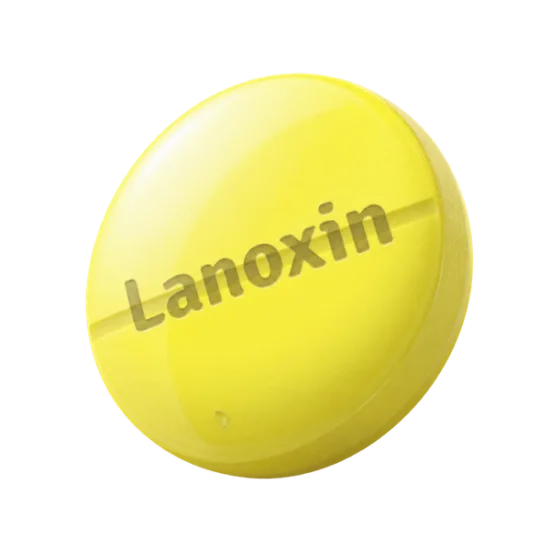
Lanoxin contains digoxin, a cardiac glycoside historically derived from digitalis plants. In clinical practice, Lanoxin and digoxin refer to the same active pharmacological entity. Digoxin is both a positive inotrope, meaning it can increase the force of heart-muscle contraction, and an antiarrhythmic medicine that can slow an excessively rapid ventricular rate.

The WHO lists digoxin as an essential medicine for defined cardiac indications. MHRA and EMA medicine-information systems use digoxin as the international non-proprietary name.

Mechanism of action

Digoxin blocks part of the sodium–potassium pump in heart cells. This raises intracellular calcium, allowing stronger contractions. It also increases vagal activity, which slows conduction through the atrioventricular node. The MHRA describes digoxin as a medicine with a narrow therapeutic range, so small changes in clearance or interactions can matter. [1]

Therapeutic indications

Lanoxin tablets may be used for chronic heart failure when symptoms persist despite foundational treatment, and for supraventricular arrhythmias such as atrial fibrillation or atrial flutter. In heart failure, digoxin can improve symptoms and reduce hospital admissions for selected people, yet it does not replace treatments that improve long-term survival.

For atrial fibrillation, its main role is ventricular rate control. The atria may still fibrillate, but slowing conduction through the atrioventricular node can prevent the ventricles from beating too quickly. This role is often useful in people with heart failure or those whose heart rate needs greater control at rest.

NICE guidance places digoxin among the rate-control options for atrial fibrillation, with choice guided by symptoms, activity level, heart failure status and coexisting conditions. [2]

Common mistakes

  • Taking a missed tablet together with the next scheduled tablet.
  • Treating nausea, poor appetite or colour-vision changes as unrelated symptoms.
  • Continuing the usual regimen through significant vomiting, diarrhoea or dehydration without seeking advice.
  • Starting an antibiotic, antiarrhythmic medicine or calcium-channel blocker without checking for interactions.
  • Assuming a normal pulse one day means kidney function and digoxin exposure are unchanged.
  • Stopping Lanoxin abruptly after feeling better, without an agreed replacement plan for rate control or heart failure.
When blood sampling for digoxin is arranged, record the time of the last dose. The interval between dosing and sampling affects how the result is interpreted.

Reasons not to use it

Lanoxin is not for you if you have a documented allergy to digoxin or another digitalis glycoside, ventricular fibrillation, or a second-degree or complete atrioventricular block without a functioning pacemaker.

Extra surveillance is needed for several situations:

  • Wolff–Parkinson–White syndrome with atrial fibrillation, where digoxin may accelerate conduction through an accessory pathway;
  • impaired renal clearance, including acute kidney injury;
  • sick sinus syndrome or an existing slow heart rate;
  • recent myocardial infarction with unstable rhythm;
  • low potassium or magnesium, or raised calcium;
  • untreated thyroid disease, since thyroid status can alter digoxin requirements.

Pregnancy and breastfeeding decisions need specialist review because the clinical indication, maternal rhythm and monitoring requirements determine whether digoxin is appropriate. Sudden changes in kidney function deserve the same attention as a dose change.

When this is not for you

Do not use Lanoxin if you have been told that you are allergic to digoxin or another digitalis medicine, or if you have certain serious rhythm or conduction problems without a functioning pacemaker. Seek specialist advice before treatment if you have kidney problems, a slow or irregular heartbeat, Wolff–Parkinson–White syndrome, thyroid disease, abnormal potassium, magnesium or calcium levels, or are pregnant or breastfeeding.

Unwanted effects

Lanoxin can cause nausea, vomiting, diarrhoea, reduced appetite, dizziness, headache, fatigue and visual disturbance. Blurred vision, altered colour perception or yellow-tinged vision are well-known signs that warrant urgent clinical assessment, especially when paired with nausea or a slow, irregular pulse.

Gastrointestinal symptoms can appear before more dangerous toxicity develops. They should not be dismissed as a minor stomach upset when they occur alongside new weakness, confusion, palpitations or changes in vision. The FDA prescribing information also lists cardiac rhythm disturbances among clinically significant adverse effects. [3]

Common tolerability issues include:

  • nausea or loss of appetite;
  • vomiting or diarrhoea;
  • dizziness, tiredness or confusion;
  • blurred, yellowish or altered colour vision;
  • slow pulse, skipped beats or palpitations.
A pulse that feels newly slow, irregular or associated with faintness needs prompt assessment. Do not use an extra Lanoxin tablet to treat palpitations.

Side effects can reflect excessive exposure, but they can also arise from an interaction or an electrolyte disturbance. A normal-looking tablet routine does not rule out a problem.

Comparison

Rate-control approaches

Approach Main role Main limitation
Digoxin Slows atrioventricular-node conduction; useful for resting rate control and some people with heart failure Less reliable for rate control during exertion
Beta-blocker Reduces heart rate and sympathetic stimulation May worsen fatigue, low blood pressure or some breathing conditions
Rate-limiting calcium-channel blocker Controls ventricular rate in suitable people without certain forms of heart failure Not suitable for every heart-failure pattern

Doctors do not select treatment only by the ECG diagnosis. Resting pulse, exercise tolerance, blood pressure, left-ventricular function and renal function shape the choice. Combining rate-slowing medicines can be appropriate, yet it also raises the risk of excessive bradycardia or conduction block.

What doctors say

Cardiology teams usually view Lanoxin as a precision medicine rather than a routine tablet for every fast pulse. Its value is clearest when the treatment goal is defined: better resting rate control, fewer heart-failure symptoms, or support where other options are limited by low blood pressure or reduced ventricular function.

In practice, doctors often observe that people feel better when the dose is stable and contributing factors are controlled. An irregular heartbeat plus dehydration, a new antibiotic or worsening renal function can change the picture quickly. The aim is not the highest possible digoxin level; it is the lowest exposure that achieves the intended clinical effect without adverse effects.

Comparison

Comparison table: Heart Failure

What customers often ask

How long can Lanoxin treatment last, and is long-term use acceptable?

Lanoxin may be used long term when it continues to control atrial fibrillation rate or supports symptom management in heart failure. Duration is determined by the ongoing clinical need, kidney function, pulse, ECG findings and tolerability rather than by a fixed course length. NICE guidance for atrial fibrillation, published in 2021, supports continued rate-control treatment when it remains clinically appropriate. Treatment reviews become more frequent after illness, dehydration or a medicine change. A clinician may reassess the dose, kidney function and heart rhythm during these reviews.

Can Lanoxin tablets be split, crushed or chewed?

Lanoxin tablets should be swallowed whole unless a prescriber has specifically instructed otherwise. Altering a tablet can create dosing inaccuracies, which matters more with digoxin than with many medicines because the therapeutic margin is narrow. The MHRA product information updated in 2024 describes digoxin tablet treatment as individually titrated, so tablet manipulation should not be used to improvise a dose. A different strength or a tailored regimen is safer than estimating portions.

Can Lanoxin be taken with food or on an empty stomach?

Lanoxin can generally be taken with or without food, provided the timing is consistent each day. High-fibre meals can reduce digoxin absorption in some people, so taking it at a similar time in relation to meals avoids unnecessary variation. The British National Formulary’s 2025 digoxin monograph advises attention to administration consistency and interaction risks. If nausea occurs, taking the scheduled dose with a light meal may be more comfortable unless a prescriber has advised a different plan.

What happens if Lanoxin is stopped, and does it need tapering?

Digoxin does not usually require tapering for withdrawal effects in the way some neurological or psychiatric medicines do. Stopping it can still allow a rapid ventricular rate or heart-failure symptoms to return, especially when it has been providing meaningful rate control. The FDA’s 2022 prescribing information advises that treatment changes should account for the underlying cardiac condition and ongoing monitoring needs. A planned switch or adjustment is safer than stopping after a few good days.

Can Lanoxin cause yellow vision?

Yes. Yellow or altered colour vision is a recognised sign associated with digoxin toxicity, sometimes called xanthopsia. It can occur with blurred vision, nausea, confusion, dizziness, palpitations or a slow pulse, though symptoms vary between people. The WHO Model List of Essential Medicines, published in 2023, includes digoxin within a category that requires careful clinical monitoring because excessive exposure can be dangerous. New visual disturbance during Lanoxin treatment needs urgent assessment.

Do you offer anonymous delivery?

Your order will be securely packed and shipped within 24 hours. This is exactly what your package will look like (images of an actual item sent). It has the size and look of a regular private letter (24x11x0.7 cm) and its contents cannot be seen.

How Buyers Rate Lanoxin

4.4
Based on 4 reviews
Luke S., 47
Milton Keynes
Four months
Verified
Rating: 5 out of 5

My resting pulse settled after the first few weeks and I stopped waking with the same pounding heartbeat. I had mild nausea early on, which passed after my treatment plan was reviewed. The regular blood tests felt tedious but made sense.

10 Oct 2026
Craig, 68
Bath
Six months
Verified
Rating: 4 out of 5

It helped with breathlessness around the house, though I still needed my other heart medicines. I had one episode of diarrhoea during a stomach bug and was told to get assessed because of the digoxin. That was a useful warning.

23 Oct 2026
Christopher Z., 58
Bournemouth
Three months
Verified
Rating: 5 out of 5

My atrial fibrillation rate was less erratic at rest. I noticed that missing sleep and getting dehydrated made me feel worse, so I became much more careful about fluids and reporting new medicines.

31 Oct 2026
Ben, 62
Swansea
Five months
Verified
Rating: 3.5 out of 5

The tablets helped my pulse, but I developed dizziness after another medicine was added. The dose was adjusted after tests and the dizziness eased. I learned not to assume every new symptom was separate from my heart treatment.

8 Nov 2026

Sources

  1. MHRA (2024). Digoxin tablets: Summary of Product Characteristics.
  2. NICE (2021). Atrial fibrillation: diagnosis and management (NG196).
  3. FDA (2022). LANOXIN (digoxin) tablets, for oral use: Prescribing Information.
Get our free app Shop faster and track your orders 3.9 · 425 reviews Install