I had low bone density after menopause and wanted something I could take once a day. I set a reminder beside the kettle and did not miss many doses. The first few weeks brought more hot flushes, then they settled.
Evista
Evista contains raloxifene hydrochloride and is used for the prevention and treatment of postmenopausal osteoporosis. It helps maintain bone strength and reduce the risk of vertebral fractures through selective oestrogen-receptor activity, with the dose decided individually according to age, other medicines and health conditions.
Overview
Evista is supplied as film-coated tablets containing raloxifene hydrochloride. Raloxifene belongs to the selective oestrogen receptor modulator, or SERM, class. A SERM can act like oestrogen in one tissue while blocking oestrogen-like stimulation in another. The dose is decided individually, taking age, other medicines and health conditions into account.
Directions for use
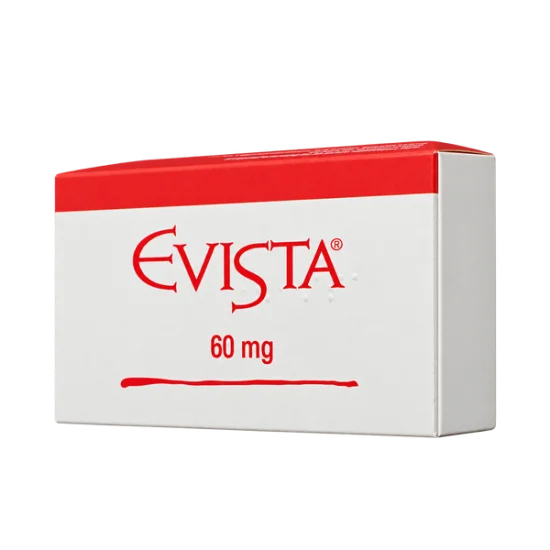
- Dose: Take the dose decided individually according to age, other medicines and health conditions. Evista is supplied as 60 mg film-coated tablets.
- Frequency: Use it at the frequency prescribed for you; the available product information does not specify a frequency.
- Timing: The available product information does not specify whether to take it before or after meals or at a particular time of day.
- Duration: Use it for the period decided for prevention or treatment of postmenopausal osteoporosis.
- Route: Swallow the film-coated tablet by mouth.
Formulation
Evista is supplied as film-coated tablets containing raloxifene hydrochloride. Raloxifene belongs to the selective oestrogen receptor modulator, or SERM, class. A SERM can act like oestrogen in one tissue while blocking oestrogen-like stimulation in another.
Active ingredient profile
Raloxifene hydrochloride is the active pharmaceutical ingredient in Evista. The tablet is taken orally once daily. The dose is decided individually, taking age, other medicines and health conditions into account.
The medicine acts on oestrogen receptors, which are protein switches present in bone, breast tissue, the uterus and other organs. Its selective pattern explains why Evista supports bone mineral density without stimulating the endometrium in the way systemic oestrogen can. The EMA product information describes raloxifene as a SERM for prevention and treatment of osteoporosis in postmenopausal women. [1]
Mechanism of action
Raloxifene binds to oestrogen receptors and changes receptor signalling in a tissue-specific way. In bone, it has oestrogen-agonist activity, meaning it helps reduce bone resorption. Osteoclasts are the cells that break down old bone; slowing excessive resorption helps retain bone mineral density.
The mechanism has another practical effect: Evista can improve some lipid measurements, yet it should not be used as a treatment for high cholesterol or cardiovascular disease. It does not relieve menopausal hot flushes and may make them more noticeable in some women.
Therapeutic indications
Evista is used for the prevention and treatment of postmenopausal osteoporosis. Prevention means maintaining bone density before a fragility fracture occurs. Treatment means reducing further loss of bone mass when osteoporosis has already been identified.
Its strongest fracture evidence concerns the spine. Raloxifene reduces the risk of vertebral fractures, including fractures that may occur after a minor fall or routine movement in people with fragile bones. It has not shown the same level of protection against hip fractures as therapies chosen specifically for hip-fracture prevention.
Bone tissue constantly remodels itself. After menopause, lower oestrogen exposure speeds up bone breakdown, and bone formation may not keep pace. Evista slows this imbalance in bone, helping preserve mineral density over time.
- It is intended for osteoporosis after menopause.
- It supports prevention in women with reduced bone density.
- It is used in established postmenopausal osteoporosis.
- It is not a fast pain-relief treatment for an existing fracture.
- Calcium and vitamin D intake may still need attention where dietary intake is low.
NICE guidance on osteoporosis assessment recognises that fracture risk depends on more than a bone-density result; age, prior fragility fracture, family history, smoking, body weight and long-term corticosteroid exposure can alter risk substantially. [2]
Common mistakes
Stopping Evista because there is no immediate change is a frequent mistake. Osteoporosis treatment aims to lower future fracture risk, so benefit develops through consistent use rather than day-to-day symptom relief.
Another mistake is overlooking temporary immobility. A planned operation, a leg in plaster, acute illness requiring bed rest, or a long period without walking can change the clot-risk calculation. The prescriber needs to know before these events where possible.
Some patients also assume that a normal calcium intake makes treatment unnecessary. Calcium supports bone mineralisation, while raloxifene changes bone turnover through a different mechanism. Both may have a role.
Do not double a dose after forgetting a tablet. Taking it when remembered on the same day is usually appropriate unless the next dose is close.
Reasons not to use it
Evista must also be avoided in the following situations:
- Pregnancy or the possibility of becoming pregnant.
- Breastfeeding.
- Active or previous venous thromboembolic disease.
- Liver impairment, including cholestasis.
- Severe renal impairment.
- Unexplained uterine bleeding.
- Signs or symptoms suggesting endometrial cancer before assessment.
Women with a history of stroke, transient ischaemic attack, atrial fibrillation, high blood pressure or other major cardiovascular risk factors need an individual assessment. Raloxifene does not prevent coronary heart disease and may increase the risk of death from stroke in selected women with established coronary disease or major coronary risk.
Oral anion-exchange resins, such as cholestyramine, substantially reduce the absorption of raloxifene and should not be taken together. Systemic oestrogen therapy should not be combined with Evista because concurrent use has not been established and may undermine the intended selective approach.
When this is not for you
This medicine is not for you if you have, or have had, venous thromboembolism. That includes deep-vein thrombosis, pulmonary embolism and retinal-vein thrombosis.
Evista is not for pregnancy. It is also unsuitable during breastfeeding.
Evista does not cause uterine bleeding as an expected oestrogenic effect. Any new vaginal bleeding after menopause still requires prompt medical assessment.
Unwanted effects
Hot flushes and leg cramps are among the more common effects reported with raloxifene. Peripheral oedema, flu-like symptoms, sweating, headache and gastrointestinal upset can also occur. These effects are often mild, though persistent symptoms deserve clinical review because another cause may be present.
The serious risk is venous thromboembolism. This includes deep-vein thrombosis in a leg, pulmonary embolism in the lungs and retinal-vein thrombosis affecting vision. Seek urgent medical help for one-sided leg swelling or pain, sudden chest pain, unexplained shortness of breath, coughing blood, or sudden visual disturbance.
Reduced mobility raises clot risk. Surgery, prolonged bed rest and long periods of immobility need advance planning with the prescriber managing Evista. The medicine is usually stopped at least three days before planned immobilisation and restarted only when the person is fully mobile.
The FDA prescribing information identifies venous thromboembolism as the most clinically significant safety concern and lists hot flushes and leg cramps among common adverse reactions. [3]

Comparison
Doctors often favour raloxifene where spinal bone protection and breast-risk reduction are relevant clinical priorities. Bisphosphonates or denosumab may be preferred when hip-fracture prevention is the principal concern or when fracture risk is very high.
| Approach | Main action | Key limitation |
|---|---|---|
| Raloxifene | Selective oestrogen-receptor modulation in bone | Raises venous-thrombosis risk |
| Bisphosphonate treatment | Reduces bone resorption directly | Can irritate the upper digestive tract |
| Denosumab treatment | Inhibits RANKL-driven osteoclast activity | Requires planned ongoing dosing and discontinuation strategy |
What doctors say
In clinical practice, doctors focus on fracture pattern, clot history and future risk rather than bone-density figures alone. A woman with vertebral osteoporosis, no history of thrombosis and a need for breast-risk reduction may be a good candidate for raloxifene. Someone with a previous pulmonary embolism is not.
Weight-bearing exercise, resistance training, adequate protein, vitamin D status and fall prevention can strengthen the wider osteoporosis plan. Smoking and regular heavy alcohol intake work against bone health.
Comparison
What customers often ask
What should I do after a missed Evista dose?
Take the missed tablet when you remember, provided it is not nearly time for the next daily dose. If the next dose is close, skip the forgotten tablet and return to the usual once-daily schedule. Do not take two tablets together. The 2023 MHRA product information for raloxifene supports resuming the normal daily regimen rather than doubling a dose. If the timing is unclear, ask a pharmacist for advice.
How should Evista be stored at home and while travelling?
Keep Evista tablets in a dry place at normal room temperature and away from excessive heat or moisture. Store them where children cannot reach them. During travel, keep the tablets in their usual container within hand luggage, rather than leaving them in a very hot car or checked baggage. The WHO’s 2023 guidance on medication safety supports maintaining medicines in stable, protected conditions.
Can older adults use Evista?
Evista is commonly considered for postmenopausal women, including older adults, when its benefits fit their fracture and clot-risk profile. Age alone does not rule it out, yet reduced mobility, previous thrombosis, renal impairment and cardiovascular risk become more relevant with advancing age. The dose is not routinely adjusted solely because of age. The 2024 EMA product information identifies thromboembolic history and immobility as key factors in selection.
What is the best time of day to take Evista?
Evista can be taken at any time of day, with or without food. The best time is one that supports reliable daily use, since a stable habit reduces missed doses. Morning works well for people who take regular daily tablets; evening may suit those with a quieter routine then. The 2023 MHRA guidance for raloxifene confirms that meal timing does not determine its use.
Can I drink alcohol while using Evista?
Alcohol does not have a specific direct interaction with raloxifene listed in the 2023 FDA prescribing information. Regular heavy alcohol use can weaken bone and increase falls, which works against the purpose of osteoporosis treatment. Alcohol can also worsen hot flushes for some women. Keeping intake low supports both bone health and balance.
Can Evista be used under 18?
No. Evista is intended for postmenopausal women and has no role in children or adolescents. Raloxifene has not been established as a treatment for low bone density in people under 18. The 2024 EMA product information limits its therapeutic use to postmenopausal osteoporosis.
Can Evista tablets be split, crushed or chewed?
Evista should be swallowed whole with water. Splitting, crushing or chewing is not the intended administration method for these film-coated tablets. Keeping the tablet intact also makes it easier to take a consistent full dose. The 2023 FDA prescribing information describes oral tablet administration as once daily.
Do you offer anonymous delivery?
Your order will be securely packed and shipped within 24 hours. This is exactly what your package will look like (images of an actual item sent). It has the size and look of a regular private letter (24x11x0.7 cm) and its contents cannot be seen.
Patient population and target demographic
Evista is for postmenopausal women. Menopause matters because raloxifene’s benefit-risk profile was studied and authorised for this population rather than for women who are still having menstrual periods.
For some postmenopausal women at increased risk of invasive breast cancer, raloxifene may also reduce the likelihood of oestrogen-receptor-positive invasive breast cancer. It does not treat breast cancer and is not used to treat a breast tumour that is already present.
A clinician may consider Evista when vertebral fracture prevention is a priority and when avoiding endometrial stimulation is relevant. The risk of venous thromboembolism remains a major part of that decision.
How Buyers Rate Evista
My main reason was spinal osteoporosis found after a scan. I had two episodes of calf cramp at night in the first month, which was irritating, but no swelling or pain afterwards. Taking it after breakfast suited me.
I was not suitable to continue because my earlier clot history came up during the review. It was disappointing, though I was glad it was picked up before I had taken it for long.
I was still having periods, so it was not the right treatment for me. The appointment clarified why postmenopausal status changes the choice of bone medicine.
The tablet itself was easy to fit into my routine. I did not feel different, which my doctor said was expected, but I kept up walking and strength exercises as well. My only complaint was occasional hot flushes.
Sources
- European Medicines Agency (2024). Evista: EPAR product information.
- National Institute for Health and Care Excellence (2018). Osteoporosis: assessing the risk of fragility fracture.
- U.S. Food and Drug Administration (2023). EVISTA prescribing information.