Skip to content
Fosamax

Fosamax

Quality products
24/7 Support
Fast delivery
Delivery from 4 days
Active ingredient Alendronic acid

Free delivery on orders from £ 166.00, free express delivery from £ 249.00

Osteoporosis weakens bone and raises the risk of fractures, especially after menopause and with advancing age. Fosamax contains alendronate sodium, a bisphosphonate that slows bone breakdown and supports stronger bone structure. It is used mainly for osteoporosis in postmenopausal women and men.

Overview

Fosamax tablets contain alendronate sodium, also called alendronic acid in its active form. Dosing differs between strengths and between users, so there is no single amount that suits everyone. Alendronate sodium belongs to the amino-bisphosphonate class.

Directions for use

Fosamax is supplied as tablets. Dosing differs between strengths and between users, so there is no single amount that suits everyone.

Take the tablet as follows:

  • Take one tablet after getting up for the day.
  • Use a full glass of plain tap water.
  • Swallow it whole.
  • Take it before breakfast, coffee, tea, juice, calcium, or other oral medicines.
  • Remain sitting or standing for at least 30 minutes.
  • Wait at least 30 minutes before eating, drinking anything other than plain water, or taking other oral medicines.

Do not chew, suck, or crush the tablet. A tablet that stays in contact with the mouth or oesophagus can cause local irritation.

If a dose is missed, take it on the morning after remembering. Do not take two tablets on the same day. Resume the regular schedule on the chosen day afterwards. This approach reflects the administration instructions in official alendronate prescribing information [2].

Do not take Fosamax with mineral water, even if the water seems clear. Calcium and other minerals can reduce alendronate absorption.

Calcium and vitamin D support

Calcium or vitamin D supplements should not be swallowed at the same time as Fosamax. They can be taken later in the day when prescribed or recommended. The same separation applies to antacids, iron, magnesium, and multivitamin products containing minerals.

A practical schedule is Fosamax first thing in the morning, followed later by calcium or a mineral supplement. Keeping these products apart helps protect alendronate absorption.

Formulation

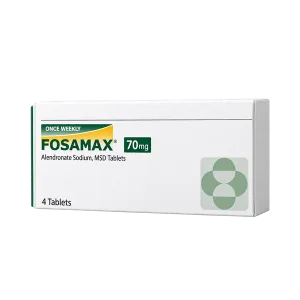
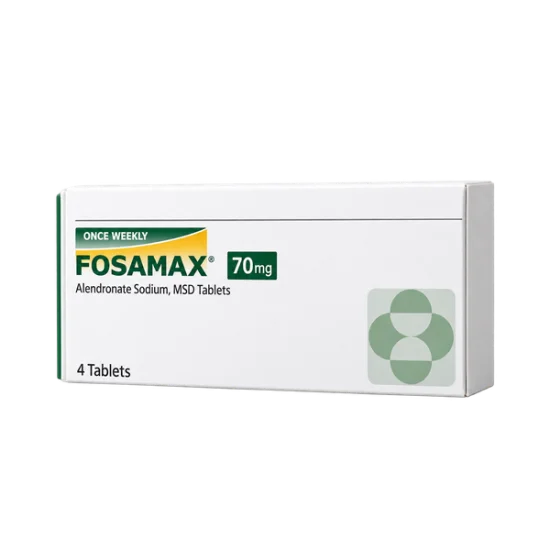
Fosamax tablets contain alendronate sodium, also called alendronic acid in its active form. Dosing differs between strengths and between users, so there is no single amount that suits everyone. The pack contains four tablets.

Mechanism of action

Alendronate sodium belongs to the amino-bisphosphonate class. It attaches to hydroxyapatite, the mineral component of bone, and becomes concentrated in areas where bone is being actively remodelled.

Osteoclasts are cells that remove old bone. When they absorb bone containing alendronate, the medicine interferes with intracellular pathways needed for osteoclast survival and activity. Bone resorption slows, while osteoblasts continue forming new bone. The balance gradually shifts towards preservation of bone mass.

This mechanism explains why Fosamax does not work like a painkiller.

Therapeutic indications

The medicine is used for:

  • Treatment of osteoporosis in postmenopausal women.
  • Treatment of osteoporosis in men.
  • Reduction of fracture risk linked to reduced bone mass.
  • Selected treatment plans for Paget’s disease of bone, when a clinician chooses an appropriate alendronate regimen.

Osteoporosis develops when bone resorption exceeds new bone formation. Bone becomes less dense and more fragile, even when there are no symptoms. A wrist, hip, or vertebral fracture may be the first visible sign. Bone loss can continue without pain or other early warning symptoms. Assessment of fracture risk helps determine whether pharmacological treatment is appropriate.

Target patient populations

Postmenopausal women often experience faster bone loss because reduced oestrogen activity increases osteoclast activity. Men can also develop osteoporosis, especially with older age, low testosterone, long-term corticosteroid use, smoking, heavy alcohol intake, or conditions affecting calcium and vitamin D metabolism.

Fosamax is not a general painkiller. It does not provide immediate relief for back or joint pain. Its purpose is to alter bone turnover over time and reduce the likelihood of fragility fractures. The clinical evidence for alendronate in osteoporosis is summarised in the Cochrane review of bisphosphonate therapy in postmenopausal women [1].

Common mistakes

Several practical errors reduce the benefit of alendronate:

  • Taking the tablet with coffee, tea, juice, or mineral water.
  • Eating breakfast immediately after swallowing it.
  • Taking calcium, iron, magnesium, or an antacid at the same time.
  • Lying down during the first 30 minutes.
  • Chewing or sucking the tablet.
  • Taking two tablets after missing a weekly dose.
  • Stopping after a few weeks because there is no immediate change in pain.
  • Ignoring new swallowing difficulty or persistent heartburn.
  • Failing to mention Fosamax before dental surgery.
  • Treating the medicine as a replacement for calcium and vitamin D correction.

One detail patients often miss is the difference between a missed weekly dose and a late dose. Taking the forgotten tablet the next morning is usually preferable to doubling later in the week, but two tablets should never be taken on one day.

Reasons not to use it

Fosamax is not suitable for you if you:

  • Have low blood calcium that has not been corrected.
  • Cannot sit or stand upright for at least 30 minutes.
  • Have an oesophageal disorder that delays emptying, such as a significant stricture or achalasia.
  • Have had an allergic reaction to alendronate or any tablet component.
  • Have severe kidney impairment where the prescriber considers alendronate unsuitable.
  • Are unable to follow the fasting and water instructions.

Alendronate interacts mainly through absorption rather than liver enzyme metabolism. Calcium, antacids, iron, magnesium, dairy products, coffee, tea, juice, and mineral water can reduce the amount absorbed. Separate these products from Fosamax according to the prescribing instructions.

When this is not for you

Fosamax is not suitable for you if you:

  • Have low blood calcium that has not been corrected.
  • Cannot sit or stand upright for at least 30 minutes.
  • Have an oesophageal disorder that delays emptying, such as a significant stricture or achalasia.
  • Have had an allergic reaction to alendronate or any tablet component.
  • Have severe kidney impairment where the prescriber considers alendronate unsuitable.
  • Are unable to follow the fasting and water instructions.

Pregnancy and breastfeeding require a separate assessment because Fosamax is designed for osteoporosis treatment in adults who meet specific clinical criteria. Dental surgery, severe reflux, swallowing difficulty, and previous atypical femoral fracture should be discussed during treatment planning.

Unwanted effects

The most relevant early adverse effects are gastrointestinal. Some people experience indigestion, abdominal discomfort, nausea, constipation, diarrhoea, or musculoskeletal pain. Correct administration lowers the chance of oesophageal irritation but does not remove it completely.

Stop taking the tablet and seek prompt medical assessment for:

  • Pain or difficulty when swallowing.
  • New or worsening heartburn.
  • Chest pain after swallowing the dose.
  • Black stools or vomiting blood.
  • Facial swelling, wheezing, widespread rash, or breathing difficulty.
  • Severe bone, joint, or muscle pain.

Rare complications include oesophageal ulceration, low calcium levels, atypical femoral fractures, and osteonecrosis of the jaw. Jaw osteonecrosis is uncommon, but risk rises with invasive dental procedures, cancer treatment, corticosteroids, poor oral hygiene, and prolonged antiresorptive exposure.

A dull ache in the thigh or groin that persists deserves attention because atypical femoral fractures can begin with prodromal pain before a complete fracture develops. Do not ignore persistent symptoms simply because the medicine is taken only once a week.

Tell the dentist that you use an oral bisphosphonate before an extraction or implant procedure. Good oral hygiene and prompt treatment of dental infection are practical ways to reduce avoidable complications.

Comparison

Treatment choice depends on fracture risk, kidney function, swallowing ability, gastrointestinal health, adherence, and previous therapy. The active ingredients below represent pharmacological categories rather than specific commercial products.

Treatment approach Main characteristics
Alendronate Oral bisphosphonate; weekly tablet; reduces osteoclast-mediated bone resorption
Other antiresorptive therapy May use a different bisphosphonate or denosumab; oral or injectable schedules vary
Bone-forming therapy Includes anabolic agents such as teriparatide or abaloparatide; reserved for selected high-risk patients

Alendronate is often considered when a person can follow the morning administration rules and has no significant oesophageal problem. Another bisphosphonate may suit someone who cannot manage a weekly tablet, while an injectable option may be selected when oral treatment is unsuitable.

Denosumab works through a different antiresorptive pathway and is given by injection. It requires reliable follow-up because stopping treatment without a planned transition can lead to rapid bone turnover. Zoledronic acid is an intravenous bisphosphonate administered at longer intervals, which can help adherence but requires infusion-based care.

Teriparatide and abaloparatide stimulate bone formation rather than mainly suppressing resorption. They may be considered for people at very high fracture risk, including those with multiple vertebral fractures. NICE guidance places treatment choice within an assessment of fracture probability, clinical risk factors, and bone mineral density [3].

What doctors say

In clinical practice, the first issue doctors often address is not the weekly schedule itself but the administration technique. A tablet taken with coffee or swallowed before lying down may provide less treatment benefit and cause preventable oesophageal irritation.

Clinicians also look for reasons behind bone loss. Long-term corticosteroids, untreated thyroid disease, low vitamin D, early menopause, low body weight, smoking, excess alcohol, and previous fragility fractures can change the treatment plan.

A doctor may review Fosamax when:

  • A new fracture occurs during treatment.
  • Severe reflux or swallowing pain develops.
  • Kidney function changes.
  • A dental procedure becomes necessary.
  • Persistent thigh or groin pain appears.
  • Treatment has continued for several years and fracture risk needs reassessment.

Patient adherence is easier when the weekly dose is linked to a stable morning routine. The key clinical trade-off is simple: Fosamax offers convenient weekly dosing, but it demands stricter administration than medicines taken with breakfast.

Comparison

Comparison table: Osteoporosis

What customers often ask

Can Fosamax be taken with food?

Fosamax should be taken on an empty stomach with plain water, because food and drinks other than water reduce alendronate absorption. The FDA prescribing information reviewed in 2024 also specifies that the tablet should be taken before the first food or drink of the day. Breakfast can follow after the required waiting period, along with other oral medicines that need to be separated from alendronate.

Which concrete condition rules out Fosamax?

A significant oesophageal disorder that delays passage or emptying can rule out Fosamax because the tablet may remain in contact with the oesophageal lining. The MHRA product information available in 2025 also lists inability to remain upright for at least 30 minutes as a contraindication. Uncorrected hypocalcaemia and previous hypersensitivity to alendronate are additional reasons treatment may be unsuitable.

How long does a Fosamax course last, and is long-term use acceptable?

Treatment duration is individual and depends on fracture risk, bone density, age, and previous fractures. NICE guidance reviewed in 2022 supports periodic reassessment rather than an automatic lifelong schedule for every patient. Long-term use can be appropriate for people who remain at high fracture risk, while a planned treatment break may be considered for others after a clinical review.

Can people under 18 use Fosamax?

Fosamax is not routinely used for ordinary osteoporosis in children or adolescents. The EMA paediatric information reviewed in 2023 does not establish routine treatment for this age group, and growing bones require a different diagnostic approach. Specialist paediatric teams may use bone-active medicines in selected disorders, but that decision requires specialist supervision.

Can Fosamax cause heartburn?

Heartburn, indigestion, and irritation of the oesophagus are recognised adverse effects of oral alendronate. The FDA information reviewed in 2024 links the risk with incorrect administration, including insufficient water or lying down soon after the dose. New or worsening heartburn, pain on swallowing, or difficulty swallowing requires prompt medical assessment before another tablet is taken.

Does Fosamax affect driving, concentration, or machinery work?

Fosamax is not expected to impair concentration or coordination directly. The EMA product information reviewed in 2023 reports no routine driving restriction, but dizziness, severe pain, visual symptoms, or an allergic reaction could make driving unsafe. Anyone who develops such symptoms should avoid machinery until the symptoms have been assessed.

What is the best time of day to take Fosamax?

The best time is immediately after getting up, before breakfast and before other oral medicines. The MHRA information reviewed in 2025 specifies plain water and an upright position for at least 30 minutes. Morning use makes the fasting interval easier to complete and reduces the chance of taking the tablet after food.

Do you offer anonymous delivery?

Your order will be securely packed and shipped within 24 hours. This is exactly what your package will look like (images of an actual item sent). It has the size and look of a regular private letter (24x11x0.7 cm) and its contents cannot be seen.

How Buyers Rate Fosamax

3.6
Based on 4 reviews
Gareth, 42
Birmingham
Three months
Verified
Rating: 5 out of 5

I took it on Monday mornings before breakfast and kept the tablet beside a glass of water. I had mild muscle aching during the first few weeks, but it settled. The routine was easier than remembering a daily tablet.

3 Nov 2026
Zoe, 32
Bournemouth
Six weeks
Verified
Rating: 3.5 out of 5

The first dose caused heartburn because I lay down again after taking it. I changed the routine and stayed upright for half an hour. The symptoms did not return, although the morning rule was more demanding than I expected.

11 Nov 2026
Emily, 52
Oxford
Nine months
Verified
Rating: 3.5 out of 5

I used Fosamax alongside vitamin D after a low bone-density result. I did not feel a dramatic difference, which was frustrating, but a later review showed that treatment was being continued as planned. Remembering the weekly day helped.

19 Oct 2026
John, 64
Edinburgh
Four months
Verified
Rating: 2.5 out of 5

I stopped after developing persistent pain when swallowing and contacted my treatment team. The symptom needed assessment, so I did not take another tablet while it was being investigated. The main lesson was not to dismiss upper digestive symptoms.

13 Oct 2026

Sources

  1. Cochrane (2017). Bisphosphonates for osteoporosis in postmenopausal women.
  2. U.S. Food and Drug Administration (2024). Fosamax (alendronate sodium) tablets prescribing information.
  3. National Institute for Health and Care Excellence (2022). Osteoporosis: assessing the risk of fragility fracture (CG146).
Get our free app Shop faster and track your orders 3.9 · 425 reviews Install