I used Finasteride daily as prescribed for seven months after noticing the crown getting thinner. The main change was less hair in the shower rather than dramatic regrowth. I had mild lower libido during the first month, which settled, and I was happier once I stopped expecting a result every week.
Finasteride
Finasteride pills are taken orally, with or without food, for adult men with male pattern baldness or benign prostatic enlargement. The medicine lowers dihydrotestosterone (DHT), a hormone that can shrink susceptible scalp follicles and contribute to progressive hair thinning.
Overview
Finasteride is a 5-alpha-reductase inhibitor used for male pattern baldness and symptoms related to benign prostatic hyperplasia. Its active ingredient is finasteride, which lowers dihydrotestosterone (DHT).
Directions for use
Administration and treatment timeline
Take Finasteride at approximately the same time each day. It may be taken with food or on an empty stomach. Swallow the pill whole with water unless a prescriber has specifically advised otherwise.
- Take the prescribed daily amount consistently.
- If a dose is missed, take the next scheduled dose at the usual time.
- Do not double doses.
- Keep treatment expectations measured in months, not days.
- Continue only under the treatment plan agreed for the reason finasteride was prescribed.
Visible changes in male pattern baldness often require three to six months of consistent treatment. A fuller assessment is usually more meaningful after a longer period because scalp hair grows in cycles. In the pivotal Finasteride Male Pattern Hair Loss Study Group trial, men using finasteride showed improvement in hair counts and investigator assessment over two years, while untreated hair loss tended to progress [2].
Formulation
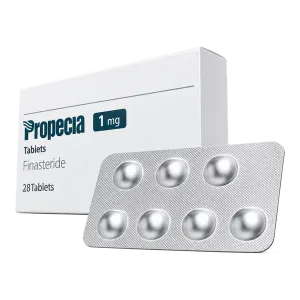
Finasteride is the active ingredient in these oral pills. It is a 5-alpha-reductase inhibitor that lowers dihydrotestosterone (DHT), a hormone involved in male pattern baldness and symptoms related to benign prostatic hyperplasia. The prescribed amount depends on the treatment goal and is agreed with a prescriber.
Mechanism of action
Hormonal pathway of dihydrotestosterone reduction
Testosterone is converted into dihydrotestosterone by the enzyme 5-alpha-reductase. Finasteride inhibits this enzyme, lowering DHT concentrations in the scalp and blood. Lower DHT exposure can slow follicular miniaturisation and support thicker-looking growth over time in men with androgenetic hair loss [1].
Hair growth is slow by nature. A follicle can take months to move from a resting phase into a visible growth phase.
A lower DHT level is useful for DHT-sensitive hair follicles, but it does not treat every cause of hair loss. Sudden patchy loss, scalp inflammation, itching, or shedding after illness needs clinical assessment because the cause may not be androgenetic alopecia.
Therapeutic indications
Finasteride is used for male pattern baldness, also called androgenetic alopecia, and for symptoms related to benign prostatic hyperplasia, an enlarged prostate. Its role differs according to the treatment goal, so the daily amount and treatment plan are agreed with a prescriber.
Male pattern baldness follows a recognisable pattern: gradual thinning at the temples, crown, or both. The hair follicles remain present, yet DHT can shorten their growth phase and progressively reduce the diameter of each hair shaft. Finasteride does not create new follicles. It helps protect follicles that are still active.
| Treatment purpose | Finasteride approach |
|---|---|
| Male pattern baldness | Daily oral treatment aimed at lowering scalp DHT |
| Benign prostatic hyperplasia | Oral treatment aimed at reducing prostate-related urinary symptoms |
The hair-loss and prostate indications should not be treated as interchangeable. A person taking finasteride for urinary symptoms may have a different clinical follow-up plan from someone using it for scalp hair loss.
Common mistakes
Finasteride works best when expectations are realistic and treatment is consistent. Several mistakes repeatedly lead to disappointment or avoidable anxiety.
- Expecting a visible new hairline within a few weeks.
- Taking pills irregularly, then judging the result from short-term shedding.
- Crushing or chewing pills to make swallowing easier.
- Doubling a missed dose.
- Assuming every episode of reduced libido is caused by finasteride without considering stress, poor sleep, alcohol, vascular health, or other medicines.
- Failing to mention finasteride before PSA testing.
- Continuing despite clear low mood, depressive symptoms, or suicidal thoughts.
Hair density can fluctuate with seasonal shedding and grooming habits. A single bad haircut can look like treatment failure.
Reasons not to use it
Finasteride is contraindicated in pregnancy and in people with a known allergy to finasteride or any ingredient in the prescribed formulation. It is not indicated for use by women or children.
- Pregnancy or the possibility of pregnancy.
- Known allergy to finasteride or any ingredient in the prescribed formulation.
- Use by women or children.
- Pregnant women and women who could become pregnant should not handle crushed or broken finasteride pills.
When this is not for you
This treatment is not for you if you are pregnant, could become pregnant, or have had an allergic reaction to finasteride. It is also not intended for women or children. Tell your prescriber about depression, suicidal thoughts, breast changes, liver disease, fertility concerns, medicines affecting liver enzymes, or planned PSA testing. Do not handle crushed or broken pills if you are pregnant or could become pregnant.
Unwanted effects
Finasteride is tolerated by many men, yet potential adverse effects deserve a direct discussion before treatment begins. Sexual effects are the issue most often raised in consultations. Mood symptoms and breast changes also require attention.
Sexual and hormonal adverse reactions
Reported sexual adverse effects include reduced libido, erectile dysfunction, reduced ejaculate volume, and difficulty with ejaculation. In clinical trials of finasteride for hair loss, these events were uncommon, though they occurred more often than with placebo in some studies. The FDA product information reports decreased libido, erectile dysfunction, and ejaculation disorders among recognised adverse reactions [3].
For some men, sexual symptoms settle during continued treatment or after stopping. Persistent symptoms have also been reported. A new problem with erection quality, libido, or ejaculation should be discussed promptly rather than ignored.
Psychiatric and rare systemic risks
Low mood, depression, and suicidal thoughts have been reported in association with finasteride. Mood changes need attention. Stop taking finasteride and seek urgent medical help if suicidal thoughts occur.
Swelling of the lips, tongue, face, or throat, breathing difficulty, and widespread rash may indicate a serious allergic reaction. These symptoms need emergency care. Breast lumps, persistent breast pain, swelling, or nipple discharge also need medical assessment without delay.
The MHRA issued a Drug Safety Update in 2024 reminding patients and prescribers about psychiatric reactions and sexual dysfunction that may persist after treatment ends. Suspected side effects can be reported through the MHRA Yellow Card scheme, which contributes to the WHO Programme for International Drug Monitoring [4].

Comparison
Finasteride works through hormonal DHT reduction. Minoxidil works differently: it is applied to the scalp and supports follicular activity through local effects that are not based on DHT suppression. Dutasteride inhibits more forms of 5-alpha-reductase than finasteride, creating stronger DHT suppression but also requiring a careful individual risk assessment.
| Option | Route and main action | Practical limitation |
|---|---|---|
| Finasteride | Oral pill; reduces DHT formation | Sexual and mood-related adverse effects can occur |
| Minoxidil | Topical scalp treatment; supports follicle activity | Requires regular scalp application and may initially increase shedding |
| Dutasteride | Oral treatment; broader 5-alpha-reductase inhibition | Hair-loss use may be outside its licensed indication and needs specialist direction |
Minoxidil can suit men who prefer a non-hormonal approach or who cannot use finasteride. Finasteride may be a stronger fit when the pattern clearly suggests DHT-driven thinning and an oral treatment is appropriate. Dutasteride is not a routine substitute for everyone; stronger DHT suppression can mean a different balance of expected benefit and adverse-effect risk.
Using finasteride and minoxidil together is sometimes considered because they act through separate mechanisms. The decision should account for scalp condition, treatment adherence, adverse-effect history, and the pattern of hair loss.
What doctors say
Doctor perspectives
In clinical practice, doctors usually frame finasteride as a long-term treatment decision rather than a quick cosmetic fix. Men who benefit most often have early-to-moderate male pattern baldness and can commit to consistent use while monitoring tolerability.
A clinician will usually ask about mood history before prescribing and will revisit sexual symptoms directly rather than waiting for the patient to volunteer them. This matters because embarrassment can delay useful treatment changes. The MHRA’s 2024 safety communication supports this cautious, active follow-up approach.
Finasteride can preserve existing hair more reliably than it recreates density in areas that have been bald for many years. That distinction prevents unrealistic expectations.
Comparison
What customers often ask
Can Finasteride pills be split, crushed, or chewed?
Finasteride pills should usually be swallowed whole with water. Crushing or chewing is not recommended unless a prescriber has explicitly instructed it, because it may expose the active substance to someone handling the fragments. This is most relevant where a pregnant woman or a woman who could become pregnant may come into contact with broken pills. The MHRA’s 2024 guidance highlights the need to discuss safety concerns and adverse effects openly .
Which concrete condition rules out Finasteride use?
Pregnancy rules out Finasteride use because exposure may harm development of a male fetus. It is also unsuitable for anyone with a known finasteride allergy. Women who are pregnant or may become pregnant should avoid handling crushed or broken pills. EMA product information from 2017 for finasteride-containing medicines includes pregnancy-related precautions because of this developmental risk.
Can Finasteride affect driving, concentration, or work with machinery?
Finasteride is not generally associated with sedation or impaired coordination, so it does not usually affect driving or machinery work. A person who develops dizziness, marked low mood, poor concentration, or any symptom affecting alertness should avoid hazardous tasks until they feel well. The MHRA’s 2024 update places psychiatric symptoms among the reactions requiring prompt attention. Individual response matters more than a general rule.
What are the pregnancy and breastfeeding considerations with Finasteride?
Finasteride is not used during pregnancy and is not indicated for women. Women who are pregnant or could become pregnant should not handle crushed or broken pills because the active substance may be absorbed through skin contact. Breastfeeding use is also inappropriate because finasteride is not intended for women. FDA prescribing information from 2022 describes the potential risk to a developing male fetus.
What happens if Finasteride is stopped, and does it need tapering?
Finasteride does not usually require gradual dose reduction. Once it is stopped, DHT levels return toward the person’s untreated state, and any hair-maintenance benefit is commonly lost over subsequent months as the natural pattern of hair loss resumes. The timing varies because hair follicles cycle slowly. The two-year clinical study by Kaufman and the Finasteride Male Pattern Hair Loss Study Group, published in 1998, supports the link between continued treatment and maintained hair outcomes. A prescriber can explain what changes to expect after stopping.
Do you offer anonymous delivery?
Your order will be securely packed and shipped within 24 hours. This is exactly what your package will look like (images of an actual item sent). It has the size and look of a regular private letter (24x11x0.7 cm) and its contents cannot be seen.
How Buyers Rate Finasteride
I took it daily as prescribed for nearly a year and my hair looked more stable in photographs. The temples did not come back much, but the top looked less see-through under office lights. I made the mistake of missing doses at weekends early on, then became more consistent.
After taking it daily as prescribed for four months, I felt my shedding had reduced and the crown was easier to style. I did notice anxiety around sexual side effects after reading about them, so I discussed it instead of guessing. For me, there was no persistent problem.
I stopped after taking it daily as prescribed for six weeks because I felt my libido had changed and it was bothering me. The symptom improved after stopping, but I wish I had raised it at the first follow-up rather than trying to push through.
My treatment was for prostate symptoms rather than hair loss, and I used it daily as prescribed for several months. I also noticed less scalp shedding over time. The urinary improvement was gradual. I made sure to mention Finasteride before my PSA blood test, which my clinician said was useful.
Sources
- European Medicines Agency (2017). Summary of Product Characteristics (SmPC) — Finasteride-containing medicinal products.
- Kaufman KD, Olsen EA, Whiting D, et al. (1998). Finasteride in the treatment of men with androgenetic alopecia. Finasteride Male Pattern Hair Loss Study Group.
- U.S. Food and Drug Administration (2022). Propecia (finasteride) prescribing information.
- Medicines and Healthcare products Regulatory Agency (2024). Finasteride: reminder of the risk of psychiatric side effects and of sexual side effects which may persist after discontinuation of treatment.