Skip to content
Propecia

Propecia

Quality products
24/7 Support
Fast delivery
Delivery from 4 days
Active ingredient Finasteride

Free delivery on orders from £ 166.00, free express delivery from £ 249.00

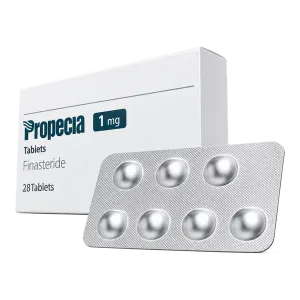
Propecia is a prescription oral tablet for adult men with androgenetic alopecia, also called male pattern hair loss. It lowers scalp DHT to help slow hair thinning, and the dose is decided individually according to age, other medicines and health conditions.

Overview

Finasteride belongs to the 5-alpha-reductase type II inhibitor class. It is prescribed for male pattern hair loss, also called androgenetic alopecia, in adult men.

Directions for use

The usual regimen for male pattern hair loss is one Propecia tablet taken orally once daily. The dose is decided individually, taking age, other medicines and health conditions into account.

  • Swallow the tablet with water.
  • Take it at approximately the same time each day.
  • It may be taken with or without food.
  • Do not take more than one tablet in a day.
  • Continue treatment regularly because interrupted use reduces the chance of maintaining benefit.
  • If a dose is missed, take the next scheduled dose at the usual time. Do not double the dose.

The tablet should be swallowed whole. Crushing or chewing is inappropriate because it creates avoidable contact with finasteride powder.

A missed tablet does not require a replacement dose. Taking two tablets the next day will not accelerate hair growth and may increase exposure without improving the result.

The medicine is intended for adult men. Treatment decisions should account for age, concurrent medicines, liver health, urinary symptoms, prostate assessment, and the pattern of hair loss.

Formulation

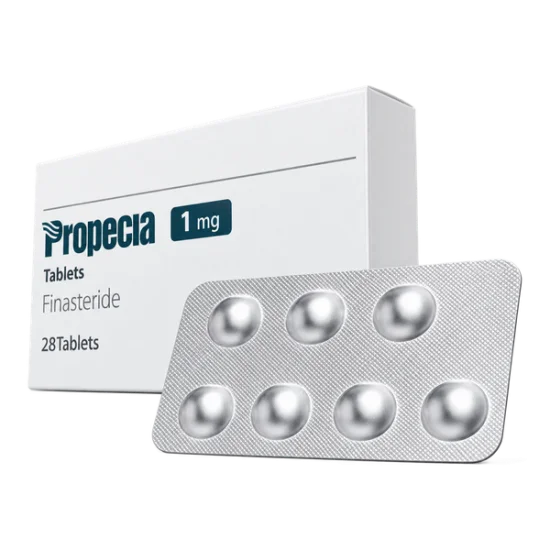
Propecia is a prescription oral tablet containing finasteride, a 5-alpha-reductase type II inhibitor used for male pattern hair loss in adult men.

Mechanism of action

Finasteride inhibits 5-alpha-reductase type II, the enzyme that converts testosterone into dihydrotestosterone, or DHT. By reducing this conversion, it lowers scalp DHT and can slow miniaturisation of susceptible hair follicles, helping preserve existing hair density. The treatment does not alter the inherited follicle sensitivity to androgens, so its benefit depends on continued treatment [1].

Therapeutic indications

Androgenetic alopecia is the medical term for male pattern hair loss. It develops through a combination of inherited follicle sensitivity and androgen activity. The pattern commonly begins with recession at the temples, thinning at the crown, or gradual reduction in density across the top of the scalp.

The sides and back often remain denser because their follicles are less sensitive to DHT. The process can progress slowly over many years, although some men notice rapid changes over a shorter period. Family history increases the likelihood, but the absence of affected relatives does not exclude the condition. The American Academy of Dermatology and the British Association of Dermatologists describe inherited follicle sensitivity as a common feature of androgenetic alopecia.

Propecia is intended for men whose hair loss follows this androgen-related pattern. Sudden patchy loss, scalp inflammation, scaling, scarring, or hair loss involving the eyebrows requires a different clinical assessment because those features may indicate another disorder.

Hair follicles affected by androgenetic alopecia become progressively smaller. A thick terminal hair may become a fine, short vellus-like hair. Finasteride can reduce the DHT pressure contributing to this process, yet it cannot guarantee restoration of hair that has been absent for many years.

Common mistakes

Several practical mistakes can make Propecia seem ineffective or create avoidable risk.

  • Stopping after four to eight weeks because no regrowth is visible
  • Taking extra tablets after a missed dose
  • Using the 1 mg hair-loss dose as if it were a treatment for prostate symptoms
  • Forgetting to mention finasteride before a PSA blood test
  • Crushing tablets or allowing a pregnant woman to handle broken tablets
  • Judging progress from daily shedding instead of longer-term density
  • Continuing despite new depression, suicidal thoughts, breast changes, or persistent sexual problems without seeking review
  • Assuming that treatment will restore a teenage hairline
  • Starting treatment without confirming that the hair-loss pattern is androgenetic

Hair growth is slow. Daily shedding also varies with washing frequency, season, hairstyles, and stress. A short period of increased hair fall does not provide enough information to judge the full response.

Reasons not to use it

Propecia is not for women or children. Finasteride is contraindicated in women who are pregnant or may become pregnant because exposure to finasteride can affect development of the external genitalia in a male fetus.

  • Women who are pregnant or may become pregnant
  • Children and adolescents
  • Men with a previous serious allergic reaction to finasteride or an excipient
  • Men whose hair loss has not been assessed and may have a non-androgen-related cause
  • Men who develop severe mood symptoms while taking finasteride, pending urgent clinical review

Finasteride is processed by the liver, so significant liver disease requires careful prescribing.

When this is not for you

Propecia is NOT for you if:

  • Women who are pregnant or may become pregnant
  • Children and adolescents
  • Men with a previous serious allergic reaction to finasteride or an excipient
  • Men whose hair loss has not been assessed and may have a non-androgen-related cause
  • Men who develop severe mood symptoms while taking finasteride, pending urgent clinical review

A history of depression, suicidal thoughts, sexual dysfunction, infertility concerns, or breast symptoms should be discussed before treatment begins.

The prescriber also needs a complete list of medicines and supplements. Finasteride may be used with many medicines, but individual assessment remains necessary when other treatments affect sexual function, mood, liver metabolism, or prostate evaluation.

Unwanted effects

The most discussed adverse effects involve sexual function. Clinical trials reported decreased libido, erectile dysfunction, and reduced ejaculate volume in a small proportion of men taking finasteride. In the first-year trials described in the US prescribing information, sexual adverse reactions were reported in 3.8% of men receiving finasteride and 2.1% receiving placebo [2].

Possible adverse effects include:

  • Reduced sexual desire
  • Difficulty achieving or maintaining an erection
  • Reduced volume of ejaculate
  • Tenderness or enlargement of breast tissue
  • Rash, itching, or allergic swelling
  • Depressed mood or mood changes
  • Testicular discomfort
  • Changes in semen parameters reported after marketing

For many men, sexual adverse effects improve during treatment or after stopping. Reports of persistent sexual symptoms have also been received, although the frequency and causal relationship are difficult to establish from spontaneous reporting. The MHRA has issued safety information about finasteride and psychiatric symptoms, including depression and suicidal thoughts, so a significant mood change requires prompt medical attention [3].

A man who develops breast enlargement, a lump, nipple discharge, or persistent breast tenderness needs medical assessment. These symptoms are uncommon but should not be ignored.

Finasteride lowers serum prostate-specific antigen, or PSA. This can affect interpretation of a PSA blood test. The clinician ordering the test needs to know that finasteride is being used, because the result may require clinical adjustment when assessing prostate health.

Tell the clinician about Propecia before a PSA test, even if the appointment is for a separate issue. A lower PSA result caused by finasteride can change how the number is interpreted.

Mood changes deserve the same attention as sexual symptoms. Contacting the prescribing clinician promptly is appropriate if persistent low mood, loss of interest, unusual anxiety, or suicidal thoughts develop.

Comparison

Approach Main biological action Practical limitation
Propecia 1 mg Lowers DHT by inhibiting type II 5-alpha-reductase Oral treatment; sexual and mood-related adverse effects require attention
Topical minoxidil Acts locally on the hair-growth cycle through a different pathway Scalp irritation and continued application may limit use
Hair-restoration procedures Redistributes or implants hair in selected areas Invasive, variable suitability, and does not stop the underlying progression

Propecia addresses the hormonal mechanism associated with susceptible follicles. A topical approach works through the scalp and may be considered when an oral option is unsuitable. Some patients use more than one medically appropriate approach, but combining treatments should be planned around tolerability and the individual diagnosis.

Hair-restoration procedures may improve coverage in selected areas, while finasteride can help protect existing susceptible follicles. Neither approach produces a guaranteed result. The correct choice depends on the stage of hair loss, medical history, treatment preferences, and risk tolerance.

What doctors say

In clinical practice, doctors usually set one expectation early: the first goal is often stabilisation rather than dramatic regrowth. A man who keeps the hair he would otherwise have lost may consider the treatment successful, even when the hairline does not return to its earlier shape.

Dermatologists also look for signs that the diagnosis fits androgenetic alopecia. A receding hairline with crown thinning supports the pattern, while sudden circular patches, inflammation, pain, or scarring points towards another cause.

The risk–benefit discussion should include sexual function, mood, fertility concerns, PSA interpretation, and the time needed to judge benefit. A short trial of irregular use gives little useful information because the follicle cycle changes slowly.

Doctors often recommend baseline photographs rather than relying on memory. Hair can appear denser after styling, shorter after cutting, or thinner under bright overhead lighting. Consistent images reduce these misleading comparisons.

Record the crown and frontal hairline before starting, using dry hair, the same distance, and similar lighting. Monthly photographs are often too close together to show a meaningful biological change.

Comparison

Comparison table: Hair Loss

What customers often ask

Can Propecia affect driving, concentration, or work with machinery?

Finasteride is not generally expected to impair driving or machinery operation directly. The FDA information available in 2024 does not identify a routine driving restriction for Propecia. A man who develops dizziness, marked fatigue, visual symptoms, severe anxiety, or depressed concentration should avoid risky tasks until the symptom has been assessed.

What is the best time of day to take Propecia?

The best time is the time that makes daily treatment easiest to maintain. FDA prescribing information from 2024 permits administration with or without food, so breakfast is not required. Morning or evening can both be suitable, provided the tablet is taken once daily and the timing remains consistent.

Do diet, exercise, or habits help or hinder the result?

The FDA evidence reviewed in 2024 does not support a specific diet as a replacement for finasteride in androgenetic alopecia. Regular exercise, adequate protein intake, sleep, and avoidance of smoking support general health but do not directly block DHT in susceptible follicles. Crash dieting, severe illness, and major nutritional deficiencies can trigger additional shedding through a separate process.

What happens after stopping Propecia, and is tapering needed?

EMA product information available in 2024 describes finasteride as a treatment whose benefit depends on continued use. Hair preserved or regrown during treatment may gradually be lost after discontinuation as the underlying androgenetic process resumes. Tapering is not generally required because finasteride does not produce a recognised withdrawal syndrome, though the decision to stop should account for the reason for treatment and any adverse effects.

What should be checked or discussed with a doctor before starting?

MHRA information from 2024 supports discussing previous depression, suicidal thoughts, sexual dysfunction, fertility concerns, liver disease, breast symptoms, and all current medicines before starting finasteride. The expected hair-loss pattern should also be assessed because not every form of shedding is androgenetic alopecia. Tell the clinician about Propecia before future PSA testing.

What should be done if the expected result does not appear?

The FDA clinical information from 2024 supports allowing several months of regular treatment before judging the response, with assessment commonly made around twelve months. A clinician can review adherence, photographs, the diagnosis, scalp findings, other causes of shedding, and adverse effects. Persistent or worsening loss may require investigation for thyroid disease, iron deficiency, inflammatory scalp disease, medication-related shedding, or another diagnosis.

Do you offer anonymous delivery?

Your order will be securely packed and shipped within 24 hours. This is exactly what your package will look like (images of an actual item sent). It has the size and look of a regular private letter (24x11x0.7 cm) and its contents cannot be seen.

How Buyers Rate Propecia

3.8
Based on 5 reviews
Alan, 60
Reading
Nine months
Verified
Rating: 3.5 out of 5

Reading, took one tablet daily for nine months: “The crown looked less exposed after about six months. I did not regain my old hairline, but the slowing of the thinning was useful. I had lower libido in the first month, which settled later.”

22 Oct 2026
Stuart, 55
Stoke-on-Trent
Five months
Verified
Rating: 3 out of 5

Stoke-on-Trent, used Propecia for five months: “I noticed less hair on the pillow, but the visual change was modest. I stopped because erections became less reliable, and the problem improved after stopping. The result was not worth continuing for me.”

6 Oct 2026
Simon, 37
Aberdeen
Twelve months
Verified
Rating: 5 out of 5

Aberdeen, took one tablet daily for twelve months: “The first three months felt unchanged. At the one-year mark, the crown looked fuller in photographs. I kept forgetting doses at weekends, so using the same morning routine helped.”

1 Nov 2026
Colin, 40
Bath
Seven months
Verified
Rating: 3.5 out of 5

Bath, used treatment for seven months: “The hair loss seemed steadier, and colleagues stopped commenting on the thinning. I developed breast tenderness and arranged a review rather than ignoring it. The symptom was investigated and the treatment plan changed.”

17 Oct 2026
Jonathan, 54
Derby
Ten months
Verified
Rating: 4 out of 5

Derby, took Propecia for ten months: “I hoped for more regrowth at the temples than I received. The crown improved slightly, but the hairline stayed thin. I also had to remind the nurse about finasteride before my PSA test.”

8 Oct 2026

Sources

  1. U.S. Food and Drug Administration (2024). PROPECIA (finasteride) tablets, for oral use — Prescribing Information.
  2. U.S. Food and Drug Administration (2024). PROPECIA (finasteride) tablets — Clinical Studies and Adverse Reactions.
  3. Medicines and Healthcare products Regulatory Agency (2024). Finasteride: reminder of the risk of psychiatric side effects and sexual dysfunction.
Get our free app Shop faster and track your orders 3.9 · 433 reviews Install