The morning stiffness eased first, and climbing stairs became less tiring by about week six. The first two injections left a red patch on my thigh, but it faded by the next day.
Humira
Adults and children with selected autoimmune or inflammatory diseases may be prescribed Humira when excessive tumour necrosis factor-alpha activity drives symptoms. It can reduce inflammation in joints, skin, bowel, and the eye when used on an individual treatment plan.
Overview
Humira contains adalimumab, a recombinant human monoclonal antibody. Adalimumab belongs to the tumour necrosis factor-alpha inhibitor class, also called an anti-TNF biologic.
Pharmacological classification of adalimumab
Adalimumab is:
- a recombinant human IgG1 monoclonal antibody;
- a tumour necrosis factor-alpha inhibitor;
- a disease-modifying biologic treatment;
- administered by subcutaneous injection;
- used in immune-mediated inflammatory conditions.
Directions for use
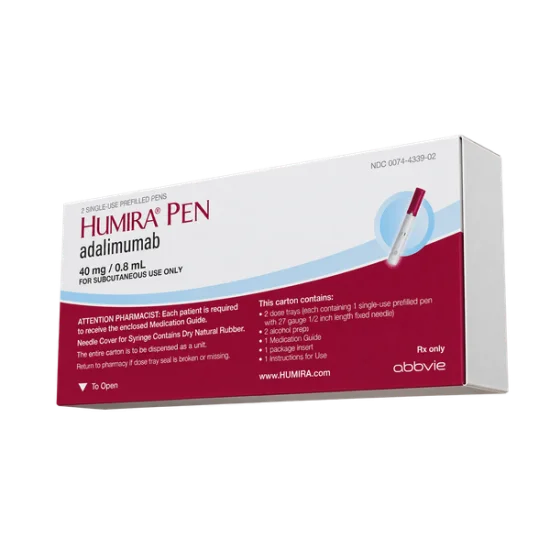
Humira is administered beneath the skin. The product presentation described for this page is a single-use pre-filled injector containing adalimumab. Two single-use pre-filled pens are included in the stated presentation.
The amount used at each administration is set individually for each person rather than being one fixed number. The prescriber selects the interval and any loading schedule according to the indication and the patient’s clinical response.
Practical administration principles
- Use Humira only by the subcutaneous route.
- Inject into the abdomen or thigh, avoiding the area immediately around the navel.
- Rotate injection sites between doses.
- Avoid skin that is bruised, tender, hardened, scarred, infected, or affected by active psoriasis.
- Do not inject through clothing.
- Use a new single-use injector for each administration.
- Dispose of the used device in an approved sharps container.
- Do not share the injector with another person.
Allowing a refrigerated injector to reach room temperature before injection may make the process more comfortable. Do not use external heat, a microwave, or hot water to warm it. Cold-chain handling, the permitted room-temperature period, and disposal instructions should follow the product’s UK regulatory information and the prescribing service’s instructions.
A missed dose should be administered when remembered unless the next scheduled dose is close. The schedule should then be returned to the prescribed pattern; two doses should not be injected together to compensate.
Formulation
Humira contains adalimumab, a recombinant human monoclonal antibody. The available injector contains adalimumab for subcutaneous use. Adalimumab belongs to the tumour necrosis factor-alpha inhibitor class, also called an anti-TNF biologic.
Tumour necrosis factor-alpha is an inflammatory signalling protein. In autoimmune disease, excessive TNF-alpha activity can sustain swelling, pain, tissue damage, bowel inflammation, skin plaques, or eye inflammation. Adalimumab binds TNF-alpha and prevents it from activating its inflammatory receptors. This lowers inflammatory signalling rather than suppressing every part of the immune system equally [1].
Humira is a prescription biologic. Its treatment schedule is selected according to the diagnosis, age, body weight, disease severity, previous treatment, and response.
Pharmacological classification of adalimumab
Adalimumab is:
- a recombinant human IgG1 monoclonal antibody;
- a tumour necrosis factor-alpha inhibitor;
- a disease-modifying biologic treatment;
- administered by subcutaneous injection;
- used in immune-mediated inflammatory conditions.
The injector is designed for one subcutaneous administration. It is not intended for intravenous injection, intramuscular injection, or oral use.
Mechanism of action
Adalimumab binds TNF-alpha and prevents it from activating its inflammatory receptors. This lowers inflammatory signalling rather than suppressing every part of the immune system equally [1].
Therapeutic indications
Humira is used for several chronic inflammatory conditions. The approved indication depends on the specific formulation, age group, treatment history, and the regulatory terms applying to the prescription. Treatment goals include reducing disease activity, protecting function, controlling inflammation, and maintaining remission where remission is achievable.
| Condition | Typical treatment goal |
|---|---|
| Rheumatoid arthritis and psoriatic arthritis | Reduce joint inflammation, stiffness, pain, and progressive structural damage |
| Plaque psoriasis | Reduce raised, inflamed plaques and improve skin involvement |
| Crohn’s disease and ulcerative colitis | Control intestinal inflammation and support clinical remission |
| Juvenile idiopathic arthritis and uveitis | Reduce inflammatory disease activity in children or the eye |
Rheumatoid arthritis affects multiple joints and can cause persistent synovial inflammation. Adalimumab may be used alone or with another disease-modifying antirheumatic drug, depending on the clinical plan. The aim is not only to relieve symptoms but also to reduce the inflammatory activity that can damage joints.
Psoriatic arthritis combines joint inflammation with psoriasis or a related disease pattern. Humira can address both musculoskeletal and skin inflammation in suitable patients. Plaque psoriasis treatment focuses on reducing the excessive immune response that accelerates skin-cell turnover.
Crohn’s disease and ulcerative colitis affect the gastrointestinal tract in different patterns. Adalimumab may reduce bowel inflammation, abdominal symptoms, diarrhoea, and relapse risk in eligible patients. Severe abdominal pain, persistent vomiting, black stools, or heavy rectal bleeding require urgent medical assessment rather than an additional dose.
Uveitis is inflammation inside the eye. It can threaten vision if treatment is delayed, so eye pain, light sensitivity, new floaters, or blurred vision need prompt ophthalmic assessment.
Juvenile idiopathic arthritis refers to inflammatory arthritis beginning during childhood. Dosing and eligibility in children depend on age, body weight, diagnosis, and the prescribed regimen. A child should not be given an adult schedule without a paediatric treatment plan.

Common mistakes
Several avoidable errors can reduce treatment reliability:
- injecting into inflamed, scarred, or repeatedly used skin;
- taking an extra dose after a missed injection;
- stopping treatment when symptoms improve without a planned review;
- ignoring fever, cough, urinary symptoms, or infected wounds;
- receiving a live vaccine without discussing the timing;
- leaving the injector exposed to heat or freezing conditions;
- sharing a device or reusing a single-use injector;
- failing to mention a planned operation or prolonged course of antibiotics.
Another common mistake is judging treatment after only one injection. Biologics are assessed over the interval defined by the prescriber, using clinical symptoms and objective markers where appropriate. A lack of early improvement does not automatically mean the treatment has failed, while a sudden deterioration should not be managed by changing the dose independently.
Reasons not to use it
Humira is not suitable for everyone. The following situations require the treatment plan to be reviewed before administration.
- you have an active serious infection, including sepsis, untreated tuberculosis, or a serious opportunistic infection;
- you have a severe allergy to adalimumab or an excipient in the formulation;
- you have moderate or severe heart failure, unless a specialist has specifically assessed the risk;
- you have symptoms suggesting tuberculosis or another serious infection that has not been investigated;
- you are due to receive a live vaccine during treatment without a clinician-approved vaccination plan.
Adalimumab should not be combined with anakinra or abatacept because combined immune modulation can increase the risk of serious infection without providing a routine therapeutic advantage. The same caution applies to other targeted immunosuppressive medicines unless a specialist has deliberately designed the combination.
When this is not for you
Before treatment, clinicians commonly assess infection history, tuberculosis risk, hepatitis B status, vaccination history, and any history of recurrent infection. During treatment, fever, persistent cough, night sweats, unexplained weight loss, painful urination, infected wounds, or unusual fatigue can indicate infection and require prompt medical review.
Live vaccines can present a risk during TNF inhibitor treatment. Inactivated vaccines may be used when clinically appropriate, although the immune response can vary. Household vaccination planning also deserves attention when a close contact is receiving a live vaccine.
Unwanted effects
The most common problems include injection-site reactions, upper respiratory infections, headache, nausea, abdominal discomfort, and musculoskeletal pain. The frequency and severity vary by indication and by whether adalimumab is combined with other immune-modifying medicines.
Common injection-site effects include:
- redness;
- itching;
- warmth;
- mild swelling;
- short-lived pain or bruising.
Humira can increase susceptibility to infections because TNF-alpha contributes to immune defence against certain bacteria and other pathogens. Serious infections, tuberculosis, invasive fungal infections, hepatitis B reactivation, and opportunistic infections have been reported with TNF inhibitors. A persistent fever should not be dismissed as a routine side effect.
Rare but serious effects include severe allergic reactions, demyelinating disorders, blood-count abnormalities, lupus-like syndromes, worsening heart failure, and some malignancies. These events are uncommon, but symptoms such as new weakness, visual change, severe breathlessness, unexplained bruising, swollen glands, or persistent night sweats need medical assessment.
A practical point from injection training is that rubbing the site immediately after injection can intensify redness and irritation. Gentle pressure is usually preferable if there is a small spot of bleeding. A cold pack wrapped in fabric may ease local discomfort.
Comparison
Humira, etanercept, and infliximab all affect TNF signalling, but their molecular structures and administration methods differ.
| Treatment | Active ingredient and route | Practical distinction |
|---|---|---|
| Humira | Adalimumab; subcutaneous injector | Self-administered under an individual schedule |
| Enbrel | Etanercept; subcutaneous injection | TNF-receptor fusion protein rather than a monoclonal antibody |
| Remicade | Infliximab; intravenous infusion | Administered by infusion with clinical monitoring |
Etanercept is a fusion protein that mimics part of a TNF receptor. Adalimumab and infliximab are monoclonal antibodies that bind TNF-alpha. Infliximab requires an infusion setting, while Humira is designed for subcutaneous administration after appropriate training.
A clinician may choose between TNF inhibitors according to the diagnosis, extra-articular symptoms, previous response, infection risk, pregnancy considerations, inflammatory bowel disease status, eye involvement, and local treatment pathways. A medicine that works well for rheumatoid arthritis may not be the preferred choice for uveitis or inflammatory bowel disease.
The existence of another TNF inhibitor does not make treatments interchangeable at the same dose or interval. Switching requires a prescribed plan.
What doctors say
In clinical practice, doctors generally assess Humira by disease activity rather than by a single symptom. For rheumatoid arthritis, this can include swollen-joint counts, inflammatory markers, stiffness, function, and imaging. In inflammatory bowel disease, bowel frequency, bleeding, abdominal symptoms, biomarkers, and endoscopic findings may all contribute to the decision.
A physician usually expects treatment to be regular. Stopping and restarting without a clinical plan may allow inflammation to return and can complicate later treatment decisions. Some people respond clearly, while others require a different biologic class or an adjusted treatment strategy.
The first few injections may produce no dramatic change. Improvement can occur in stages: reduced morning stiffness, fewer bowel symptoms, less skin scaling, or improved eye inflammation before the patient feels fully recovered. The treatment target is controlled disease activity, not simply a temporary reduction in pain.
Comparison
What customers often ask
Can Humira be combined with other medicines or supplements?
Humira can be prescribed alongside selected disease-modifying medicines, but combining it with anakinra or abatacept is avoided because infection risk can increase. The EMA's 2023 product information describes the interaction concern for dual targeted immune suppression. Medicines for pain, blood pressure, diabetes, or stomach acid may be compatible, yet each combination must be assessed against the person’s medical history. Supplements should also be disclosed, especially products that may affect immunity, the liver, or bleeding risk. The prescribing clinician should review the full medicine list before each treatment change.
How soon can the effect of Humira become noticeable?
The timing depends on the disease being treated, the prescribed induction plan, and the person’s inflammatory burden. NHS inflammatory disease services commonly assess early symptom changes over the first several weeks, while objective assessment may take longer; this approach was reviewed in 2024. Joint stiffness, skin inflammation, bowel symptoms, or eye findings may improve at different rates. A sudden worsening, severe infection symptom, or vision change needs prompt clinical assessment rather than an unscheduled additional injection.
Which diet, exercise, or habits can support the result?
Humira works on inflammatory signalling, so diet and exercise do not replace the prescribed biologic schedule. NICE guidance published in 2022 supports condition-appropriate physical activity, strength maintenance, smoking cessation, vaccination planning, and weight management where relevant to inflammatory disease care. People with bowel disease may need an individually tolerated diet, while people with arthritis often benefit from graded movement rather than complete rest. Keeping injections, symptoms, infections, and missed doses in a written record can make treatment reviews more accurate.
Is Humira suitable for older adults?
Older adults may receive adalimumab when the expected benefit outweighs infection and comorbidity risks. The MHRA highlighted in 2023 the need for careful monitoring of serious infection risk with immunosuppressive biologics, especially when several medicines or chronic conditions are present. Kidney function, liver disease, lung disease, heart failure, vaccination history, and previous infections may influence the treatment plan. Age alone does not determine eligibility, but a new fever, cough, confusion, or functional decline deserves prompt assessment.
How long does a Humira course last, and is long-term use acceptable?
Humira treatment may continue for months or years when disease control remains beneficial and monitoring supports continuation. The WHO described in 2023 chronic inflammatory disease treatment as an ongoing balance between disease control, adverse effects, infection risk, and treatment goals. There is no universal course length because the schedule depends on the indication and response. Stopping after improvement can lead to relapse, while continued treatment should be reviewed when infections, surgery, pregnancy, vaccination, or a change in disease activity occurs.
Do you offer anonymous delivery?
Your order will be securely packed and shipped within 24 hours. This is exactly what your package will look like (images of an actual item sent). It has the size and look of a regular private letter (24x11x0.7 cm) and its contents cannot be seen.
Biosimilar adalimumab and treatment continuity
A biosimilar is a biological medicine shown to be highly similar to an established reference medicine, with no clinically meaningful differences in quality, safety, or effectiveness for its authorised uses. Biosimilars are not simple chemical copies because biologic antibodies are produced in living cell systems.
ABP 501 is an adalimumab biosimilar development associated with the same therapeutic class. Adalimumab biosimilars may use different device designs, injection volumes, excipients, or storage instructions, even when they contain the same active substance.
A switch between Humira and a biosimilar should follow the prescribing service’s process. Device training matters: the button position, viewing window, injection time, and disposal method can differ. Patients should record the product name and batch details in their treatment record if their clinical service requests this, especially when switching between biologic products.
How Buyers Rate Humira
My finger swelling reduced and the skin plaques became less raised. I had two minor colds during the first month, so the treatment team checked me before the next dose. The extra appointments were inconvenient.
The injections were manageable after training. I did not notice enough improvement, and my doctor later discussed another treatment option. I was glad the review was based on blood tests and joint findings rather than guesswork.
Bowel urgency improved gradually rather than overnight. I kept a simple symptom diary, which made it easier to describe changes at appointments. A sore throat led to one delayed dose.
My elbows and scalp improved substantially, although I still had a small patch during stressful weeks. The injector was easier after I stopped rushing the preparation.
Sources
- European Medicines Agency (2023). Humira: European public assessment report and product information.