Skip to content
Wynzora

Wynzora

Quality products
24/7 Support
Fast delivery
Delivery from 4 days
Active ingredient Calcipotriol, Betamethasone dipropionate

Free delivery on orders from £ 166.00, free express delivery from £ 249.00

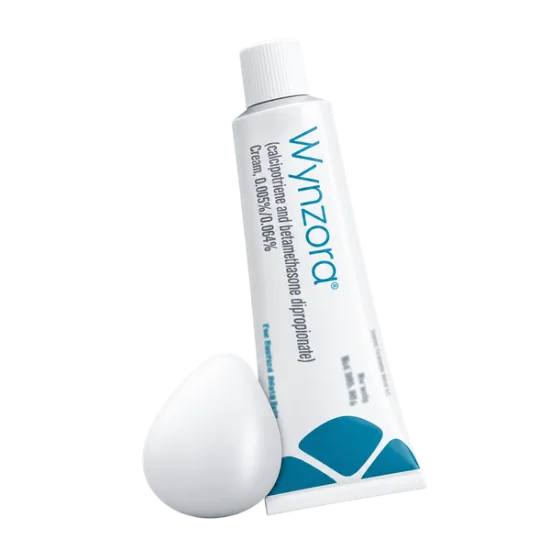
Wynzora is a topical cream in a tube for adults with plaque psoriasis. Applied once daily to affected skin, it combines calcipotriene with betamethasone dipropionate to slow excessive skin-cell growth and reduce inflammation.

Overview

Wynzora contains two active ingredients: calcipotriene and betamethasone dipropionate. The product combines a vitamin D analogue with a corticosteroid.

Directions for use

Wynzora is applied to the skin once daily for the treatment period prescribed for the individual patient. The dose is decided individually, taking age, other medicines and health conditions into account. For adults, treatment with this type of calcipotriene and betamethasone cream is commonly limited to a defined course rather than continuous unsupervised use.

Practical administration points include:

  • Apply a thin layer to the psoriasis plaques once daily.
  • Use the cream only on the affected areas.
  • Do not apply it to the face, eyes, groin, genital area or armpits unless a prescriber has given specific instructions.
  • Do not cover treated skin with airtight dressings, plastic wrap or tight bandages.
  • Wash your hands after application unless the hands themselves are being treated.
  • Keep the cream away from broken, infected or ulcerated skin.
  • Avoid applying it immediately before a bath or shower, because washing can remove the product.
  • Do not use more than the prescribed amount or extend treatment beyond the recommended course.
  • The amount to use is decided individually, taking age, other medicines and health conditions into account.

A fingertip unit can help with approximate quantity: the amount squeezed from an adult fingertip to the first crease covers roughly two adult palm-sized areas. This is only a practical guide, not a replacement for the prescribed amount.

Wynzora should not be used as a moisturiser over unaffected skin. Apply an emollient separately if needed, allowing time between products so the treatment cream is not diluted or spread beyond the intended area.

If both an emollient and Wynzora are used, apply them at separate times rather than mixing them in the hand. This makes it easier to keep the corticosteroid on the plaques where it is needed.

A missed application should not be compensated for with a double amount. Apply the next dose when remembered if it is not close to the next scheduled application; otherwise, skip the missed application and resume the usual routine.

Formulation

Wynzora contains two active ingredients: calcipotriene and betamethasone dipropionate. It is used for plaque psoriasis, a chronic inflammatory skin condition that causes raised, scaly patches. The cream is applied directly to affected areas rather than taken by mouth.

Dual-action formulation

Psoriasis plaques develop when immune signalling causes skin cells to form too quickly. The result is a build-up of thick, scaly skin. Calcipotriene helps reduce this abnormal cell turnover, while betamethasone dipropionate suppresses local inflammatory signals in the skin [1].

The cream base also matters in daily use. A cream can be useful for plaques on the trunk and limbs because it spreads across larger areas without the rapid evaporation associated with some foams or lotions. It should be applied only to the affected skin and kept away from the eyes and sensitive body-fold areas.

Wynzora is intended for plaque psoriasis, not every type of psoriasis. Dermatology treatment plans differ for guttate, inverse, pustular and erythrodermic psoriasis, where a different approach may be needed.

Use a small amount over each affected plaque and spread it gently until the skin is covered. Vigorous rubbing can irritate already inflamed skin.

Mechanism of action

Calcipotriene helps regulate the rapid production and maturation of skin cells. Betamethasone dipropionate reduces inflammatory activity, redness, swelling and itching. The two actions address different parts of the psoriasis process.

Therapeutic indications

It is used for plaque psoriasis, a chronic inflammatory skin condition that causes raised, scaly patches.

Wynzora is intended for plaque psoriasis, not every type of psoriasis. Dermatology treatment plans differ for guttate, inverse, pustular and erythrodermic psoriasis, where a different approach may be needed.

Common mistakes

Several routine mistakes can make Wynzora seem less helpful or increase side effects:

  • Applying it only when plaques itch.
  • Stopping after a few days because scaling remains.
  • Covering treated skin with cling film or an airtight dressing.
  • Using it on the face because facial plaques are visible.
  • Applying it to the entire body instead of plaques.
  • Continuing an old course for months without review.
  • Combining it with another steroid cream without adding the total exposure.
  • Applying it directly after a hot shower when the skin is irritated.
  • Forgetting to wash hands after treating plaques.
  • Assuming a missed application requires extra cream.
  • Ignoring new joint pain because the skin is improving.

A thin plaque can still be active psoriasis. Treatment decisions should be based on the prescribed course and clinical response, not only on how much scaling is visible on one day.

Take a simple weekly photograph for personal comparison using the same lighting and distance. Skin appearance can change slowly, and this record helps distinguish gradual improvement from a true plateau.

Reasons not to use it

Wynzora is not suitable for everyone. The product should not be used when the person has:

  • A known allergy to calcipotriene, betamethasone dipropionate or an excipient in the cream.
  • Viral skin infections such as herpes or chickenpox at the application site.
  • Fungal or bacterial skin infections that have not been treated.
  • Tuberculous or syphilitic skin lesions.
  • Rosacea, acne vulgaris or perioral dermatitis at the proposed treatment area.
  • Ichthyosis, skin ulcers or fragile, atrophic skin unless specifically directed by a specialist.
  • Calcium metabolism disorders or a history of high calcium linked to vitamin D treatment.

Tell the prescriber about psoriasis on the face, scalp, skin folds, palms, soles or genitals. These areas can require different strengths, vehicles or treatment durations.

Wynzora should not be applied to large areas without a clear treatment plan. Combining it with other topical corticosteroids, calcipotriene products or vitamin D preparations may increase the risk of excessive exposure. Patients using medicines that affect calcium levels may need more cautious monitoring.

Pregnancy and breastfeeding require an individual risk assessment. Potent topical corticosteroids should be used on the smallest area for the shortest suitable period. Breastfeeding mothers should not apply the cream to the nipple or nearby skin where an infant could ingest it.

When this is not for you

NOT for you if you have an untreated infection at the application site, need treatment on the face or skin folds, or cannot follow the prescribed course.

Unwanted effects

Topical treatment usually produces fewer whole-body effects than oral corticosteroid treatment, but absorption can increase when large areas are treated, when skin is damaged, or when the cream is covered. The risk also rises if a potent corticosteroid is used for longer than directed.

Possible skin reactions include:

  • Burning, stinging or irritation after application.
  • Itching or redness.
  • Worsening psoriasis in the treated area.
  • Folliculitis, which appears as small inflamed spots around hair follicles.
  • Thinning of the skin after prolonged or repeated corticosteroid exposure.
  • Stretch marks or visible small blood vessels with excessive corticosteroid use.
  • Changes in skin colour after inflammation settles.

Calcipotriene can affect calcium regulation when excessive quantities are absorbed. Symptoms of markedly raised calcium may include unusual thirst, frequent urination, nausea, constipation, weakness or confusion. This is uncommon with correct topical use, yet the risk is a reason to respect the weekly limit.

Betamethasone dipropionate can suppress the local skin immune response. A fungal or bacterial infection may spread more easily if it develops beneath continued corticosteroid treatment. Increasing pain, pus, rapid spreading redness or fever needs prompt medical assessment.

Stop applying the cream and seek urgent medical attention for facial swelling, widespread hives, breathing difficulty or a severe blistering reaction. These symptoms may indicate a serious allergic response.

Skin thinning is easy to miss because it can develop gradually. Avoid using extra cream on stubborn plaques or continuing an old course for months without a treatment review.

Children have a larger skin-surface area relative to body weight and can absorb topical corticosteroids more readily. Wynzora is therefore not automatically suitable for children simply because it is applied to the skin.

Comparison

The most useful comparison is by treatment category and vehicle rather than by brand name. Wynzora is a combination cream, while other topical choices may contain one active ingredient, a different corticosteroid, salicylic acid, coal tar or a non-steroid anti-inflammatory agent.

Treatment approach Main clinical distinction Typical practical limitation
Calcipotriene plus betamethasone cream Combines anti-inflammatory and skin-cell regulating actions Corticosteroid exposure limits long-term unsupervised use
Topical corticosteroid alone Reduces inflammation and itching quickly Does not provide the same vitamin D analogue action and may cause atrophy with prolonged use
Non-steroid topical treatment Useful for selected sites or maintenance plans May act more slowly or cause local irritation

A cream may suit plaques on the trunk, arms and legs. A foam can feel lighter on hairy areas, while an ointment may be more occlusive for very dry plaques. The best vehicle depends on body site, plaque thickness, hair coverage, climate and the patient’s willingness to apply treatment consistently.

Wynzora offers two pharmacological actions in one application. Its limitation is the presence of a potent topical corticosteroid, so repeated long courses need clinical supervision. A non-steroid maintenance option may be preferred once plaques are controlled.

What doctors say

Dermatologists often assess three points before changing topical treatment: whether the cream is being applied to the correct areas, whether enough is being used, and whether the course has lasted long enough to judge the response. A plaque that receives an occasional smear is not receiving the same treatment as a plaque treated once daily as prescribed.

A doctor will also ask about hidden psoriasis activity. Scalp scaling, nail pitting, heel pain or morning back stiffness can change the treatment plan because they may indicate broader disease or psoriatic arthritis. The WHO describes psoriasis as a condition that can affect physical, psychological and social wellbeing, not merely a surface rash [3].

One detail patients sometimes overlook is transfer to nearby skin. Cream left on the fingers can reach the eyelids, lips or genital area during washing or dressing. Handwashing after application helps reduce this accidental spread.

Comparison

Comparison table: Psoriasis

What customers often ask

Can I go out in the sun while using Wynzora?

Normal outdoor activity is not automatically prohibited, but sunburn can intensify psoriasis irritation and make treated skin more uncomfortable. Do not use artificial tanning equipment as a substitute for prescribed UVB treatment. Advice from the WHO in 2016 supports careful management of psoriasis triggers and skin injury while recognising that ultraviolet treatment must be medically controlled . Cover treated areas when practical and use suitable sun protection on unaffected skin.

Do diet, exercise or daily habits affect the result?

Diet and exercise do not replace Wynzora, yet regular movement can support general health and joint function. Alcohol may worsen psoriasis in some people and is a significant concern when methotrexate is also prescribed. NICE guidance updated in 2023 supports attention to lifestyle factors alongside psoriasis treatment rather than relying on topical therapy alone . Avoid scratching and keep application linked to a routine activity, such as evening skincare.

How much Wynzora should I apply, and should I wash my hands or cover the area?

Apply a thin layer once daily to the affected plaques, using the individually prescribed amount. Wash your hands after application unless the hands are being treated. Do not cover the area with airtight material, and avoid the face, groin, genital area, armpits and eyes unless a prescriber specifically directs otherwise. The MHRA’s safety information on topical corticosteroids, published in 2021, supports limiting potent steroid exposure to the necessary area and duration [4].

Can Wynzora affect driving, concentration or work with machinery?

The 2022 FDA prescribing information indicates that a topical cream containing calcipotriene and betamethasone is not expected to impair alertness, concentration or coordination when used as directed. It does not act as a sedative. Painful plaques, itching or poor sleep may still reduce concentration independently of the cream. If a serious allergic reaction or severe skin reaction occurs, stop the activity and obtain urgent medical help.

What should I do if the expected result does not come?

Check whether the cream has been applied once daily to every prescribed plaque and whether the course has been completed without repeated gaps. Do not respond by applying a thicker layer, treating unaffected skin or extending the course independently. A dermatologist may need to check the diagnosis, infection, treatment adherence, plaque thickness, joint symptoms or the need for phototherapy or systemic treatment. The NICE psoriasis pathway, updated in 2023, recommends treatment review when disease remains uncontrolled or causes substantial impact.

What should I do after a missed application?

Apply the missed dose when remembered if the next application is not due soon. If it is nearly time for the next application, skip the missed dose and return to the normal schedule. Do not apply twice as much to compensate, because extra corticosteroid exposure can increase irritation and skin-thinning risk. The 2022 FDA product guidance for calcipotriene and betamethasone combinations supports returning to the regular application schedule rather than doubling treatment.

Do you offer anonymous delivery?

Your order will be securely packed and shipped within 24 hours. This is exactly what your package will look like (images of an actual item sent). It has the size and look of a regular private letter (24x11x0.7 cm) and its contents cannot be seen.

Lifestyle factors and disease triggers

Alcohol consumption can worsen psoriasis for some people and can make adherence harder through disrupted sleep, missed applications or dehydration. Alcohol also requires special caution with methotrexate because both can place strain on the liver. The prescribing team should know the person’s usual alcohol intake before methotrexate is started.

Helpful habits include:

  • Applying Wynzora at the same time each day.
  • Using fragrance-free emollients for dry, non-treated skin.
  • Avoiding scratching, picking and harsh exfoliation.
  • Treating smoking cessation as part of psoriasis care.
  • Keeping a record of joint pain, morning stiffness and nail changes.
  • Protecting the skin from sunburn rather than deliberately burning or tanning it.
  • Maintaining sleep and stress-management routines when flares follow poor sleep or stress.

Diet does not cure psoriasis, and restrictive diets can create nutritional problems. A balanced eating pattern, regular movement and weight management may support general health and reduce pressure on joints. Alcohol reduction is more medically urgent when methotrexate is part of treatment.

Psoriasis management beyond topical treatment

Topical treatment is often the first approach for limited plaque psoriasis. If plaques remain extensive, painful or disabling despite correct application, a dermatologist may consider phototherapy or systemic treatment.

Methotrexate is a systemic medicine used for selected patients with more extensive psoriasis or psoriatic arthritis. It requires attention to liver function, blood counts, kidney function, infections and alcohol intake. Wynzora may still have a role for individual plaques while systemic treatment manages wider disease, but the combination should form part of a planned regimen.

UVB treatment uses controlled ultraviolet exposure under medical supervision. It can help widespread psoriasis when topical treatment alone is impractical. Additional unplanned sun exposure does not reproduce supervised UVB treatment and can cause burns.

Treatment escalation is usually guided by the extent of skin involvement, nail disease, joint symptoms, impact on daily life and response to topical treatment. NICE guidance and American Academy of Dermatology guidance place topical therapy within a wider stepwise approach that may include phototherapy and systemic medicines [2].

A useful practical distinction is this: Wynzora treats the skin surface directly, whereas methotrexate and UVB treatment influence wider disease management. A person can need more than one treatment method, but adding products independently can increase irritation or corticosteroid exposure.

How Buyers Rate Wynzora

4
Based on 4 reviews
Gareth, 64
Coventry
Several weeks
Verified
Rating: 5 out of 5

The plaques on my elbows became less rough first. The redness took longer to settle, and I needed to keep applying it regularly rather than only when the itching returned.

6 Oct 2026
Jack, 65
Birmingham
Several weeks
Verified
Rating: 3.5 out of 5

The cream spread easily and did not feel as greasy as the ointment I had used before. I missed applications during a short trip, so the improvement was uneven until I returned to the routine.

16 Oct 2026
Ian, 58
Leicester
Several weeks
Verified
Rating: 4 out of 5

After the first week I noticed less itching, but the thicker areas were still obvious. By the end of the course they were flatter, although I still needed moisturiser for dryness.

23 Oct 2026
Daniel S., 58
Portsmouth
The prescribed course
Verified
Rating: 3.5 out of 5

It helped the scaling, but one area became sore and more irritated when I applied too much. Using a thinner layer and avoiding broken skin made the treatment easier to tolerate.

3 Nov 2026

Sources

  1. U.S. Food and Drug Administration (2022). Wynzora (calcipotriene and betamethasone dipropionate) Cream Prescribing Information.
  2. National Institute for Health and Care Excellence (2023). Psoriasis: assessment and management.
  3. World Health Organization (2016). Global report on psoriasis.
  4. Medicines and Healthcare products Regulatory Agency (2021). Topical corticosteroids: information on the risk of topical steroid withdrawal reactions.
Get our free app Shop faster and track your orders 3.9 · 425 reviews Install