My blood pressure readings settled gradually after the first few weeks. I felt light-headed when I stood up too quickly at first, but taking my time in the morning made a difference.
Lisinopril
Lisinopril is an oral ACE inhibitor used for high blood pressure, heart failure, and early treatment after acute myocardial infarction. It helps blood vessels relax, reducing resistance to blood flow and easing strain on the heart; the regimen for the selected tablet strength should be confirmed with a healthcare professional before starting.
Overview
Lisinopril is an oral angiotensin-converting enzyme inhibitor, often shortened to ACE inhibitor. It is used for high blood pressure, heart failure, and early treatment after acute myocardial infarction. These conditions place extra strain on the heart, arteries, and kidneys.
Directions for use
The product contains Lisinopril tablets for oral use. Tablets are usually taken once daily, at a consistent time, with or without food. The regimen for the selected strength should be confirmed with a healthcare professional before starting, based on the condition being treated, blood pressure, kidney function, age, and other medicines.
Clinical prescribing commonly starts cautiously when a person is older, dehydrated, taking a diuretic, or has reduced kidney function. For uncomplicated hypertension, the regimen for the chosen strength should be confirmed with a healthcare professional before starting. Maintenance treatment is often adjusted when clinically appropriate.
For heart failure, starting regimens are usually lower and increased gradually under clinical supervision. This reduces the chance of first-dose dizziness, low blood pressure, or a sudden change in kidney function. NICE guidance supports ACE inhibitors as core therapy for many people with heart failure with reduced ejection fraction [2].
- Swallow the tablet whole with water.
- Take it at the same time each day.
- Food does not materially alter Lisinopril absorption.
- Rise slowly from bed or a chair during the first days or after a dose increase.
- Attend planned blood-pressure, kidney-function, and potassium monitoring.
- Do not change the dose independently after a single unusual reading.
A missed dose should be taken when remembered unless the next dose is due soon. Do not take two doses together.
Formulation
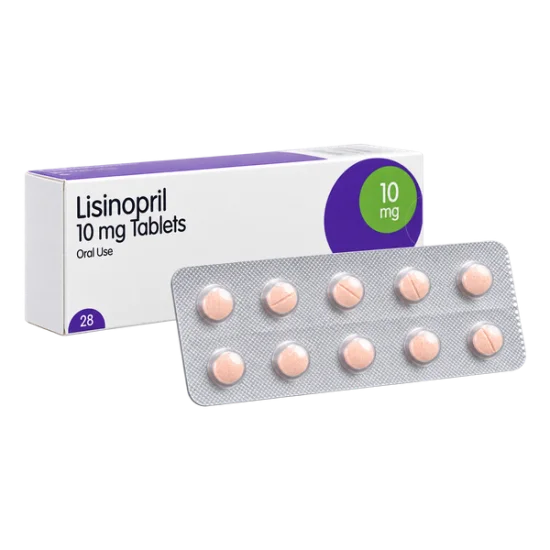
The product contains Lisinopril in tablets intended for oral use. The pack is marked for oral use and identifies a pack size of 28 tablets.
Mechanism of action
Lisinopril belongs to the ACE inhibitor class. ACE means angiotensin-converting enzyme, an enzyme within the renin-angiotensin-aldosterone system, also called RAAS.
The kidneys release renin when they sense reduced blood flow. Renin starts a chain reaction that produces angiotensin II. Angiotensin II tightens blood vessels and signals the body to retain sodium and water. Lisinopril blocks the enzyme that forms angiotensin II, so vessels relax and aldosterone activity falls.
This mechanism also explains the characteristic dry cough. ACE normally breaks down bradykinin, a natural signalling substance. With ACE blocked, bradykinin can build up and irritate the airways in some people.
Lisinopril does not need metabolic activation by the liver. It is active when swallowed and is mainly removed through the kidneys. Kidney function and potassium concentrations therefore matter during treatment.
Therapeutic indications
Lisinopril is an oral angiotensin-converting enzyme inhibitor, often shortened to ACE inhibitor. It is used for high blood pressure, heart failure, and early treatment after acute myocardial infarction. These conditions place extra strain on the heart, arteries, and kidneys.
For hypertension, Lisinopril helps blood vessels relax so blood moves through them with less resistance. Lowering raised blood pressure reduces the likelihood of stroke, heart attack, kidney decline, and vascular disease over time. The WHO includes ACE inhibitors among the main medicine groups for treating hypertension in adults [1], and the European Medicines Agency (EMA) publishes regulatory information on ACE-inhibitor medicines.
Indications for hypertension and heart failure
In heart failure, the heart cannot pump blood as efficiently as the body needs. Lisinopril reduces afterload, meaning the resistance against which the heart must pump. It can also reduce aldosterone-driven salt and water retention.
Following a heart attack, Lisinopril may be used to limit harmful changes in the heart muscle, known as ventricular remodelling. This remodelling can weaken pumping function in the months after myocardial infarction.
Common mistakes
Several avoidable habits make Lisinopril harder to use well.
- Stopping tablets after a few normal blood-pressure readings.
- Taking an extra tablet after a missed dose.
- Using potassium salt substitutes without considering their potassium content.
- Taking NSAIDs repeatedly for pain without discussing kidney and blood-pressure effects.
- Ignoring vomiting or diarrhoea, which can cause dehydration and make low blood pressure more likely.
- Assuming a dry cough will settle if it has lasted for weeks.
- Skipping planned kidney-function and potassium blood tests.
One overlooked detail is hydration during stomach illness. If vomiting, diarrhoea, or very poor fluid intake occurs, the risk of kidney stress rises. Individual sick-day advice should be confirmed with the clinician managing the prescription.
Reasons not to use it
Extra caution is needed with severe renal artery stenosis, advanced kidney impairment, aortic stenosis, hypertrophic cardiomyopathy, dehydration, or low sodium levels. Starting treatment may alter kidney filtration in susceptible people, so renal function is assessed clinically.
People taking Lisinopril require attention to potassium. Potassium supplements, potassium-containing salt substitutes, and potassium-sparing diuretics can raise potassium too far. This risk increases when kidney function is reduced.
The MHRA lists angioedema, hypotension, kidney-function changes, and raised potassium among key risks requiring clinical awareness with Lisinopril [3].
When this is not for you
Lisinopril is not for you if you have previously had angioedema linked to an ACE inhibitor or have hereditary or idiopathic angioedema. It must not be used during pregnancy because medicines acting on the renin-angiotensin system can harm fetal kidney development.
Unwanted effects
Most people tolerate Lisinopril without severe problems, though side effects are possible. Dizziness, headache, tiredness, low blood pressure, and dry cough are among the more familiar effects. Dizziness is more likely after the first dose, a dose increase, dehydration, vomiting, diarrhoea, or heavy alcohol intake.
A dry ACE-inhibitor cough can be frustrating because it may persist while treatment continues. The cough does not usually mean an infection. Its onset can be delayed, so people do not always connect it with a medicine started several weeks earlier.
Low blood pressure may cause light-headedness, faintness, blurred vision, or weakness. High potassium, called hyperkalaemia, often produces no early symptoms and is found through blood testing. This is why monitoring is part of good Lisinopril care.
Seek urgent medical help for swelling of the lips, tongue, face, or throat, difficulty breathing, or collapse. These can be signs of angioedema, a rare but serious reaction.
Comparison
ACE inhibitors share a related mechanism, though their absorption, activation, and elimination differ. Lisinopril is active as swallowed and mainly leaves the body unchanged through the kidneys. Enalapril is a prodrug, meaning the body converts it to an active metabolite. Benazepril also requires activation and has more mixed renal and biliary elimination.
| Medicine | Key pharmacological feature | Usual dosing pattern |
|---|---|---|
| Lisinopril | Active ACE inhibitor; mainly renal elimination | Usually once daily |
| Enalapril | Prodrug converted to enalaprilat | Once or twice daily |
| Benazepril | Prodrug with renal and biliary elimination | Usually once daily |
Fosinopril has mixed renal and liver elimination, which may influence selection when kidney function is substantially reduced. Quinapril and trandolapril are other ACE inhibitors used in cardiovascular care. The choice is individual and can depend on treatment goal, kidney function, blood-pressure response, and tolerability.
Angiotensin II receptor blockers, called ARBs, are sometimes used when an ACE inhibitor causes a troublesome cough. ARBs act later in the RAAS pathway by blocking the angiotensin II receptor rather than preventing angiotensin II formation.
What doctors say
In clinical practice, prescribers focus on the response trend rather than one isolated blood-pressure figure. They usually review home readings, symptoms, kidney blood tests, potassium, and the effect of other medicines before deciding whether a dose change is needed.
A common clinical observation is that early dizziness does not automatically mean Lisinopril has failed. It may reflect dehydration, a recent diuretic change, missed meals, or an overly rapid dose increase. Repeated fainting, severe weakness, or facial swelling needs prompt assessment.
Doctors also distinguish the dry ACE-inhibitor cough from chest infection, asthma, or heart-failure breathlessness. A cough that starts after treatment and continues without phlegm deserves review rather than repeated self-treatment with cough products.
Comparison
Inspra
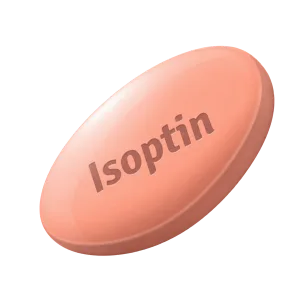
Isoptin
Lisinopril Current
Micardis
What customers often ask
Which diet, exercise, and habits support Lisinopril treatment?
A lower-salt eating pattern supports the blood-pressure effect of Lisinopril. Fruit, vegetables, pulses, wholegrains, regular walking, and weight management can improve cardiovascular risk, while smoking and heavy alcohol intake work against treatment goals. Potassium-rich foods are usually part of a healthy diet, though potassium supplements and potassium-based salt substitutes need clinical approval because Lisinopril can raise potassium. NICE hypertension guidance, updated in 2023, supports lifestyle measures alongside antihypertensive treatment. Regular activity can also help maintain functional capacity.
How long does one Lisinopril tablet keep working?
A once-daily Lisinopril dose is designed to provide blood-pressure control across a 24-hour dosing interval. Blood concentrations peak several hours after swallowing, while the clinical effect develops over regular daily use rather than from one tablet alone. Blood pressure may begin to fall during the first days, yet the full response can take several weeks. The MHRA product information published in 2024 describes once-daily administration for standard use.
Can older adults take Lisinopril?
Older adults can use Lisinopril, though clinicians often start carefully because kidney function, fluid balance, and other medicines may change the response. Dizziness and falls matter more when standing blood pressure is low. Blood tests for creatinine and potassium are commonly checked after starting or changing the dose. The WHO hypertension guideline published in 2021 supports individualised medicine selection and monitoring in older people .
What should I do if I miss a Lisinopril dose?
Take the missed tablet when remembered unless it is nearly time for the next regular dose. If the next dose is close, skip the missed tablet and return to the normal schedule. Do not double the dose, since this can cause an excessive fall in blood pressure, dizziness, or fainting. FDA prescribing information published in 2018 advises regular daily use and does not support dose doubling after a missed tablet [5].
Can Lisinopril be used during pregnancy or breastfeeding?
Lisinopril should not be used in pregnancy. Exposure during the second and third trimesters can cause serious fetal kidney injury, reduced amniotic fluid, impaired skull development, and neonatal complications. People planning pregnancy should have their blood-pressure treatment reviewed before conception, and pregnancy should be reported promptly if it occurs during treatment. NICE guidance on hypertension in pregnancy, updated in 2023, identifies ACE inhibitors as medicines to avoid during pregnancy.
Do you offer anonymous delivery?
Your order will be securely packed and shipped within 24 hours. This is exactly what your package will look like (images of an actual item sent). It has the size and look of a regular private letter (24x11x0.7 cm) and its contents cannot be seen.
Long-term cardiovascular benefits
Sustained blood-pressure control protects blood vessels even when hypertension causes no obvious symptoms. Lisinopril can reduce cardiac workload, reduce protein loss in urine for some people with diabetes and hypertension, and support standard heart-failure treatment plans.
For chronic heart failure with reduced ejection fraction, ACE inhibitors reduce symptoms, hospital admissions, and mortality when used as part of evidence-based therapy. They are not a substitute for diuretics when fluid overload is present, nor for other heart-failure medicines when those are indicated.
The long-term benefit depends on regular treatment, monitoring, and a cardiovascular plan that also addresses smoking, activity, body weight, sleep, diabetes, and dietary salt. NICE recommends ACE inhibition within guideline-directed therapy for suitable people with heart failure [4].
How Buyers Rate Lisinopril
I did not feel a dramatic change, which was the point because my high blood pressure had no symptoms. My home readings were lower, although I had to be more careful with ibuprofen for back pain.
The tablets were easy to fit into my routine. I developed a dry cough after about a month, mostly in the evening, and my prescriber changed the treatment rather than leaving me to put up with it.
I took it alongside treatment for heart failure. The first week brought tiredness and dizziness, then it settled. Blood tests were arranged after starting, which reassured me because potassium had been discussed.
Sources
- World Health Organization (2021). Guideline for the pharmacological treatment of hypertension in adults.
- National Institute for Health and Care Excellence (2023). Hypertension in adults: diagnosis and management (NG136).
- Medicines and Healthcare products Regulatory Agency (2024). Lisinopril 10 mg Tablets: Summary of Product Characteristics.
- National Institute for Health and Care Excellence (2025). Chronic heart failure in adults: diagnosis and management (NG106).
- Food and Drug Administration (2018). Zestril (lisinopril) prescribing information.