Skip to content
Luzu

Luzu

Quality products
24/7 Support
Fast delivery
Delivery from 4 days
Active ingredient Luliconazole

Free delivery on orders from £ 166.00, free express delivery from £ 249.00

Tinea infections of the feet, groin, or body can cause persistent scaling, itching, and redness. Luzu contains luliconazole 1%, a topical antifungal cream for local treatment of dermatophyte infections by disrupting the fungal cell membrane.

Overview

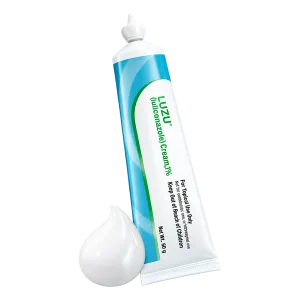
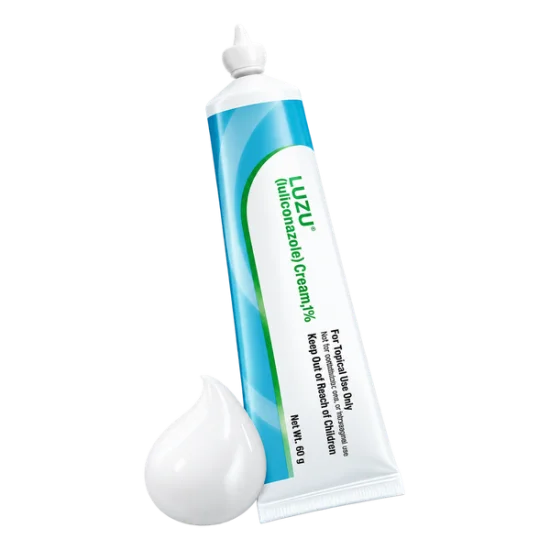
Luzu is a cream for skin application containing luliconazole 1%. Luliconazole belongs to the azole antifungal group and is used against dermatophytes, fungi that commonly cause athlete’s foot, jock itch, and ringworm.

Active Ingredient Profile

Luliconazole blocks an enzyme needed for ergosterol production. Ergosterol is a structural component of the fungal cell membrane; without it, the fungus cannot maintain its cell structure or continue growing.

Directions for use

Use Luzu only on affected skin. The amount and treatment duration should follow the individual treatment plan because location, severity, age, and skin condition can alter the approach.

  • Wash the affected area gently and dry it well.
  • Apply a thin film of cream to the rash and nearby skin.
  • Rub it in lightly until it is absorbed.
  • Wash hands after application unless the hands are being treated.
  • Keep the treated area uncovered unless a clinician has specifically advised a dressing.
  • Avoid eyes, lips, mucous membranes, and broken or severely inflamed skin.

Occlusive dressings, tight plastic coverings, and heavily wrapped areas can increase moisture and irritation. Socks and ordinary loose clothing are different; they are often necessary, especially when treating the feet or groin.

Formulation

Luzu is a cream for skin application containing luliconazole 1%. Luliconazole belongs to the azole antifungal group and is used against dermatophytes, fungi that commonly cause athlete’s foot, jock itch, and ringworm.

Active Ingredient Profile

Luliconazole blocks an enzyme needed for ergosterol production. Ergosterol is a structural component of the fungal cell membrane; without it, the fungus cannot maintain its cell structure or continue growing.

The cream is intended for external use on affected skin and a small area of healthy-looking skin around it. It is not designed for the eyes, mouth, vagina, or inside the nose.

Apply Luzu to clean, fully dry skin. Dampness between the toes or in skin folds can encourage fungal growth and make treatment less reliable.

Mechanism of action

After application, luliconazole passes into the outer skin layer, the stratum corneum, where dermatophytes live. It inhibits fungal lanosterol 14α-demethylase, an enzyme involved in ergosterol synthesis. The depleted membrane becomes unstable, slowing fungal growth and allowing the affected skin to recover. The FDA prescribing information for luliconazole 1% cream describes activity against dermatophytes responsible for tinea pedis, tinea cruris, and tinea corporis [1]. This mechanism supports treatment of localised dermatophyte infections.

Therapeutic indications

Luzu is used for superficial dermatophyte infections. These infections often produce a scaly edge, itching, cracking, or a slowly expanding rash. Athlete’s foot may affect the spaces between toes, soles, or sides of the feet. Ringworm on the body often forms a round or expanding scaly patch, while groin infection commonly affects warm skin folds.

The cream is most suitable when the affected area is localised and the skin remains largely intact. Thickened nails, painful fissures, pus, extensive crusting, fever, or rapidly spreading redness are not routine cream-treatment situations.

Common mistakes

A frequent mistake is applying a thick layer. More cream does not make luliconazole work faster and may leave the skin sticky or irritated.

Another common error is treating only when itching is noticeable. Fungal infection can remain active even when symptoms are mild. Skipping applications repeatedly can reduce the chance of clearing the infection.

Using the same towel for affected feet and the rest of the body may spread fungal material to other areas. A separate towel for the affected area is a practical precaution.

Dry between the toes with a clean towel after bathing. This small step matters because persistent moisture is one of the main reasons athlete’s foot keeps returning.

Reasons not to use it

This treatment is not for you if you have had an allergic reaction to luliconazole or to ingredients in the cream base.

Use needs medical review in the following situations:

  • The rash affects the scalp, nails, eyes, mouth, or genital mucosa.
  • The skin is extensively broken, ulcerated, or severely inflamed.
  • There is pus, pronounced pain, fever, or rapidly spreading redness.
  • You are treating a young child.
  • You are pregnant, breastfeeding, or planning pregnancy.
  • You have diabetes, poor circulation, reduced immune function, or recurrent unexplained fungal infections.
  • You are already using medicated creams on the same area, including corticosteroids, antibiotics, retinoids, or strong exfoliating products.

The MHRA monitors medicine safety in the United Kingdom, while the EMA publishes scientific standards relevant to topical medicinal products. Their approach supports careful use of creams on limited areas and prompt reassessment when symptoms do not follow the expected course [4].

When this is not for you

Seek medical advice rather than relying on this cream if the rash is on the scalp, nails, eyes, mouth, or genital mucosa. You should also ask a clinician before use if you are pregnant or breastfeeding, are treating a young child, or have diabetes, poor circulation, reduced immune function, or repeated unexplained fungal infections.

Unwanted effects

Luzu is usually well tolerated when applied to limited areas of intact skin. Some people experience mild local burning, stinging, itching, dryness, redness, or irritation after application. These reactions are often mild and short-lived, especially during the first few uses.

Stop using the cream and seek medical advice if there is intense burning, swelling, blistering, hives, widespread rash, or signs of an allergic skin reaction. These symptoms can indicate sensitivity to luliconazole or another component of the cream.

A rash that becomes more painful, warm, weeping, crusted, or rapidly widespread may have a bacterial component or may not be fungal. Persistent scaling without improvement can also point to a different diagnosis.

Avoid applying several new medicated creams to the same patch of skin at once. If irritation develops, it becomes much harder to identify which product caused it.

Comparison

Antifungal Treatment Comparison

Topical antifungals differ mainly in their drug class, dosing pattern, and suitability for the infection site.

Active ingredient or class Main action Typical role
Luliconazole Azole antifungal that disrupts ergosterol synthesis Localised dermatophyte infections of feet, groin, or body
Terbinafine Allylamine antifungal that blocks an earlier ergosterol pathway Common option for dermatophyte infections, including athlete’s foot
Clotrimazole Azole antifungal that interferes with fungal membrane production Broad topical option for superficial fungal skin infections

Cochrane evidence supports topical antifungals for uncomplicated fungal infections of the foot, though the right agent and duration depend on the site, extent, and clinical appearance of the infection [2]. Creams work best on localised areas. Widespread disease, nail involvement, scalp infection, or repeated treatment failure needs medical assessment because cream alone may not reach the source of infection.

What doctors say

In dermatology practice, clinicians look at the pattern of the rash before choosing an antifungal. A sharply bordered, scaling lesion may fit a dermatophyte infection, yet eczema, psoriasis, bacterial infection, and irritant dermatitis can resemble it. The diagnosis matters because an antifungal treats fungi, not every itchy rash.

Doctors also consider recurrence. Repeated athlete’s foot can reflect ongoing moisture in footwear, untreated fungal nail disease, shared changing-room exposure, or treatment stopped when symptoms first eased. The WHO highlighted dermatophyte infections among fungal diseases that can create a meaningful health burden, especially when diagnosis or treatment is delayed [3].

Fungal cream should reach the edge of the rash, not only its centre. Dermatophytes can extend slightly beyond the most visible scaling or redness.

Comparison

Comparison table: Antifungals

What customers often ask

Can Luzu be used with cosmetics, sunscreen, or other topical products?

Apply Luzu to clean, dry skin first. Avoid covering the treated area with fragranced body lotions, exfoliating acids, or heavy ointments unless they are part of a clinician’s plan. The EMA’s 2018 guidance on topical products recognises that the vehicle and application conditions can influence how a medicine performs on the skin. For facial or sun-exposed areas, seek advice before combining multiple topical products.

Can Luzu be combined with other medicines or supplements?

Luliconazole cream has low systemic absorption when used on limited areas of intact skin, so interactions with oral medicines are not expected to be common. The more relevant issue is combining it with other products applied to the same site, such as corticosteroid creams, acne treatments, antiseptics, or herbal balms. The FDA’s 2013 prescribing information advises use as a topical treatment and does not identify major systemic interaction concerns for normal skin use. Give a doctor or prescriber a full list of medicines if the infection is extensive or if you use several medicated skin products.

Can Luzu affect driving, concentration, or work with machinery?

Luzu is applied to the skin and is not expected to impair alertness, concentration, or driving ability. It does not have the sedating effects associated with some oral medicines. The MHRA’s medicine-safety framework as of 2026 focuses on symptoms that could affect safe activity, and local skin reactions such as burning or irritation do not usually impair driving. If you develop a severe allergic reaction or feel unwell for another reason, do not drive until you feel fully able to do so.

What should you do after a missed application?

Apply Luzu when you remember unless it is nearly time for the next planned application. Do not apply a double layer to compensate for a missed use. A single missed application is unlikely to determine the outcome, while repeated gaps can allow the fungus to remain active. The FDA’s 2013 luliconazole information supports regular topical use according to the treatment plan rather than extra applications.

Does Luzu require tapering when treatment stops?

Luzu does not need tapering because luliconazole is an antifungal cream, not a medicine that causes withdrawal after normal topical use. Treatment should continue for the planned course even if itching and redness improve early. Stopping too soon is a common reason for symptoms to return. WHO fungal-disease guidance published in 2022 emphasises the value of appropriate antifungal treatment for controlling superficial fungal infections.

What medical checks are needed before starting treatment?

A doctor should assess persistent, recurrent, painful, extensive, or uncertain rashes before treatment. Mention diabetes, circulation problems, immune suppression, pregnancy, breastfeeding, allergies, and all medicated creams already used on the same area. Nail, scalp, or widespread body involvement may require a different treatment approach because topical cream may not reach the infected tissue adequately. The EMA’s 2018 topical-product guidance supports matching topical therapy to the application site and skin condition.

Do diet, exercise, and habits affect Luzu results?

No specific diet is required for Luzu because it is applied to the skin rather than swallowed. Habits that reduce trapped moisture can improve results: dry skin folds carefully, change sweaty socks, rotate footwear, and avoid sharing towels. Exercise is fine, though showering and drying promptly after training helps limit fungal growth. Cochrane evidence from 2012 supports topical antifungal treatment, while everyday moisture control helps reduce the risk of persistence and recurrence [2].

Do you offer anonymous delivery?

Your order will be securely packed and shipped within 24 hours. This is exactly what your package will look like (images of an actual item sent). It has the size and look of a regular private letter (24x11x0.7 cm) and its contents cannot be seen.

Practical Treatment Habits

Feet and skin folds benefit from a dry environment. Change socks after heavy sweating, allow footwear to dry between uses, and avoid sharing towels. These habits do not replace antifungal treatment, though they reduce the conditions that let dermatophytes persist.

Gym showers, swimming-pool changing rooms, and communal floors can expose bare feet to fungi. Wearing protective footwear in these settings can help prevent reinfection after the skin has cleared.

The cream should be stored away from excessive heat and kept out of reach of children. Do not use it on pets; animal skin infections need veterinary treatment.

How Buyers Rate Luzu

3.5
Based on 3 reviews
Alan, 69
Southampton
Nearly two weeks
Verified
Rating: 5 out of 5

I used Luzu on the peeling skin between my toes for nearly two weeks. The itch eased after a few days, and the scaling gradually settled. I had to be more careful drying between my toes after my morning shower because I realised that was where the problem kept starting.

7 Oct 2026
Simon, 54
Glasgow
Within the first week
Verified
Rating: 3.5 out of 5

The rash in my groin was less red within the first week, but I applied too much cream at first and it felt uncomfortable under tight clothing. Using a much thinner layer made a difference. I also changed out of damp cycling shorts straight after rides, which seemed to stop the irritation coming back.

18 Oct 2026
Colin, 52
Edinburgh
Verified
Rating: 2 out of 5

I used it for a patch on my foot that I thought was athlete’s foot, but it became sore and did not improve as expected. The clinician later said it needed a different treatment. The cream itself was easy to apply, but I should not have assumed every flaky patch was fungal.

2 Nov 2026

Sources

  1. FDA (2013). Luzu (luliconazole) cream, 1% prescribing information.
  2. Cochrane (2012). Topical treatments for fungal infections of the skin and nails of the foot.
  3. WHO (2022). WHO fungal priority pathogens list to guide research, development and public health action.
  4. EMA (2018). Guideline on quality and equivalence of topical products.
Get our free app Shop faster and track your orders 3.9 · 425 reviews Install