Skip to content
Miralax

Miralax

Quality products
24/7 Support
Fast delivery
Delivery from 4 days
Active ingredient Macrogol 3350

Free delivery on orders from £ 166.00, free express delivery from £ 249.00

Miralax powder is dissolved in a drink and taken once daily to relieve occasional constipation. It uses polyethylene glycol 3350, an osmotic laxative that retains water in the bowel, helping stools become softer and easier to pass.

Overview

Miralax is an osmotic laxative for occasional constipation. Its active substance, polyethylene glycol 3350, remains largely within the bowel and holds water in the stool. This makes bowel movements less dry, less firm, and easier to pass without directly stimulating intestinal nerves.

Directions for use

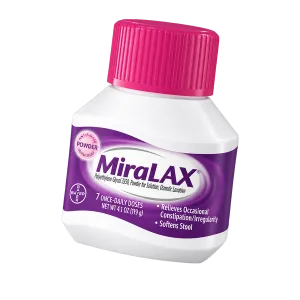
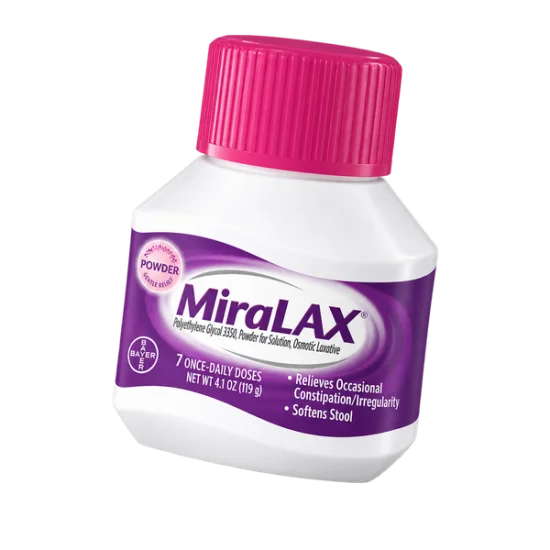
Miralax is supplied as powder in a bottle containing seven once-daily doses. Dissolve the intended daily serving fully in a non-carbonated drink before taking it. Water is suitable, and the powder may also be mixed into another preferred cold or hot beverage.

The amount used and how often it is used depends on the reason for treatment and should be agreed with a doctor or pharmacist.

  • Take the dissolved powder orally once daily when it is being used for occasional constipation.
  • Stir until the powder has dispersed in the drink.
  • Choose a time that allows access to a toilet when the laxative begins to work.
  • Continue normal meals unless a clinician has advised dietary restrictions.
  • Do not use repeated doses to compensate for a missed day.

Relief from polyethylene glycol may take one to three days. It is not a quick rescue treatment for severe abdominal pain or sudden inability to pass stool or wind.

NHS guidance on laxatives describes osmotic agents as products that draw water into the bowel and may take a few days to produce an effect [2].

Mix the powder in a drink you can finish comfortably. Leaving part of the drink behind may mean you do not take the full intended serving.

A common mistake is taking an extra serving after only a few hours because nothing has happened. That can lead to loose stools, bloating, or cramping without making the medicine work more predictably.

Another frequent problem is changing several things at once: starting Miralax, adding a stimulant laxative, cutting food intake, and increasing fibre sharply on the same day. If bowel symptoms change, this makes it much harder to identify the cause.

Formulation

Miralax contains polyethylene glycol 3350 as its active substance. It is supplied as a powder for dissolution in a non-carbonated drink. The osmotic laxative holds water in the bowel, helping stools become softer, less firm, and easier to pass. The powder is intended for once-daily use when treating occasional constipation.

Mechanism of action

Polyethylene glycol 3350 remains largely within the bowel and holds water in the stool. This makes bowel movements less dry, less firm, and easier to pass without directly stimulating intestinal nerves.

The WHO ATC/DDD Index classifies macrogols such as polyethylene glycol among osmotic laxatives, a group used to increase water content in the intestine rather than force a rapid bowel contraction [1].

Polyethylene glycol 3350 counteracts the reabsorption of water by keeping more water in the bowel contents.

Therapeutic indications

Miralax is an osmotic laxative for occasional constipation.

For occasional constipation, this can help restore a more comfortable bowel movement pattern. Persistent constipation needs a more detailed assessment because causes can include medicines, reduced mobility, dietary changes, thyroid disease, bowel disorders, or pelvic-floor problems.

Common mistakes

Several habits reduce the chance of a satisfactory result.

  • Expecting immediate relief: polyethylene glycol often needs one to three days.
  • Taking extra powder too soon: this raises the risk of diarrhoea and cramps.
  • Using it during possible obstruction: severe pain, vomiting, and abdominal swelling require urgent assessment.
  • Ignoring fluid intake: dehydration can worsen constipation and make stools harder.
  • Stopping all fibre suddenly: abrupt dietary changes can affect bowel regularity.
  • Relying on laxatives for new persistent symptoms: prolonged or unexplained constipation needs investigation.

A bowel routine can help. Going to the toilet after breakfast, allowing enough unhurried time, and responding to the urge to pass stool may be more useful than repeatedly delaying bowel movements.

Many people suppress the urge to open their bowels while travelling, working, or rushing in the morning. Repeatedly doing so gives the colon more time to reabsorb water, which can make stools firmer.

Reasons not to use it

  • severe abdominal pain without a known cause;
  • nausea and vomiting with constipation;
  • a history of bowel obstruction, bowel perforation, or severe inflammatory bowel disease;
  • rectal bleeding or unexplained blood in the stool;
  • sudden constipation with weight loss, anaemia, or a major change in bowel habit;
  • difficulty swallowing fluids safely.

Separate oral medicines from Miralax if diarrhoea develops, since fast intestinal transit can reduce the time available for some medicines to be absorbed. This matters for drugs with a narrow therapeutic range, including some anti-epileptic medicines, immunosuppressants, thyroid replacement, and anticoagulants.

When this is not for you

Miralax is not for you if you have a known or suspected bowel obstruction. A blockage needs medical treatment, not a laxative that adds water to bowel contents.

People with kidney disease, heart failure, frailty, or a history of electrolyte imbalance should discuss prolonged laxative use with a clinician. The concern is not that polyethylene glycol 3350 is absorbed in large amounts, but that diarrhoea, dehydration, and reduced food intake can alter fluid and salt balance.

Stop taking Miralax and seek urgent medical assessment for severe or worsening abdominal pain, a swollen abdomen, repeated vomiting, rectal bleeding, black stools, fainting, or an inability to pass stool or wind.

Unwanted effects

Most people tolerate polyethylene glycol 3350 without major problems when used for occasional constipation. The most common unwanted effects are related to increased water in the bowel.

Possible effects include:

  • bloating or increased wind;
  • mild nausea;
  • abdominal fullness;
  • loose stools or diarrhoea;
  • abdominal discomfort or cramping.

Diarrhoea usually means the bowel is receiving more osmotic effect than needed. Persistent diarrhoea can lead to dehydration and, in vulnerable people, disturbance of salts such as sodium or potassium.

The MHRA Yellow Card Scheme records suspected adverse reactions to medicines and provides a route for reporting serious or unexpected effects [3].

A small amount of wind or mild bloating during the first few doses can happen. Severe pain, vomiting, or a tense swollen abdomen are different symptoms and need urgent assessment rather than another laxative dose.

Comparison

Miralax differs from stimulant laxatives, bulk-forming fibre products, and stool softeners because its primary action is osmotic. It does not rely on stimulating bowel nerves, and it does not add bulk in the same way as psyllium-based products.

Approach Main action Typical role
Miralax / polyethylene glycol 3350 Retains water in the bowel to soften stool Occasional constipation with hard or dry stools
Bulk-forming agents such as psyllium Absorb water and increase stool bulk Constipation linked to low fibre intake when fluids are adequate
Stimulant laxatives such as bisacodyl or senna Stimulate bowel muscle activity Short-term use when a faster bowel response is needed

Bulk-forming agents can be useful where dietary fibre is low, though they may worsen bloating if fluid intake is poor. They also tend to be less suitable when there is suspected bowel narrowing or severe abdominal distension.

Stimulant laxatives such as bisacodyl and senna can work faster than osmotic products. Their drawback is a greater chance of cramping, urgency, and diarrhoea. They are often reserved for short-term relief or used when an osmotic approach alone has not helped.

Stool softeners, sometimes called emollient laxatives, aim to make stool easier to pass by altering its texture. Their effect can be modest in established constipation. Miralax generally focuses more directly on increasing stool water content.

If your stool is hard and dry, an osmotic laxative often makes more sense than repeatedly using a stimulant product. If you already have loose stool, adding any laxative can make symptoms worse.

What doctors say

Doctors usually view Miralax as a reasonable option for occasional constipation when hard stools and infrequent bowel movements are the main problem. Its osmotic mechanism is predictable when it is taken consistently and given sufficient time to work.

Clinicians also look beyond the immediate symptom. New constipation in an older adult, constipation accompanied by bleeding, or a sudden change from a stable lifelong pattern deserves assessment rather than repeated self-treatment.

A practical clinical question is whether constipation began after a new medicine. Opioid pain medicines, iron supplements, calcium supplements, anticholinergic medicines, some antidepressants, and certain blood-pressure medicines can all slow bowel function.

Miralax may soften stool, but it does not remove the underlying cause of medicine-related constipation. A clinician may need to adjust the wider treatment plan.

Comparison

Comparison table: Constipation

What customers often ask

When should urgent symptoms receive medical assessment?

Severe abdominal pain, persistent vomiting, abdominal swelling, rectal bleeding, black stools, fainting, or inability to pass stool or wind require urgent medical assessment. These symptoms can indicate bowel obstruction, bleeding, or another cause that Miralax should not mask. NHS advice published in 2023 treats severe pain and vomiting with constipation as warning signs rather than routine constipation symptoms. Do not take repeated laxative doses while these symptoms are present. Call emergency services if symptoms are severe or rapidly worsening.

How do diet, activity, and bowel habits affect constipation?

Regular meals, adequate fluids, gentle daily movement, and responding to the urge to open the bowels can support a better result. Fibre-rich foods may help some people, though adding a large amount of fibre suddenly can increase wind and bloating. NICE clinical guidance reviewed in 2022 supports lifestyle measures as part of constipation management, alongside an appropriate laxative where needed. Long periods of sitting, very low fluid intake, and regularly delaying toilet visits can make constipation more persistent.

Can older adults use Miralax?

Older adults can use osmotic laxatives, though new or worsening constipation should be assessed more carefully in this age group. Reduced mobility, low fluid intake, multiple medicines, and swallowing difficulties can all contribute to bowel problems. The MHRA's 2025 Yellow Card Scheme information highlights the need to report suspected adverse effects, including concerns in people who are frail or taking several treatments. A clinician should review constipation that continues despite a short course of treatment.

When should bowel obstruction rule out Miralax?

Known or suspected bowel obstruction rules out use of Miralax unless a clinician has assessed the situation. Obstruction may cause cramping pain, a distended abdomen, vomiting, and failure to pass stool or wind. NHS information from 2023 advises urgent assessment when constipation occurs with severe pain, vomiting, or abdominal swelling, rather than routine laxative use. A laxative should not be used to delay assessment of these symptoms.

What clinical checks are needed before starting Miralax?

Before using Miralax, discuss persistent constipation, previous bowel surgery, inflammatory bowel disease, kidney or heart disease, and all regular medicines with a doctor or pharmacist. Mention unexplained weight loss, blood in the stool, anaemia, a family history of bowel cancer, or a sudden change in bowel habit. WHO medicines guidance in 2025 continues to emphasise appropriate medicine use based on the person’s symptoms and clinical context. These details help distinguish occasional constipation from symptoms needing investigation.

How long does one daily serving take to work?

One daily serving is intended to support a bowel movement over the following one to three days rather than act within minutes. The response varies with stool hardness, fluid intake, diet, activity level, and other medicines. NHS information from 2023 describes osmotic laxatives as slower-acting than stimulant options because they work by changing the water content of bowel contents. Taking more before the first serving has had time to act can cause unnecessary diarrhoea.

Do you offer anonymous delivery?

Your order will be securely packed and shipped within 24 hours. This is exactly what your package will look like (images of an actual item sent). It has the size and look of a regular private letter (24x11x0.7 cm) and its contents cannot be seen.

How Buyers Rate Miralax

4.1
Based on 5 reviews
Karen, 69
Plymouth
Five days
Verified
Rating: 5 out of 5

I used Miralax once daily for five days after constipation became uncomfortable. The first day did not change much, but by the second morning I passed a softer stool without straining. I had a little wind at first, then it settled.

6 Oct 2026
Liam V., 35
Birmingham
About two days
Verified
Rating: 4.5 out of 5

I took it after a week of poor eating and sitting at my desk too much. It was slower than I expected, taking about two days, but it did not give me the sudden cramps I had experienced with a stimulant laxative.

16 Oct 2026
Michael S., 33
Sunderland
Three days
Verified
Rating: 4 out of 5

I used it for three days while recovering from a stomach bug. It helped, although I made the mistake of taking another serving too early on day two and ended up with loose stools. Waiting was the better approach.

23 Oct 2026
Wendy G., 53
Portsmouth
Verified
Rating: 5 out of 5

I had used it for occasional constipation linked to changes in my routine. It mixed easily in water and worked by the following day. I noticed that it worked less well when I barely drank anything during the day.

28 Oct 2026
Jack, 55
Cardiff
One dose
Verified
Rating: 2 out of 5

I stopped after one dose because I developed stronger abdominal pain and nausea rather than my usual constipation. It turned out I needed medical advice instead of trying to treat it myself with a laxative.

4 Nov 2026

Sources

  1. WHO Collaborating Centre for Drug Statistics Methodology (2025). ATC/DDD Index 2025.
  2. NHS (2023). Laxatives.
  3. MHRA (2025). Yellow Card Scheme: report a side effect to a medicine or medical device.
Get our free app Shop faster and track your orders 3.9 · 425 reviews Install