I used Shuddha Guggulu at the label dosage for several weeks as part of a plan to improve my diet after my cholesterol review. I did not expect a quick change, and I kept my repeat blood test appointment. My stomach felt slightly unsettled for the first few days, then settled.
Shuddha Guggulu
Adults seeking Ayurvedic support for healthy lipid metabolism and cardiac wellness may consider Shuddha Guggulu tablets. Shuddha Guggulu is purified guggul resin used traditionally in Ayurveda to support metabolic balance. Its role is supportive rather than a replacement for treatment of raised cholesterol or cardiovascular disease.
Overview
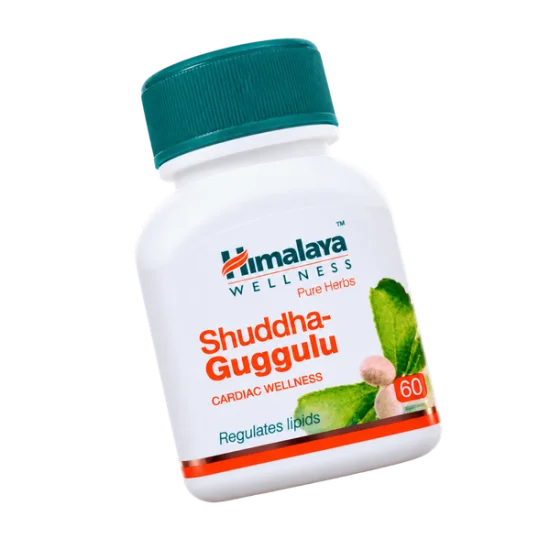
Shuddha Guggulu is the Ayurvedic name for purified guggul resin, obtained from Commiphora mukul. The product is supplied as tablets in a bottle and is positioned for cardiac wellness and lipid regulation. It is a traditional herbal wellness preparation rather than a statin, anticoagulant, thyroid medicine, or treatment for established heart disease.
The WHO describes Commiphora mukul as a medicinal plant with a long traditional history, while also distinguishing traditional use from proof of clinical benefit for a specific disease [1].
Directions for use
- Dose: The exact tablet strength and dose in mg are not provided; confirm the dose for the chosen strength with a healthcare professional before starting.
- Frequency: Confirm how many times per day the chosen strength should be taken with a healthcare professional.
- Timing: Take the tablets orally with water; confirm whether they should be taken before or after meals.
- Duration: Confirm the appropriate duration of use with a healthcare professional, particularly if using the product for lipid or cardiac wellness.
- Route: Use by mouth as tablets; do not apply topically or use by another route.
- Missed dose: Do not double the next dose; resume the planned schedule.
- Monitoring: Stop and seek professional advice if nausea, rash, palpitations, sleep disruption, or bowel changes occur.
Formulation
Shuddha Guggulu is purified guggul resin obtained from Commiphora mukul. It is supplied as oral tablets in a bottle and positioned as a traditional Ayurvedic herbal wellness preparation for cardiac wellness and lipid regulation.
Mechanism of action
Guggul contains plant sterols called guggulsterones. These compounds have been studied for possible effects on liver receptors involved in cholesterol and bile-acid metabolism. The biological activity is interesting, though the response seen in people has varied between studies.
Therapeutic indications
Shuddha Guggulu is used to support healthy lipid levels and cardiac wellness. In traditional Ayurvedic terms, it is also used where sluggish metabolism and excess body tissue are thought to be present. These concepts do not diagnose high cholesterol, coronary disease, or thyroid disease.
Potential supportive roles include:
- Supporting healthy lipid metabolism in adults following an appropriate diet and activity plan.
- Providing an Ayurvedic herbal option for people interested in traditional metabolic support.
- Potential drawback: clinical evidence for cholesterol lowering is mixed, so results may be limited.
- Contributing to a broader cardiac-wellness routine when cardiovascular risk is already being monitored.
- Offering a tablet format rather than a complex liquid preparation.
| Focus | What Shuddha Guggulu may support |
|---|---|
| Lipid metabolism | Traditional support for healthy cholesterol and triglyceride balance |
| Cardiac wellness | A supportive wellness approach alongside evidence-based cardiovascular care |
| Metabolic balance | Ayurvedic support where diet, weight, activity, and lipid markers need attention |
Clinical evidence is mixed. A randomised trial published in JAMA found that a guggul preparation did not lower cholesterol as expected in adults with hypercholesterolaemia, and some participants experienced an LDL cholesterol rise [2]. This matters because raised cholesterol needs proper assessment through blood testing rather than symptom-based self-management.
Common mistakes
Several avoidable mistakes reduce the value of herbal lipid support or increase its risks.
- Treating Shuddha Guggulu as a replacement for cholesterol testing.
- Adding it to a long supplement stack and being unable to identify the source of side effects.
- Combining it with anticoagulants or thyroid medicines without reviewing the combination.
- Doubling tablets after a missed dose.
- Stopping prescribed statins because a herbal product feels more natural.
- Ignoring a persistent itchy rash, diarrhoea, or palpitations after starting treatment.
A useful rule is to change one variable at a time. Start no other new herbal product during the first period of use, and record any symptoms with the date they began.
Reasons not to use it
Do not start it without clinical advice if you use:
- Warfarin, apixaban, rivaroxaban, clopidogrel, aspirin at prescribed cardiovascular doses, or another medicine affecting bleeding.
- Thyroid replacement or antithyroid medicines.
- Prescription treatment for high cholesterol.
- Diabetes medicines where diet, body weight, or metabolic control is changing.
- Several herbal products with possible effects on blood sugar, thyroid activity, bleeding, or liver metabolism.
The EMA’s herbal-medicine quality guidance emphasises consistent identity and quality assessment for herbal preparations, which is relevant because resin-based products can vary in their chemical profile [4].
When this is not for you
Shuddha Guggulu is not for you if you have had an allergic reaction to guggul or another ingredient in the tablets. It should also be avoided during pregnancy and breastfeeding unless a clinician with relevant expertise has specifically advised its use.
Use extra caution where thyroid disease is present. Guggul has been associated with thyroid-related biological activity in laboratory and animal research, while reliable clinical guidance remains limited. People taking levothyroxine, liothyronine, antithyroid medicines, or undergoing thyroid monitoring should discuss Shuddha Guggulu before starting it.
Unwanted effects
Most concerns reported with guggul involve the digestive system or skin. Possible reactions include abdominal discomfort, nausea, loose stools, headache, itching, or a rash. A systematic review by the Natural Standard Research Collaboration described gastrointestinal and dermatological effects among the reported tolerability concerns for guggul products [3].
Stop using Shuddha Guggulu and seek urgent medical advice for facial swelling, wheezing, widespread hives, fainting, severe abdominal pain, yellowing of the skin or eyes, dark urine, or a rapidly spreading rash. These symptoms are uncommon, yet they need prompt assessment.
Comparison
A single-herb approach has one practical advantage: it keeps the focus on guggul rather than combining several botanicals with overlapping effects. It also has a limitation. Its benefit cannot be assumed to match the broader intentions of classical multi-herb formulas.
The key difference lies in complexity. A single-herb product keeps exposure limited to guggul-derived constituents. A compound formulation may add herbs selected for a traditional purpose, such as support for mobility, urinary function, digestion, or metabolic balance.
What doctors say
In clinical practice, doctors generally separate two questions: whether a person wants traditional herbal support, and whether they have a cardiovascular risk factor needing established medical treatment. Shuddha Guggulu may fit the first question for some adults. It does not answer the second question on its own.
A clinician would usually review lipid results, blood pressure, thyroid history, diabetes status, diet, alcohol intake, and current medicines before agreeing that a guggul product is appropriate. People already taking statins should not stop or reduce them because they begin Shuddha Guggulu.
Expectations need to stay realistic. The potential benefit is supportive, and the clinical evidence for cholesterol lowering is inconsistent. A symptom-free person can still have a clinically significant lipid disorder.

Comparison
What customers often ask
What should be discussed before starting Shuddha Guggulu?
Before starting Shuddha Guggulu, discuss your lipid results, cardiovascular history, thyroid condition, allergies, pregnancy plans, and full medicine list with a clinician. The WHO’s 2007 medicinal-plant monograph supports the traditional context for Commiphora mukul, yet traditional use does not establish suitability for every individual. Mention anticoagulants, thyroid treatment, statins, diabetes medicines, and other herbal products. This review is most useful before the first tablet is taken.
What should you do after a missed dose?
After a missed dose, continue with the next planned dose rather than taking extra tablets. This approach avoids unnecessary exposure and reduces the risk of digestive intolerance. The MHRA’s 2025 public advice on medicines use supports avoiding dose-doubling unless a prescriber has provided specific instructions. If missed doses happen often, linking tablets to a regular meal or daily routine may help.
Can Shuddha Guggulu be used with thyroid disease?
Active thyroid disease is a concrete reason to pause before using Shuddha Guggulu. Guggul-derived compounds may influence thyroid-related pathways, and this can complicate interpretation of symptoms or blood tests in people taking thyroid treatment. A 2006 EMA herbal-medicine quality guideline supports careful assessment of herbal products when they are used alongside conventional medicines. A prescriber managing the thyroid condition should confirm whether use is appropriate.
Can Shuddha Guggulu be used with anticoagulants or antiplatelet medicines?
Do not combine Shuddha Guggulu with warfarin, direct oral anticoagulants, clopidogrel, or prescribed aspirin without clinical review. These medicines are used to reduce clotting risk, and an unreviewed herbal addition may complicate bleeding-risk management. A 2005 review by the Natural Standard Research Collaboration identified interaction concerns as part of guggul safety assessment. Report unusual bruising, nosebleeds, black stools, or prolonged bleeding promptly.
Can you drink alcohol while using Shuddha Guggulu?
There is no well-established direct alcohol interaction specific to Shuddha Guggulu, though alcohol can worsen triglycerides, disturb sleep, irritate the stomach, and complicate efforts to improve cardiovascular risk. The JAMA guggul trial published in 2003 reinforces that herbal use should not replace measurable lipid management. Keeping alcohol intake modest supports the same health goals that lead people to consider this product. Avoid using alcohol to manage any digestive discomfort that occurs after taking the tablets.
Does Shuddha Guggulu affect driving or concentration?
Shuddha Guggulu is not generally associated with sedation, but individual responses can differ. The MHRA’s 2024 safety guidance advises avoiding driving or machinery if a medicine or supplement causes dizziness, unusual weakness, headache, or impaired concentration. Take extra care when first starting, after changing a regimen, or if you are using other products that affect alertness. Persistent dizziness or palpitations warrants medical assessment.
Do you offer anonymous delivery?
Your order will be securely packed and shipped within 24 hours. This is exactly what your package will look like (images of an actual item sent). It has the size and look of a regular private letter (24x11x0.7 cm) and its contents cannot be seen.
Ayurvedic polyherbal formulation context
Guggulu is also used as a base resin in traditional Ayurvedic compound preparations. In these formulas, the resin can help bind powdered herbs into tablets while contributing its own traditional metabolic and musculoskeletal role.
Classical examples include Gokshuradi Guggul, Kaishore Guggul, Kanchnar Guggulu, Triphala Guggulu, Medohar Guggulu, Yograj Guggulu, Mahayograj Guggulu, Simhnad Guggulu, Punarnavadi Guggulu, and Navaka Guggulu. These are distinct traditional formulas with different additional herbs and traditional purposes. They are not interchangeable with Shuddha Guggulu tablets.
| Formula category | Traditional focus |
|---|---|
| Metabolic combinations | Body-weight and metabolic balance support |
| Mobility combinations | Joint comfort and musculoskeletal support |
| Urinary-support combinations | Urinary and fluid-balance support |
A formula containing guggul may have a different interaction profile from a single-herb product because each additional plant introduces further active constituents. People using anticoagulants, thyroid medicines, diabetes medicines, or several prescription treatments should avoid assuming that one guggul formula can be substituted for another.
How Buyers Rate Shuddha Guggulu
I took the tablets at the label dosage consistently for several weeks while cutting back on takeaways and increasing my walking. I liked the straightforward tablet form. My lipid results still needed attention, so I did not treat it as an alternative to the plan agreed with my clinician.
I stopped after taking the tablets at the label dosage for less than a week and developing an itchy patch on my arms. It may not have been the tablets, but I did not restart them because I was also taking thyroid medicine and wanted the combination reviewed first.
Sources
- World Health Organization (2007). WHO Monographs on Selected Medicinal Plants, Volume 3
- JAMA (2003). Guggulipid for the treatment of hypercholesterolemia: A randomized controlled trial
- Natural Standard Research Collaboration (2005). An evidence-based systematic review of guggul (Commiphora mukul)
- European Medicines Agency (2006). Guideline on quality of herbal medicinal products/traditional herbal medicinal products