I used Xenical for nearly three months alongside planned meals and evening walks. The first week included oily spotting after a fried lunch, which was embarrassing, but it settled when I stopped buying creamy lunches at work. I lost weight gradually rather than dramatically.
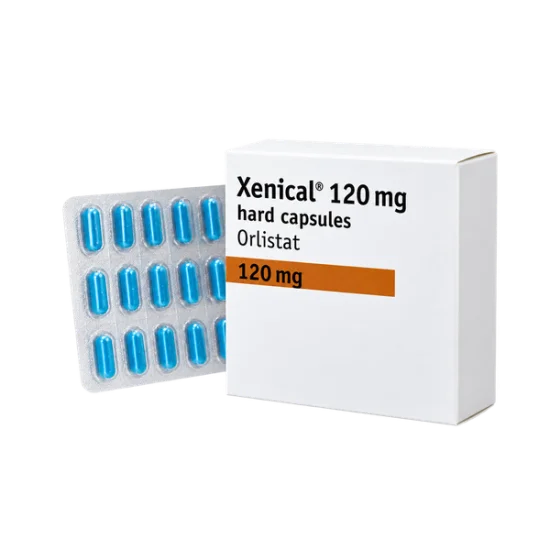
Xenical is an orlistat hard-capsule product for adults with obesity or overweight and relevant health risks. It supports structured weight management alongside eating patterns, physical activity and other sustainable changes.
Overview
Xenical is a hard-capsule formulation containing orlistat. It belongs to the lipase inhibitor class and is used as part of a structured weight-management plan for adults with obesity or overweight with relevant health risks.
Directions for use
Dosing differs between strengths and between users, so there is no single amount that suits everyone. The appropriate use should be determined for the individual rather than adjusted in an attempt to accelerate weight loss.
| Meal situation | Usual action |
|---|---|
| Main meal containing fat | Use according to the individual dosing instructions |
| Meal contains no fat | Follow the individual dosing instructions |
| Missed meal-related dose | Follow the individual dosing instructions and do not double up |
Standard Meal-Linked Dosing
Meal-linked use is central to how orlistat works. Taking a capsule long after eating does not provide the intended benefit because most digestion has already progressed.
Do not crush, split or chew the hard capsule. A capsule taken with black coffee, a piece of fruit or another fat-free snack is not needed.
Missed Doses and Meal Changes
If a dose is forgotten and the meal window has passed, follow the individual dosing instructions. Do not take extra capsules together, as this may increase the chance of bowel effects without improving the result.
Common Administration Mistakes
Common errors include:
- taking Xenical with every snack rather than with main meals;
- taking an extra capsule after a rich meal;
- continuing the capsule when a meal contains no fat;
- assuming it offsets high-calorie food or alcohol;
- taking all regular medicines and supplements at the same time;
- avoiding all dietary fat, which can reduce intake of essential fatty acids.
Formulation
Xenical is a hard-capsule formulation containing orlistat. It belongs to the lipase inhibitor class and is used as part of a structured weight-management plan for adults with obesity or overweight with relevant health risks.
- Active ingredient: orlistat
- Dosage form: hard capsules
- Therapeutic class: lipase inhibitor
- Main role: support for obesity management alongside dietary and activity changes
Lipases are digestive enzymes that break dietary fat into smaller molecules the body can absorb. Orlistat acts locally in the stomach and small intestine rather than changing brain appetite signals. The MHRA-approved product information describes Xenical as an adjunct to a mildly hypocaloric diet for weight management. [1]
Active Ingredient and Pharmacological Class
Orlistat attaches to gastric and pancreatic lipases, reducing their ability to digest some of the fat eaten in a meal. Less digested fat means less fat is absorbed.
This action does not block carbohydrates or protein in the same way.
Role in Weight Management
Obesity management means more than pursuing a number on the scales. It includes eating patterns, physical activity, sleep, medical conditions, medicines that affect weight, and support that can be sustained over time. Xenical supports these changes but does not replace them.
Mechanism of action
Xenical works in the digestive tract during and shortly after meals. Dietary fat enters the stomach and intestine, where lipase enzymes would normally prepare it for absorption. Orlistat blocks part of this process, so some undigested fat passes out in the stool.
The medicine does not directly suppress hunger. It also does not neutralise the calories from sugary drinks, alcohol, sweets, refined carbohydrates or oversized portions. This is why dietary energy intake still matters during obesity management.
Fat Digestion and Absorption
A meal containing oil, butter, cream, fried food or fatty meat provides dietary fat. Xenical reduces digestion of part of that fat before absorption takes place. The unabsorbed portion remains in the bowel.
This local mechanism explains both its benefit and its main limitation. A lower-fat, reduced-calorie eating plan supports steady progress, while a very high-fat meal is more likely to cause unpleasant digestive effects.
Digestive Consequences of Unabsorbed Fat
Oily stools, oily spotting and urgency can occur because unabsorbed fat leaves through the bowel. These effects are not a sign that the capsule is working better than expected. They usually signal that the fat content of a meal was high.
Therapeutic indications
Xenical is used as part of a structured weight-management plan for adults with obesity or overweight with relevant health risks.
Obesity management means more than pursuing a number on the scales. It includes eating patterns, physical activity, sleep, medical conditions, medicines that affect weight, and support that can be sustained over time. Xenical supports these changes but does not replace them.
Common mistakes
Taking Xenical after every meal regardless of fat content is a frequent mistake. The capsule is intended for main meals that contain dietary fat.
Another problem is treating the medicine as protection against an occasional very high-fat meal. That approach tends to cause urgency and oily stools without creating lasting weight-management habits.
Some people stop all dietary fat to avoid symptoms. This can reduce enjoyment of food and compromise intake of essential fats and fat-soluble vitamins.
A further issue is stopping activity when the scales slow down. Plateaus happen. Reviewing portions, drinks, sleep, activity and medicine timing gives more useful information than reacting to a single weigh-in.
Reasons not to use it
Xenical is not for you if you have chronic malabsorption syndrome, cholestasis, or a known allergy to orlistat or another ingredient in the capsule.
Avoid Xenical if you have:
- chronic malabsorption syndrome;
- cholestasis, where bile flow from the liver is blocked;
- known hypersensitivity to orlistat or capsule ingredients.
People with a history of calcium oxalate kidney stones, kidney disease, liver disease, gallbladder disease or pancreatitis may need closer review. Orlistat can alter nutrient handling and may increase urinary oxalate in susceptible people.
Extra monitoring or timing changes may be needed with ciclosporin, levothyroxine, warfarin and other anticoagulants, antiepileptic medicines, amiodarone, and some HIV treatments. Changes in body weight and vitamin K absorption may affect anticoagulant control.
When this is not for you
Xenical is not for you if you have chronic malabsorption syndrome, cholestasis, or a known allergy to orlistat or another ingredient in the capsule. These conditions can make its effect on fat absorption unsuitable or increase nutritional concerns.
Pregnancy and breastfeeding require medical advice before any weight-management medicine is considered. Xenical is also not intended for children unless a specialist has made that decision.
Eating disorders need careful clinical management rather than calorie restriction alone. Nutritional risk can be hidden even where body weight is high, especially after bariatric surgery or with restrictive eating patterns.
Unwanted effects
Most side effects with Xenical affect the bowel because of unabsorbed dietary fat. Oily spotting, oily or fatty stools, loose stools, wind with oily discharge, increased bowel movements and faecal urgency are common.
They often improve when meal fat content falls and becomes more evenly distributed. The FDA prescribing information also records rare serious reports involving liver injury, kidney stones and severe allergic reactions. [3]
Common Gastrointestinal Effects
Digestive effects can include:
- oily spotting on underwear;
- pale, oily or fatty stools;
- urgency or difficulty controlling a bowel movement;
- loose stools;
- increased wind;
- more frequent bowel movements;
- abdominal discomfort.
Persistent symptoms deserve discussion with the prescriber, especially if they interfere with daily life or lead to avoiding meals.
Serious Symptoms and Medical Review
Seek urgent medical assessment for severe or persistent abdominal pain, repeated vomiting, swelling of the face or throat, trouble breathing, yellow skin or eyes, dark urine, marked itching, blood in the urine, or severe flank pain.
Those symptoms have causes beyond Xenical and should not be self-diagnosed. Prompt assessment matters because dehydration, liver problems, allergic reactions and kidney stones need different care.

Comparison
Weight-management medicines work through different pathways. Xenical acts in the gut on dietary fat, while other prescription approaches may affect appetite-regulating hormones or central appetite pathways.
| Treatment approach | Mechanism and route | Common limitations |
|---|---|---|
| Orlistat capsules | Reduces absorption of some dietary fat in the intestine | Oily stools, urgency and vitamin-timing issues |
| GLP-1 receptor agonists | Usually injections that influence appetite and glucose regulation | Nausea, vomiting, injection burden and monitoring needs |
| Central appetite treatments | Alter appetite signalling in the brain | May be unsuitable with some psychiatric, cardiovascular or medicine histories |
Orlistat-Based Treatment Compared with Appetite- or Hormone-Based Options
Xenical may suit people who prefer an oral capsule and who can commit to a lower-fat meal pattern. Its mechanism is predictable: richer meals carry a greater likelihood of bowel effects.
Appetite- or hormone-based options may be appropriate for some people with obesity and metabolic disease, yet they involve different contraindications, monitoring and tolerability concerns. No single medicine suits every clinical situation.
Selection Factors in Clinical Practice
Doctors usually consider medical history, diabetes, blood pressure, cardiovascular risk, kidney and liver function, pregnancy plans, regular medicines and prior treatment experience. Personal preference matters too, especially when weighing capsule timing against injection-based treatment.
What doctors say
Clinicians commonly see better Xenical adherence when patients understand that digestive effects are linked to meal composition, not personal failure. Setting this expectation before treatment can prevent people from stopping after one difficult meal.
Doctors also look for obesity-related conditions such as type 2 diabetes, sleep apnoea, fatty liver disease, high blood pressure and joint pain. These factors influence the weight-management plan and the health outcomes being tracked.
Comparison
What customers often ask
Can older adults use Xenical?
Older adults may use Xenical when it is clinically appropriate, but age alone does not determine suitability. Kidney function, liver disease, mobility, nutrition, osteoporosis risk and regular medicines need consideration because these factors can affect monitoring needs. The MHRA’s 2024 product information lists the same core contraindications for adults while individual prescribing decisions remain based on health history. Older adults using warfarin, levothyroxine or multiple medicines need interaction review before treatment starts. A pharmacist or prescriber can check whether existing treatments require timing changes or closer monitoring.
How long does one Xenical capsule keep working?
One capsule is designed to act around the main meal taken during the meal or within one hour afterwards. Its useful effect is linked to dietary fat passing through the digestive tract, rather than providing all-day appetite control. The FDA’s 2015 prescribing information describes orlistat’s local action on gastric and pancreatic lipases. Taking an extra capsule later does not compensate for a missed meal-related dose.
How soon does Xenical become noticeable?
Its effect on fat digestion begins with a fat-containing meal, so bowel changes can appear early in treatment. Weight loss is slower and should be assessed over weeks, not days, because daily scale changes are influenced by fluid and food intake. NICE guidance updated in 2025 supports structured review of progress within a wider weight-management programme. Consistent meals, activity and weighing conditions give a clearer picture of change.
Which habits help or hinder Xenical results?
A reduced-calorie eating pattern with moderate fat spread across meals helps both tolerability and weight management. Large fried meals, creamy dishes, heavy sauces and unplanned takeaway portions can trigger oily stools and urgency. The WHO’s 2022 guidance on obesity management supports long-term dietary, activity and behavioural approaches rather than short-term restriction. Regular movement, planned shopping and adequate sleep can support adherence.
Can Xenical be used during pregnancy or breastfeeding?
Xenical should not be started during pregnancy because weight loss is not recommended in pregnancy and treatment needs individual medical assessment. Breastfeeding also requires prescriber advice, since medicine choice must account for maternal nutrition and infant feeding. The MHRA’s 2024 prescribing information advises caution around pregnancy and lactation. Anyone who becomes pregnant during treatment should contact their prescriber promptly.
What should happen if expected results do not come?
Do not increase the capsule dose. Review meal fat content, calorie intake, drinks, weekend eating, activity, vitamin timing and whether capsules were taken only with fat-containing main meals. NHS guidance published in 2023 advises review when weight-management treatment is not producing the expected benefit. A prescriber may reassess the diagnosis, medicines, nutrition, health conditions and whether a different strategy is more appropriate.
Do you offer anonymous delivery?
Your order will be securely packed and shipped within 24 hours. This is exactly what your package will look like (images of an actual item sent). It has the size and look of a regular private letter (24x11x0.7 cm) and its contents cannot be seen.
Dietary Plan for Xenical Treatment
A reduced-calorie diet with moderate, evenly distributed fat intake tends to be easier to maintain and better tolerated with Xenical. NICE guidance on overweight and obesity management supports combining dietary change, activity and behavioural support rather than relying on medication alone. [2]
Removing all fat from food is not the goal. Dietary fat provides essential fatty acids and helps the body use fat-soluble vitamins. The practical target is moderation and consistency.
Fat Distribution Across Meals
Large servings of fried food, creamy sauces, buttery pastries and rich takeaway meals can produce more oily stools or urgent bowel movements. Splitting fat intake across breakfast, lunch and dinner is usually easier on the digestive system.
Meals built around vegetables, pulses, lean protein, wholegrains and measured portions of unsaturated fats often fit well with treatment. A registered dietitian can tailor calorie and nutrient goals around diabetes, high blood pressure, mobility limits, cultural eating patterns or shift work.
Physical Activity and Behaviour Support
Physical activity helps preserve fitness and supports weight maintenance after weight loss. Walking, swimming, cycling, seated exercise and resistance training can all be adapted to health status and mobility.
Weight change is rarely linear. Use the same scales, at a similar time of day, and similar clothing conditions when tracking progress. Daily fluctuations often reflect fluid, salt intake and bowel contents rather than a meaningful change in body fat.
How Buyers Rate Xenical
I took the capsules with breakfast, lunch and dinner for eight weeks. I had to get more organised with meals because a takeaway on Friday caused urgent bowel movements the next morning. The routine worked better once I prepared food at home.
I had been using Xenical for four months and found the meal link easy to remember. My weight was moving in the right direction, though I disliked the oily stools after meals that were richer than I thought. Keeping notes made the pattern obvious.
I expected the capsules to reduce my appetite, and they did not. I stopped after several weeks because I had not changed my eating habits enough and the bowel effects were inconvenient. It made more sense once my prescriber explained the fat-absorption mechanism.
I took Xenical for twelve weeks while following a calorie-controlled plan. I found a bedtime vitamin routine easier than trying to remember it around meals. The results were steady, although weekends were harder when meals were less planned.
Sources
- MHRA (2024). Summary of Product Characteristics — Xenical 120 mg hard capsules.
- NICE (2025). Overweight and obesity management: NICE guideline NG246.
- FDA (2015). Xenical (orlistat) prescribing information.