Skip to content
Lexapro

Lexapro

Quality products
24/7 Support
Fast delivery
Delivery from 4 days
Active ingredient Escitalopram

Free delivery on orders from £ 166.00, free express delivery from £ 249.00

Lexapro is prescribed for adults and, in appropriate clinical circumstances, adolescents with depression or anxiety disorders. It increases serotonin signalling in the brain, helping stabilise mood and reduce persistent anxiety.

Overview

Escitalopram, the active ingredient of Lexapro, is a selective serotonin reuptake inhibitor (SSRI) antidepressant.

Directions for use

Lexapro tablets are taken orally, usually once daily. The regimen for the chosen strength should be confirmed with a healthcare professional before treatment begins.

Typical prescribing principles include:

  • Adults with depression commonly begin with once-daily treatment.
  • Some patients may start with a lower dose when sensitivity to side effects, panic symptoms, liver impairment, or other clinical concerns are present.
  • A clinician may increase the daily dose when the initial response is insufficient and tolerability is acceptable.
  • The maximum adult dose is determined by the prescribing clinician’s assessment.
  • Older adults and people with hepatic impairment may require a lower maximum dose.
  • The tablet can be taken with or without food.
  • Treatment commonly continues after improvement to reduce the chance of relapse.
  • The tablet should be swallowed with water unless a prescriber gives different instructions.

Do not change to another strength independently. Dose increases are normally gradual, especially when treating panic symptoms or when previous antidepressants caused marked agitation.

If a dose is missed, take it when remembered unless the next dose is close. Do not take two doses together. A double dose increases the chance of nausea, tremor, drowsiness, agitation, and other adverse effects.

Do not stop suddenly after regular use. Withdrawal symptoms can include dizziness, electric-shock sensations, sleep disturbance, anxiety, sweating, nausea, and irritability. The FDA prescribing information for escitalopram describes once-daily dosing, dose adjustment, and discontinuation precautions [3].

Morning dosing can suit people who notice activation or sleep difficulty. Evening dosing may suit people who feel sleepy after taking it; changing the timing is best done consistently rather than switching back and forth.

Formulation

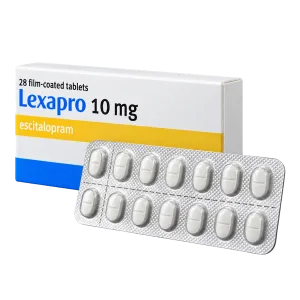
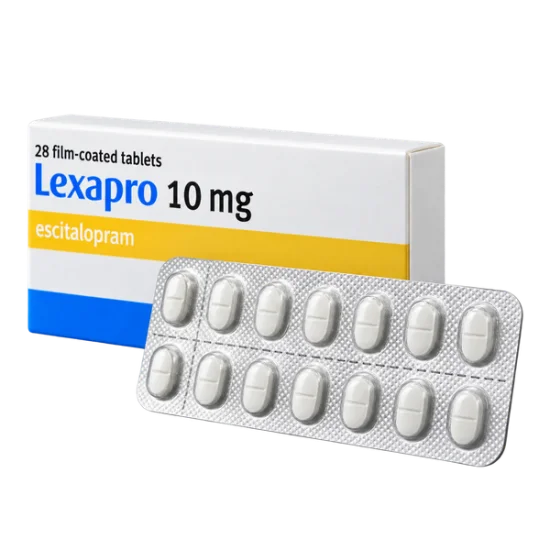
Lexapro is supplied here as film-coated tablets containing escitalopram. The product presentation is 10 mg tablets, with 28 tablets in the pack.

Escitalopram is also available in other pharmaceutical presentations in some healthcare systems, including oral solutions and generic tablets. Those presentations may differ in concentration, excipients, licensing, or dosing instructions. Do not substitute a liquid volume for a tablet dose without a prescriber or pharmacist confirming the conversion.

Generic escitalopram formulations contain the same active substance, though inactive ingredients and tablet appearance may vary. The clinical choice concerns the active ingredient, strength, formulation, and patient response.

Mechanism of action

Escitalopram selectively blocks the serotonin transporter, which normally removes serotonin from the synaptic space between nerve cells. This inhibition allows serotonin to remain available for longer and strengthens signalling through relevant serotonin receptors.

Serotonin influences mood, worry, fear responses, sleep, appetite, and emotional processing. The drug does not simply add serotonin to the brain. It changes how nerve cells recycle and respond to the neurotransmitter over time.

The therapeutic effect develops gradually because downstream receptor adaptation and changes in neural circuits take time. Nausea, restlessness, or altered sleep can appear before mood benefits become clear.

SSRIs differ from medicines that mainly affect noradrenaline, dopamine, or several neurotransmitter systems. Escitalopram is relatively selective for serotonin reuptake, which helps explain both its clinical uses and its characteristic adverse effects, including nausea and sexual dysfunction. The pharmacological basis of SSRI treatment is described in the EMA product information for escitalopram [2].

Therapeutic indications

Lexapro contains escitalopram and belongs to the SSRI class of antidepressants. Its principal clinical uses include major depressive disorder and generalised anxiety disorder. Treatment aims to reduce low mood, loss of interest, excessive worry, sleep disruption, irritability, and associated physical symptoms.

Escitalopram may also be prescribed for panic disorder, social anxiety disorder, or obsessive-compulsive disorder when a clinician considers an SSRI suitable. These uses depend on the patient’s diagnosis, age, medical history, and local prescribing guidance. The Medicines and Healthcare products Regulatory Agency (MHRA) and European Medicines Agency (EMA) recognise escitalopram as an established SSRI treatment option for depressive and anxiety-related conditions [1].

Primary conditions treated by escitalopram

Lexapro is generally considered when symptoms are persistent, impair daily activities, or have not improved sufficiently with psychological support alone. A clinician may also use it when depression and anxiety occur together.

Treatment is not intended to create immediate sedation or alter personality. The clinical goal is gradual symptom improvement, better emotional regulation, and improved functioning.

Escitalopram is not suitable for every mood symptom. Bipolar disorder requires careful assessment because an antidepressant can contribute to mood elevation or rapid cycling in susceptible patients.

Common mistakes

Several practical errors can reduce benefit or create avoidable problems:

  • Stopping after a few days because mood has not improved yet.
  • Taking the tablet at changing times and then assuming the medicine is inconsistent.
  • Doubling the next dose after a missed tablet.
  • Increasing the dose without waiting for a planned review.
  • Stopping suddenly because of nausea, insomnia, or sexual dysfunction.
  • Combining Lexapro with St John’s wort or tramadol without checking the interaction.
  • Keeping quiet about suicidal thoughts, severe agitation, or symptoms of mania.
  • Forgetting to mention anticoagulants, migraine medicines, or heart-rhythm treatment.
  • Treating a short period of improvement as proof that treatment can end immediately.

One common misconception is that a larger dose always produces faster relief. Higher exposure can also increase nausea, sweating, insomnia, sexual dysfunction, and agitation.

Another is that withdrawal symptoms prove addiction. Escitalopram is not classified as an addictive drug, but the nervous system can react to sudden changes after regular exposure. A gradual reduction helps reduce discontinuation symptoms.

Reasons not to use it

Escitalopram also requires careful assessment in the following circumstances:

  • Previous allergic reaction to escitalopram or another ingredient.
  • Known long-QT syndrome or significant heart-rhythm abnormality.
  • Use of medicines that prolong the QT interval.
  • Bipolar disorder or a previous manic episode.
  • Epilepsy or a history of seizures.
  • Severe liver impairment.
  • Low sodium levels.
  • A bleeding disorder or treatment with anticoagulants or antiplatelet medicines.
  • Pregnancy, planned pregnancy, or breastfeeding.
  • Age under 18, where the balance of benefit and risk requires specific assessment.

Medicines that can raise serotonin include other antidepressants, tramadol, lithium, linezolid, triptans, amphetamines, and the herbal product St John’s wort. The combination of escitalopram with these agents requires a prescribing decision rather than casual self-treatment.

Non-steroidal anti-inflammatory drugs, aspirin, warfarin, and other anticoagulants may increase bleeding risk when used with an SSRI. Some medicines affect heart rhythm or alter escitalopram concentrations. A complete medicine and supplement review is needed before starting.

When this is not for you

Lexapro may not be right for you if you are taking or have recently taken an MAOI, have a serious heart-rhythm problem, have had an allergic reaction to escitalopram, or have a history of mania or seizures. Speak with a clinician before treatment if you have severe liver problems, low sodium, a bleeding condition, are pregnant or breastfeeding, or take medicines that affect serotonin, bleeding, heart rhythm, or escitalopram levels.

Unwanted effects

Common SSRI effects include nausea, headache, dry mouth, increased sweating, fatigue, insomnia, dizziness, and changes in appetite. Sexual dysfunction may involve reduced desire, delayed orgasm, or difficulty reaching orgasm. These effects vary between individuals and often improve during the first few weeks, although sexual symptoms can persist for some patients.

The UK patient information for escitalopram lists gastrointestinal effects and nervous-system symptoms among recognised adverse reactions. It also describes clinically significant risks such as suicidal thoughts, serotonin syndrome, abnormal bleeding, seizures, mania, and heart-rhythm changes [4].

Practical management may include:

  • Taking the tablet with food if nausea occurs.
  • Taking it in the morning when insomnia or evening restlessness develops.
  • Taking it later in the day when daytime drowsiness is the main problem.
  • Avoiding abrupt discontinuation when sexual side effects or other problems occur.
  • Recording sleep, anxiety, mood, and adverse effects during the first month.
  • Reporting persistent sexual dysfunction rather than silently stopping treatment.

Urgent medical assessment is needed for severe agitation, confusion, high temperature, muscle rigidity, fainting, a seizure, sudden suicidal thoughts, symptoms of mania, or signs of a serious allergic reaction.

One detail patients often miss is that early activation can feel like worsening anxiety. This may settle, but marked agitation, impulsivity, or suicidal thinking requires prompt clinical review.

Another practical issue concerns alcohol. Alcohol can worsen sleep disruption, dizziness, impaired judgement, and depressed mood, even though it does not create the same specific interaction as a monoamine oxidase inhibitor.

Comparison

Active substance Main pharmacological profile Practical distinction
Escitalopram Selective serotonin reuptake inhibitor Often chosen for depression and anxiety, with once-daily administration
Sertraline Selective serotonin reuptake inhibitor Frequently considered when anxiety, panic symptoms, or cardiac-risk considerations influence selection
Fluoxetine Selective serotonin reuptake inhibitor with a long half-life May be useful when a longer-lasting active metabolite is clinically desirable, but interactions can persist longer

All three medicines can cause nausea, sleep changes, agitation during initiation, and sexual side effects. Escitalopram may feel smoother for some patients, while others experience more tiredness, reduced libido, or gastrointestinal discomfort. Prescribing decisions depend on diagnosis, previous response, other medicines, pregnancy status, cardiac history, and suicide-risk assessment.

What doctors say

In clinical practice, doctors usually set expectations before the first dose: Lexapro is gradual, and early side effects can precede noticeable improvement. Anxiety may begin to ease before low mood, or the sequence may be reversed.

A clinician will usually review sleep, agitation, suicidal thoughts, adherence, alcohol use, and other medicines during the early treatment period. Dose increases are based on response and tolerability, not on a fixed schedule that applies to everyone.

The first few weeks deserve attention. Patients who feel unusually restless, impulsive, euphoric, or unable to sleep should report those changes rather than simply increasing or stopping the medicine.

Long-term treatment may be appropriate after recurrent depression or repeated anxiety symptoms. The duration depends on relapse history and response, not merely on whether the first course produced improvement.

Comparison

Comparison table: Antidepressants

What customers often ask

How does Lexapro differ from the closest alternative antidepressants?

Escitalopram and sertraline are both SSRIs, so they share a serotonin-based mechanism, while individual tolerability can differ. NICE guidance reviewed in 2025 continues to support SSRI selection according to diagnosis, previous response, interaction risk, and patient preference. Lexapro may suit someone who previously responded to escitalopram or who needs a straightforward once-daily SSRI, while another option may be preferred after troublesome side effects.

Which concrete condition rules Lexapro out?

A current MAOI treatment rules out starting escitalopram until the required interval has passed and a clinician confirms that treatment can begin. The EMA safety information reviewed in 2025 also identifies congenital long-QT syndrome and serious heart-rhythm risk as conditions requiring avoidance or specialist assessment. Bipolar mania, severe allergic reaction to the medicine, and certain interacting medicines also require a different plan.

What happens when Lexapro is stopped, and should it be tapered?

Sudden discontinuation can cause dizziness, sensory disturbances, anxiety, nausea, sweating, sleep changes, and irritability. WHO antidepressant guidance published in 2023 supports planned reduction rather than abrupt stopping after regular treatment. The tapering pace depends on treatment duration, dose, previous withdrawal symptoms, and the return of depressive or anxiety symptoms.

What is the best time of day to take Lexapro?

There is no single time that suits every patient because escitalopram can cause either sleepiness or activation. NHS medicine guidance available in 2025 supports once-daily administration at a consistent time, with or without food. Morning dosing may suit insomnia, while evening dosing may suit daytime drowsiness; the chosen schedule should remain stable unless the prescriber advises a change.

Do you offer anonymous delivery?

Your order will be securely packed and shipped within 24 hours. This is exactly what your package will look like (images of an actual item sent). It has the size and look of a regular private letter (24x11x0.7 cm) and its contents cannot be seen.

How Buyers Rate Lexapro

3.7
Based on 5 reviews
Oliver R., 64
Liverpool
Six weeks
Verified
Rating: 3.5 out of 5

The first ten days brought nausea and lighter sleep. I took the tablet after breakfast and the stomach problem eased. By week five, I was less preoccupied with small worries, although I still felt tired in the afternoon.

8 Oct 2026
Emily, 29
Sunderland
Three months
Verified
Rating: 4 out of 5

My panic symptoms became less frequent after about four weeks. I noticed reduced libido, which was difficult to discuss at first. The prescriber adjusted the timing and reviewed other options rather than telling me to stop suddenly.

17 Oct 2026
Peter, 41
Cardiff
Five weeks
Verified
Rating: 4.5 out of 5

I felt more settled and managed work meetings without the same physical anxiety. The first week was uncomfortable because of headaches and restlessness. Those symptoms improved, but I needed regular reminders to take the tablet.

22 Oct 2026
Charlotte, 41
York
Two weeks
Verified
Rating: 3 out of 5

The early agitation was too strong for me, and my sleep became poor. I contacted the prescriber and did not increase the dose. My experience was mixed, so the treatment plan was reassessed.

27 Oct 2026
Kate, 30
Brighton
Four months
Verified
Rating: 3.5 out of 5

My mood gradually lifted and I became more willing to leave the house. I still had delayed orgasm, which had not happened before treatment. The improvement was meaningful, but the side effect remained part of the decision about continuing.

3 Nov 2026

Sources

  1. European Medicines Agency (2024). Escitalopram: Summary of Product Characteristics and patient information.
  2. European Medicines Agency (2015). Assessment report for escitalopram-containing medicinal products.
  3. U.S. Food and Drug Administration (2023). Lexapro (escitalopram oxalate) prescribing information.
  4. Medicines and Healthcare products Regulatory Agency (2024). Escitalopram: United Kingdom product information and safety guidance.
Get our free app Shop faster and track your orders 3.9 · 425 reviews Install