Skip to content
Minomycin

Minomycin

Quality products
24/7 Support
Fast delivery
Delivery from 4 days
Active ingredient Minocycline

Free delivery on orders from £ 166.00, free express delivery from £ 249.00

Minomycin capsules contain minocycline, a tetracycline antibiotic used for susceptible bacterial infections and inflammatory acne. It limits bacterial protein production, helping reduce the growth of microorganisms involved in infection and skin inflammation.

Overview

Minocycline is distributed into body tissues, including the skin, which helps explain its role in inflammatory acne. Its clinical use depends on the suspected or confirmed organism, the site of infection, previous antibiotic exposure, and the patient’s medical history.

Directions for use

Minomycin dosing differs between strengths, conditions, age groups, kidney or liver function, and individual treatment plans. There is no single amount that suits everyone. The prescribed dose determines the interval and duration.

  • Swallow the capsule with a full glass of water.
  • Take it while sitting or standing rather than immediately before lying down.
  • Keep the timing consistent from day to day.
  • Complete the prescribed course unless the prescriber changes it because of an adverse reaction.
  • Separate minocycline from iron, calcium, magnesium, aluminium-containing antacids, and some mineral supplements because these products can reduce absorption.
  • If a dose is missed, take it when remembered unless the next dose is due soon; do not double the next dose.

The capsule should not be opened, crushed, or chewed unless a prescriber or pharmacist has supplied specific instructions for that formulation. Taking a tetracycline capsule with too little water can cause irritation or ulceration of the oesophagus.

Take the capsule with a generous glass of water and remain upright for at least 30 minutes. This simple habit reduces the chance of painful swallowing caused by capsule contact with the oesophagus.

Minocycline can be taken with food when stomach upset occurs, although mineral-rich products can interfere with absorption. Milk, yoghurt, calcium supplements, iron tablets, magnesium products, and antacids should not be taken at the same time without checking the required separation interval for the prescribed formulation.

Formulation

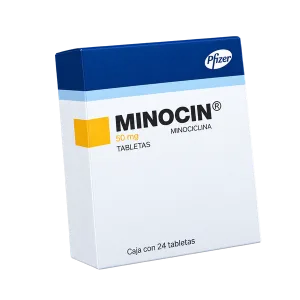
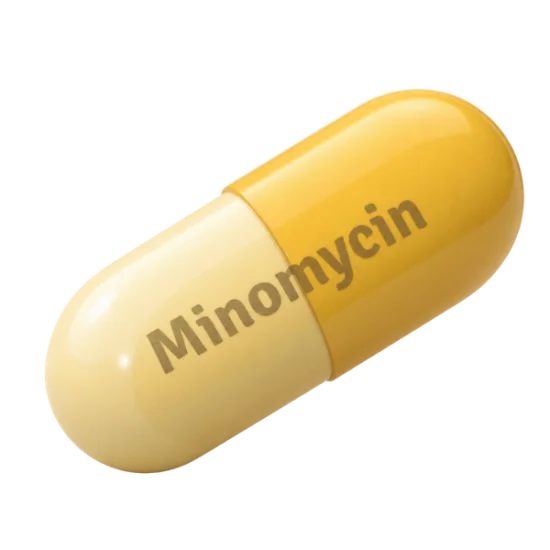
Minomycin contains minocycline, a semi-synthetic tetracycline antibiotic. Minocycline belongs to the broad-spectrum tetracycline class. The capsules are taken orally with water. [1]

Active Ingredient and Drug Class

The active ingredient is minocycline. It is a tetracycline antibiotic with antibacterial and anti-inflammatory properties.

International Equivalents and Brand Designations

Minocycline is the generic name used in prescribing information and clinical literature. Brand designations can vary between countries, but the pharmacological discussion concerns minocycline itself rather than a retailer, package design, or commercial presentation.

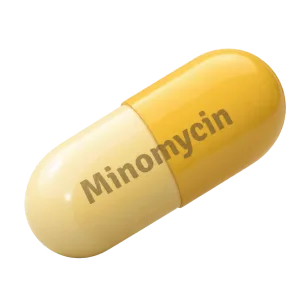
The product is supplied as capsules.

Mechanism of action

Minocycline acts mainly by preventing bacteria from producing proteins needed for growth. Its antibacterial action targets the 30S bacterial ribosomal subunit, reducing the addition of amino acids to new bacterial proteins.

This process is mainly bacteriostatic. In plain terms, minocycline usually slows bacterial multiplication rather than destroying every organism immediately. The immune system then helps clear the remaining infection.

Minocycline differs from older tetracyclines through its tissue distribution and lipid solubility. Those characteristics allow useful penetration into skin and other tissues, while also contributing to adverse effects such as dizziness, pigmentation, and vestibular symptoms in some patients.

Therapeutic indications

Minomycin is used when minocycline is clinically suitable for a bacterial infection or inflammatory skin condition. The choice should reflect the likely pathogen and local antimicrobial guidance, because tetracyclines are not appropriate for every infection. The MHRA and WHO both support responsible antibiotic selection to reduce avoidable antimicrobial resistance. [2]

Dermatological Application in Inflammatory Acne

Minocycline may be prescribed for moderate-to-severe inflammatory acne when topical treatment alone has not controlled papules, pustules, or deeper lesions. It reduces the number of susceptible Cutibacterium acnes organisms and may reduce inflammatory signalling around blocked follicles.

Improvement is gradual. Tender lesions can begin to settle during the first several weeks, while clearer skin often requires a longer course and consistent use. Acne may relapse after antibiotics are stopped, so dermatology treatment commonly includes a longer-term topical plan rather than repeated antibiotic courses alone.

A practical detail matters here: improvement in new spots usually occurs before older marks fade. Brown or red post-inflammatory marks can remain after active acne has improved, so judging treatment only by leftover discoloration can give a misleading impression.

Immunomodulatory Role in Rheumatoid Arthritis

Minocycline has been studied for rheumatoid arthritis because tetracyclines can influence inflammatory pathways as well as bacterial protein synthesis. Its use in this condition is more selective than its use for bacterial infections and should follow a rheumatology-led treatment plan.

Disease-modifying treatment for rheumatoid arthritis is assessed through joint swelling, morning stiffness, pain, function, inflammatory markers, and structural disease. Minocycline should not be treated as an interchangeable substitute for established disease-modifying antirheumatic therapy.

Clinical use Main treatment aim Expected pattern
Inflammatory acne Reduce bacterial activity and follicular inflammation Skin improvement develops over several weeks
Susceptible bacterial infection Reduce growth of the causative organism Symptoms depend on infection site and bacterial sensitivity
Rheumatoid arthritis Modulate selected inflammatory pathways Assessment requires sustained clinical monitoring

Dermatologists usually focus on lesion count, inflammation, scarring risk, and antibiotic duration. Rheumatologists focus on joint activity and functional change. The same active substance can therefore be used with different treatment goals.

Common mistakes

Several routine mistakes can reduce treatment benefit or increase side effects:

  • Taking the capsule just before going to bed.
  • Swallowing it with only a small sip of water.
  • Taking iron, calcium, magnesium, or antacids at the same time.
  • Doubling a dose after forgetting one.
  • Stopping as soon as acne looks better without a maintenance plan.
  • Continuing treatment despite severe dizziness, visual symptoms, jaundice, or an extensive rash.
  • Assuming that a cold or flu requires an antibiotic.
  • Sharing capsules with another person who has similar-looking acne or symptoms.
Keep mineral supplements and antacids at a separate time from Minomycin. The exact interval depends on the product and prescribed regimen, so it should be confirmed before treatment begins rather than guessed.

A missed dose is not corrected by taking two capsules together. If several doses have been missed, the treatment plan may need adjustment, especially when Minomycin is being used for a significant infection.

Reasons not to use it

Important interactions include oral retinoids, such as isotretinoin, because the combination may increase the risk of raised intracranial pressure. Antacids and mineral supplements containing aluminium, calcium, magnesium, or iron can reduce absorption. Warfarin may require closer anticoagulation monitoring because antibiotic treatment can alter anticoagulant response.

Tell the prescriber about medicines for epilepsy, anticoagulation, acne, thyroid disease, kidney disease, and liver disease. A full medicines review is useful before treatment begins.

When this is not for you

Minomycin is not suitable for everyone. This medication is not for you if:

  • You have a serious allergy to minocycline, other tetracyclines, or an excipient in the formulation.
  • You are pregnant, especially during later pregnancy, unless a specialist has made a specific decision.
  • You are breastfeeding without a clinician’s direction, because tetracyclines can pass into breast milk.
  • The intended patient is a child under 8 years, except under specialist direction, because tetracyclines can affect developing teeth and bone.
  • You have significant liver disease requiring specialist review.
  • You have experienced severe intracranial hypertension linked to a tetracycline.
  • You have a history of minocycline-related lupus, autoimmune hepatitis, or serious hypersensitivity.

Unwanted effects

Minocycline is tolerated by many patients, but its adverse-effect profile deserves careful attention. Headache, dizziness, drowsiness, fatigue, nausea, and gastrointestinal discomfort can occur. Constipation is also reported, although digestive effects vary between individuals. Symptoms can overlap with the underlying illness. Report persistent or severe symptoms to the prescriber.

Neurological and Systemic Side Effects

Dizziness or vertigo may appear early, especially after starting treatment or increasing the dose. Drowsiness and fatigue can affect concentration. Headache is often mild, yet a persistent or severe headache with visual disturbance requires prompt medical assessment because raised intracranial pressure is a rare but serious reaction.

Avoid driving, cycling in traffic, climbing, or operating machinery until you know how Minomycin affects alertness and balance.

The first few doses are the most useful time to assess dizziness. If the room seems to move, vision becomes blurred, or balance feels unreliable, stop safety-sensitive activities and seek prompt medical advice.

Rare reactions include liver injury, severe allergic reactions, drug-induced lupus, autoimmune hepatitis, and serum-sickness-like reactions. Symptoms such as yellowing of the skin, dark urine, severe abdominal pain, facial swelling, breathing difficulty, widespread blistering rash, or joint pain with fever require urgent medical attention. [3]

Dermatological Pigmentation and Gastrointestinal Impacts

Longer exposure to minocycline can cause blue-grey, grey-brown, or dark pigmentation of the skin, scars, teeth, gums, nails, or mucous membranes. The risk rises with cumulative exposure, and pigmentation may persist after treatment ends.

One detail patients often miss is that pigmentation does not always appear where acne is active. It may develop around old scars, the shins, gums, or nail beds. Report new colour changes early, before the affected area becomes extensive.

Constipation, nausea, abdominal discomfort, and diarrhoea can occur. Severe watery or bloody diarrhoea during treatment or after completion may indicate antibiotic-associated colitis and requires urgent assessment.

Comparison

Minocycline is one option within antibiotic and anti-inflammatory treatment. Selection depends on the infection, bacterial susceptibility, treatment objective, and the patient’s risk factors.

Approach Main action Main limitation
Minocycline Tetracycline antibacterial action with anti-inflammatory effects Dizziness, pigmentation, and rare autoimmune or neurological reactions
Topical acne treatment Works directly within affected follicles May be insufficient for widespread or deep inflammatory acne
Non-antibiotic systemic acne treatment Targets hormonal, keratinisation, or inflammatory drivers Suitability depends on sex, pregnancy potential, monitoring, and diagnosis

For acne, topical therapy may be preferred when disease is limited. Oral minocycline may be considered when inflammation is widespread or deeper lesions create a scarring risk. Repeated antibiotic treatment without a maintenance strategy can encourage relapse and resistance.

For bacterial infections, the choice should be guided by microbiology and local prescribing guidance. A tetracycline is unsuitable for organisms that are resistant or for infections requiring a different tissue penetration profile.

What doctors say

In clinical practice, doctors usually assess three points before prescribing minocycline: whether the diagnosis is bacterial or inflammatory, whether a tetracycline is suitable, and whether the patient has risk factors for neurological, hepatic, autoimmune, or pigmentation-related adverse effects.

For acne, dermatologists often set a defined antibiotic period and pair it with topical maintenance treatment. The aim is to reduce inflammation while avoiding unnecessary prolonged antibiotic exposure. A patient who continues to develop new deep lesions despite consistent treatment may need reassessment of the diagnosis, adherence, hormonal factors, or scarring risk.

For suspected infection, clinicians consider culture results, local resistance patterns, and the severity of illness. Minocycline is not a general treatment for viral colds or influenza.

The most useful clinical expectation is gradual change. Painful acne lesions may settle before the complexion looks clear, and infection symptoms should be judged against the specific site and severity of disease rather than against a fixed timetable.

Comparison

Comparison table: Antibiotics

What customers often ask

Can Minomycin affect driving, concentration, or work with machinery?

Minocycline can cause dizziness, vertigo, drowsiness, headache, or visual symptoms, which may impair driving and machinery work. The MHRA’s 2023 medicine-safety principles support avoiding safety-sensitive activities until an individual response is clear. [4] Do not drive if balance, alertness, or vision is affected, and seek medical advice for severe or persistent symptoms.

How does Minomycin differ from the closest alternative by active substance or mechanism?

Minomycin contains minocycline, a tetracycline that blocks bacterial protein production at the 30S ribosomal subunit. Other antibiotics use different targets, such as bacterial cell-wall synthesis or DNA replication, so they do not have identical activity, tissue distribution, or adverse effects. The EMA’s 2023 antimicrobial-resistance guidance supports choosing treatment according to the suspected organism and clinical indication rather than treating antibiotics as interchangeable. [5]

How long does a Minomycin course last, and is long-term use acceptable?

Course length depends on the diagnosis, response, bacterial sensitivity, and the prescriber’s treatment plan. Acne treatment often requires several weeks, while other infections may require a shorter or different course. Long-term use can increase cumulative risks such as pigmentation and autoimmune reactions, so extended treatment requires a clear clinical reason and periodic review by the treating clinician. The MHRA’s 2023 antibiotic safety guidance supports periodic review of prolonged treatment.

Can people under 18 use Minomycin?

Use in children requires age-specific medical judgement because tetracyclines can affect developing teeth and bone. Minocycline is generally avoided in children under 8 years unless a specialist considers the benefit necessary. The WHO’s 2023 antimicrobial-use principles support age-appropriate prescribing and avoidance of antibiotics when a non-antibiotic treatment is more suitable.

Can alcohol be used while taking Minomycin?

Alcohol is not known to create the same direct interaction seen with some other antibiotics, but it can worsen dizziness, drowsiness, nausea, or poor concentration. Heavy alcohol intake can also add stress to the liver, which is relevant because rare liver injury has been associated with minocycline. The MHRA’s 2023 guidance advises attention to medicine-related impairment and liver symptoms when treatment causes unusual fatigue, dark urine, or yellowing of the skin.

How soon can an effect from Minomycin become noticeable?

The timeline depends on the condition being treated. In inflammatory acne, fewer new tender lesions may appear after several weeks, while marks and scarring risk require a longer assessment. The EMA’s 2023 guidance describes antibiotic response as dependent on the infection, organism sensitivity, and treatment adherence; worsening symptoms, fever, or a lack of expected improvement requires clinical reassessment.

Can the capsule be split, crushed, or chewed?

The capsule should be swallowed whole with water unless a prescriber or pharmacist gives formulation-specific instructions. Crushing or chewing can make administration difficult and may increase throat or oesophageal irritation. The FDA’s 2010 prescribing information for minocycline capsules supports oral administration as a swallowed capsule, while severe swallowing pain or chest discomfort during treatment requires prompt medical attention.

Do you offer anonymous delivery?

Your order will be securely packed and shipped within 24 hours. This is exactly what your package will look like (images of an actual item sent). It has the size and look of a regular private letter (24x11x0.7 cm) and its contents cannot be seen.

How Buyers Rate Minomycin

3.8
Based on 4 reviews
Fiona, 43
Hull
Several weeks
Verified
Rating: 4 out of 5

The painful spots became less frequent first. I had mild nausea at the beginning, which improved when I took the capsule with food and plenty of water.

29 Oct 2026
Amanda D., 50
Swansea
A prescribed course
Verified
Rating: 4 out of 5

The redness started settling during the first part of treatment. I felt slightly dizzy after one dose, so I avoided driving and contacted the prescriber before continuing.

4 Nov 2026
Michelle M., 51
Bournemouth
Several weeks
Verified
Rating: 4 out of 5

My skin was noticeably calmer after a few weeks, although the dark marks took much longer to fade. I found it frustrating that improvement was not the same as completely clear skin.

6 Oct 2026
Susan, 54
Cambridge
The prescribed course
Verified
Rating: 3 out of 5

The capsules were easy to take with water, but I developed persistent fatigue and stopped after medical advice. The symptoms were taken seriously and the treatment was changed.

21 Oct 2026

Sources

  1. U.S. Food and Drug Administration (2010). Minocin (minocycline hydrochloride) Capsules, Prescribing Information.
  2. World Health Organization (2023). The WHO AWaRe Antibiotic Book: Antibiotic Book.
  3. U.S. National Library of Medicine (2024). Minocycline: Drug Information.
  4. Medicines and Healthcare products Regulatory Agency (2023). Drug Safety Update: Driving and Operating Machinery While Taking Medicines.
  5. European Medicines Agency (2023). Antimicrobial Resistance and the Safe Use of Antibiotics.
Get our free app Shop faster and track your orders 3.9 · 425 reviews Install