Skip to content
Minocin

Minocin

Quality products
24/7 Support
Fast delivery
Delivery from 4 days
Active ingredient Minocycline

Free delivery on orders from £ 166.00, free express delivery from £ 249.00

Minocin is an oral formulation containing minocycline, a systemic tetracycline antibiotic. It is used when bacterial activity contributes to inflammation, including selected infections and inflammatory acne vulgaris. The amount per intake is set individually for each person rather than being one fixed number.

Overview

Minocin is an oral formulation containing minocycline, a systemic tetracycline antibiotic. It belongs to the tetracycline antibiotic class and is used when bacterial activity contributes to inflammation.

Directions for use

Minocin is an oral formulation containing minocycline, a systemic tetracycline antibiotic. The amount per intake is set individually for each person rather than being one fixed number, according to the prescribed treatment plan and the condition being treated.

Minocin is used when bacterial activity contributes to inflammation, including selected infections and inflammatory acne vulgaris. Take it exactly as prescribed and use it only for the bacterial condition for which it is intended; antibiotics do not treat viral illnesses such as uncomplicated colds or influenza.

Product form Active substance Administration
Oral formulation Minocycline Oral use; individual dose and frequency

Follow the prescribed dose and frequency for the complete treatment plan. In inflammatory acne, systemic minocycline reaches inflamed areas through the bloodstream, where its antibacterial activity can help when bacteria contribute to the inflammation.

Formulation

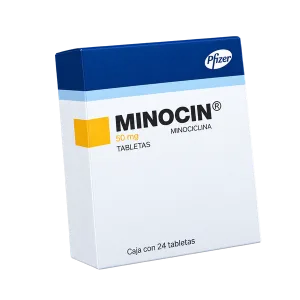
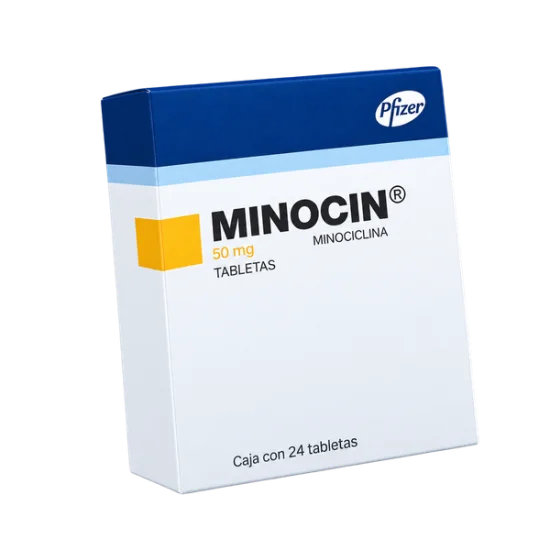
Minocin is an oral formulation of minocycline, a systemic tetracycline antibiotic. The product is supplied as tablets, with 24 tablets in the pack. The amount per intake is set individually for each person rather than being one fixed number. Minocycline is also known as the active ingredient in Minocin; the therapeutic effect comes from the antibiotic substance rather than the brand name.

Mechanism of action

Minocycline enters susceptible bacterial cells and attaches to the 30S subunit of the bacterial ribosome. Ribosomes are the structures bacteria use to build proteins. By interfering with the delivery of transfer RNA, minocycline prevents bacteria from producing proteins needed for growth and reproduction.

This makes minocycline mainly bacteriostatic. It slows or stops bacterial multiplication, allowing the immune system to clear organisms that are no longer expanding rapidly. The action differs from antibiotics that directly damage bacterial cell walls or disrupt bacterial DNA.

The drug has a broad antibacterial spectrum, although resistance limits its usefulness against some organisms.

The European Medicines Agency and MHRA recognise tetracyclines as a distinct antibiotic class with specific restrictions in pregnancy and childhood because of effects on developing teeth and bones [2].

Therapeutic indications

Doctors use minocycline when bacterial activity contributes to inflammation. Its recognised uses include selected skin infections, respiratory infections, urinary infections, and inflammatory acne vulgaris. The correct indication depends on the organism, local resistance patterns, previous treatment, and the patient’s medical history. Treatment decisions also account for the likely site and severity of infection. Antibiotics should not be used for viral illnesses such as uncomplicated colds or influenza.

In acne, systemic minocycline can reach inflamed areas through the bloodstream. This gives it a role when inflammatory papules, pustules, or deeper lesions are widespread, painful, or insufficiently controlled with topical treatment alone. NICE guidance places oral antibiotics within a planned acne regimen rather than as indefinite single-agent treatment [1].

Primary Clinical Uses in Dermatology

Minocycline may reduce the number and severity of inflammatory acne lesions by suppressing susceptible bacteria and reducing some inflammatory signalling. Improvement is gradual. Existing spots do not disappear immediately after the first tablet, and new lesions may continue to appear during the early treatment period.

Dermatological treatment commonly combines an oral antibiotic with a suitable topical medicine. This approach can improve acne control while limiting the duration of systemic antibiotic exposure. Minocycline is not suitable for every type of acne, and it does not treat acne scars that have already formed.

Take the tablet with a full glass of water and remain upright for a while afterwards. This small habit reduces the chance of irritation in the throat or oesophagus.

Common mistakes

Several practical errors can reduce treatment success or increase adverse effects:

  • Taking Minocin with an iron supplement, antacid, or mineral product.
  • Swallowing the tablet with only a sip of water.
  • Lying down immediately after taking it.
  • Taking two doses together after forgetting one.
  • Stopping as soon as acne appears slightly better.
  • Ignoring dizziness before driving or using machinery.
  • Treating severe diarrhoea as an ordinary antibiotic effect.
  • Combining Minocin with a systemic retinoid without medical review.
  • Spending prolonged periods in strong sunlight without protection.
  • Expecting an oral antibiotic to remove established acne scarring.

One easily missed detail is the mineral interaction. A morning multivitamin can be enough to reduce absorption if it is taken beside the antibiotic, even when both products are individually appropriate.

Another mistake is changing the schedule around meals without keeping the interval consistent. Stomach comfort matters, yet separating Minocin from calcium, magnesium, aluminium, iron, and zinc matters more for absorption.

Record the time of Minocin and any mineral supplement separately. A simple two-line medication list can prevent an interaction that is easy to overlook.

Reasons not to use it

  • Pregnancy, unless a specialist determines that the expected benefit justifies treatment.
  • Breastfeeding where infant exposure presents a concern.
  • Children below the age range permitted by the product information, because tetracyclines can affect developing teeth and bones.
  • Previous serious allergy to minocycline, tetracyclines, or tablet ingredients.
  • Significant liver disease or a history of severe liver reactions to antibiotics.
  • Previous drug-induced lupus, autoimmune hepatitis, or severe hypersensitivity linked to minocycline.
  • Concurrent treatment with isotretinoin or other systemic retinoids, which may increase concern about intracranial hypertension.

Antacids and supplements containing aluminium, calcium, magnesium, iron, or zinc can bind minocycline in the digestive tract. The doses should be separated according to professional instructions. Warfarin and other anticoagulants may require closer monitoring because antibiotic treatment can alter anticoagulant response.

The MHRA has highlighted the need to recognise serious reactions associated with minocycline, including pigmentation, autoimmune syndromes, and liver injury [3].

When this is not for you

Minocin is not for you if you have had a severe tetracycline allergy or a previous serious minocycline reaction. Tell a clinician before treatment if you are pregnant or breastfeeding, have liver disease, or have previously developed autoimmune problems after taking minocycline. You should also discuss treatment carefully if you take isotretinoin or another systemic retinoid.

Unwanted effects

Minocycline can cause adverse effects even when it is prescribed appropriately. Dizziness, nausea, headache, loose stools, and stomach discomfort are recognised problems. Some people experience vertigo or light-headedness soon after starting treatment, which can affect walking, driving, or other activities requiring balance.

Sun sensitivity is possible. The skin may burn more easily, so prolonged direct sunlight and tanning equipment should be avoided during treatment. Protective clothing and a broad-spectrum sunscreen can reduce exposure, although sunscreen does not remove the need for sensible sun avoidance.

Frequency pattern Possible effects Practical response
More common or recognised Nausea, diarrhoea, dizziness, headache, skin sensitivity Water, careful timing, sun protection, and clinical advice if persistent
Less common but clinically significant Skin or mucosal pigmentation, liver injury, autoimmune reactions Stop and seek medical assessment if concerning symptoms appear
Urgent warning signs Severe allergic reaction, severe headache with visual symptoms, blistering rash, marked jaundice Obtain urgent medical care

Longer courses can be associated with blue-grey or brown pigmentation of the skin, nails, teeth, gums, or other tissues. Minocycline has also been linked with liver inflammation, drug-induced lupus-like reactions, serum sickness-like reactions, and raised intracranial pressure. These events are uncommon, yet they require prompt assessment.

A severe headache accompanied by blurred vision, double vision, vomiting, or brief visual obscurations needs urgent attention because tetracyclines can rarely contribute to intracranial hypertension. A rash with blistering, mouth ulcers, fever, or skin peeling may signal a serious hypersensitivity reaction.

Do not drive after the first doses until you know whether Minocin causes dizziness or spinning sensations. Some patients describe the effect as feeling seasick rather than simply tired.

Nausea is often worse when a tablet is swallowed with too little water or just before lying down. Persistent diarrhoea during or after antibiotic treatment also deserves medical review, especially if it is watery, bloody, or accompanied by abdominal pain.

Comparison

Therapeutic Alternatives in Acne Treatment

Minocin is one option within acne treatment. The preferred approach depends on lesion type, severity, scarring risk, previous treatment, pregnancy status, antimicrobial resistance, and tolerance.

Treatment category Typical role Main limitation
Oral tetracycline antibiotic Widespread inflammatory acne or selected bacterial infections Systemic adverse effects and antibiotic resistance
Topical antibacterial or anti-inflammatory therapy Mild to moderate localised acne Less practical for extensive or deeper disease
Non-antibiotic acne therapy Maintenance treatment and reduction of antibiotic exposure May irritate skin or require several weeks before benefit

Topical treatment can be appropriate when lesions are limited to a manageable area. Oral therapy may be considered when inflammation is widespread or reaches areas that are difficult to treat consistently with creams or gels.

The antibiotic choice should not be based only on perceived strength. A doctor may select another category when there is a pregnancy concern, a history of minocycline-related dizziness, liver disease, retinoid use, or a need to avoid prolonged antibiotic exposure. Acne treatment also requires a maintenance plan after the antibiotic course ends.

Minocin Versus Generic Minocycline

Minocin contains minocycline, generally supplied as minocycline hydrochloride in oral products. Generic minocycline formulations contain the same active pharmaceutical ingredient and are intended to provide the same antibacterial action when approved as therapeutically equivalent.

Differences may occur in inactive excipients, tablet colour, coating, storage instructions, and manufacturing presentation. These differences can matter to someone with a specific intolerance or allergy, even though the active antibiotic is the same.

The brand name does not change the need for individual dosing. A generic product and Minocin should not be combined unless a prescriber has deliberately arranged the treatment, because doing so could duplicate the same active ingredient.

What doctors say

In clinical practice, doctors usually assess three points before selecting an oral tetracycline: whether bacteria are likely to be involved, whether a systemic antibiotic is justified, and whether the patient has risk factors for adverse effects. Acne alone does not automatically require an oral antibiotic.

A dermatologist may combine Minocin with a topical non-antibiotic treatment to improve control and reduce the chance of relying on antibiotics for too long. The plan may also include a review date, because continuing treatment without reassessment can expose the patient to side effects without adding useful benefit.

Prescribers pay close attention to dizziness. Minocycline can cause vestibular symptoms more often than some other tetracyclines, and a patient who operates machinery or drives for work may need a different treatment plan if balance is affected.

Doctors also ask about headaches, visual symptoms, autoimmune disease, liver disease, pregnancy, and retinoid use. These questions are not routine paperwork; they identify situations in which the risk profile changes.

Comparison

Comparison table: Antibiotics

What customers often ask

Can Minocin be taken with food or on an empty stomach?

Minocin can cause less stomach irritation when taken with suitable food, but calcium-rich products and mineral supplements can reduce absorption. The MHRA’s 2016 safety information supports separating minocycline from interacting minerals and taking tablets with enough water. The prescribed timing should take priority when a clinician has provided a specific schedule.

How soon does Minocin’s effect become noticeable?

The time depends on the infection and the condition being treated. NICE guidance from 2021 describes acne improvement as a process assessed over weeks rather than after one or two tablets. Minocin may reduce new inflammatory lesions gradually, while existing marks and redness can take longer to fade.

How long does one dose of Minocin keep working?

A dose provides antibiotic exposure for a period determined by absorption, distribution, and the prescribed dosing interval. The EMA’s 2008 tetracycline information explains that treatment schedules are designed to maintain useful exposure rather than produce a visible short-term sensation. Do not take an extra tablet because symptoms return before the next scheduled dose.

Can Minocin affect driving, concentration, or work with machinery?

Dizziness, vertigo, and visual symptoms can impair driving, concentration, balance, and machinery work. MHRA safety advice from 2016 supports stopping hazardous activity if these effects occur and obtaining clinical advice. Avoid driving until you know how Minocin affects you, especially after the first doses or after a dose change.

Do you offer anonymous delivery?

Your order will be securely packed and shipped within 24 hours. This is exactly what your package will look like (images of an actual item sent). It has the size and look of a regular private letter (24x11x0.7 cm) and its contents cannot be seen.

How Buyers Rate Minocin

3.7
Based on 5 reviews
David, 55
Sheffield
Several weeks
Verified
Rating: 5 out of 5

David, 55 - Sheffield, had taken Minocin for inflammatory skin lesions for several weeks. He noticed fewer painful areas first, while the redness took longer to settle. Mild nausea improved when he used more water and avoided lying down after the tablet.

4 Nov 2026
Susan, 29
Plymouth
About one month
Verified
Rating: 3.5 out of 5

Susan, 29 - Plymouth, had used Minocin for acne for about one month. Her skin became less inflamed, but dizziness appeared after some doses and made commuting uncomfortable. Her prescriber reviewed the treatment rather than simply increasing the dose.

6 Oct 2026
Adam, 29
Cardiff
A prescribed course
Verified
Rating: 3.5 out of 5

Adam, 29 - Cardiff, had completed a prescribed course and felt that new spots became less frequent during the later weeks. He had expected a change within a few days and found the slower improvement frustrating. Sun sensitivity was manageable after he changed his outdoor routine.

24 Oct 2026
Matthew, 27
Reading
The first part of treatment
Verified
Rating: 3.5 out of 5

Matthew, 27 - Reading, reported that Minocin helped deeper acne lesions but caused stomach upset during the first part of treatment. Taking the tablet with suitable timing and plenty of water made the problem less troublesome. He still needed a separate maintenance plan afterwards.

13 Oct 2026
Neil, 31
Bristol
Verified
Rating: 3 out of 5

Neil, 31 - Bristol, stopped treatment after developing a severe headache with visual disturbance and sought urgent assessment. The experience made him more aware that unusual neurological symptoms should not be dismissed as a normal antibiotic effect.

30 Oct 2026

Sources

  1. National Institute for Health and Care Excellence (NICE) (2021). Acne vulgaris: management (NG198)
  2. European Medicines Agency (EMA) (2008). Summary of Product Characteristics (SmPC) — minocycline
  3. Medicines and Healthcare products Regulatory Agency (MHRA) (2016). Minocycline: risk of pigmentation, autoimmune disorders and hypersensitivity reactions
Get our free app Shop faster and track your orders 3.9 · 433 reviews Install