Skip to content
Nitrofurantoin

Nitrofurantoin

Quality products
24/7 Support
Fast delivery
Delivery from 4 days
Active ingredient Nitrofurantoin

Free delivery on orders from £ 166.00, free express delivery from £ 249.00

Nitrofurantoin is an oral antibiotic for uncomplicated lower urinary tract infections, concentrating antibacterial activity in the urine. The dose is decided individually, taking age, other medicines and health conditions into account.

Overview

Nitrofurantoin belongs to the antibiotic class and is used for bacterial infections affecting the bladder and lower urinary tract. It is a first-choice option for many uncomplicated urinary tract infections because it reaches useful concentrations in urine while producing relatively low concentrations in blood and tissues.

Directions for use

Swallow the prescribed tablet whole with a meal or a snack and a full glass of water. Taking it with food improves absorption and may reduce nausea.

For an acute lower UTI, a course is commonly short and must be completed exactly as prescribed. The National Institute for Health and Care Excellence gives different course lengths for different patient groups, reflecting sex, pregnancy status, clinical severity and renal function [2].

  • Take each dose at evenly spaced times.
  • Use the same daily routine throughout the course.
  • Continue for the prescribed duration even if burning and urgency settle early.
  • Drink normally unless a clinician has set a fluid restriction for heart or kidney disease.
  • Contact the prescriber if symptoms worsen or fail to start improving within a few days.
Nitrofurantoin can turn urine dark yellow or brown. This is a recognised effect of the medicine and is not, by itself, a sign of bleeding.

A tablet should not be crushed unless a prescriber has specifically advised it. Crushing can make an unpleasant taste harder to tolerate and may make it difficult to take the complete dose.

Formulation

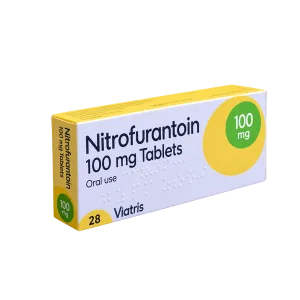
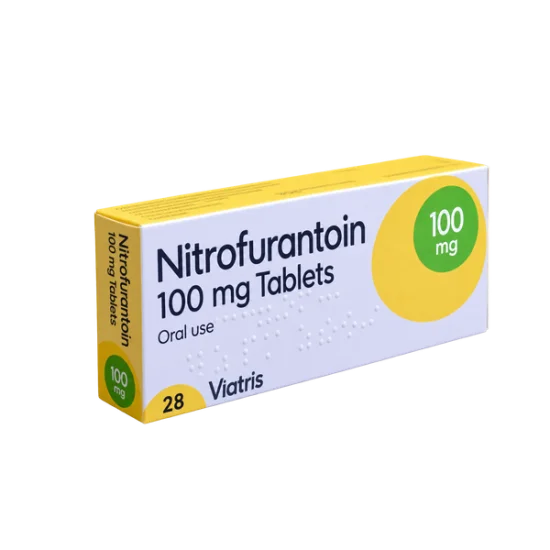
This product contains nitrofurantoin, an antibiotic intended for oral use in the treatment of bacterial infections of the bladder and lower urinary tract.

Mechanism of action

Mechanism of action in urinary tract infections

After swallowing a tablet, nitrofurantoin is filtered and secreted into the urine. Bacteria convert it into reactive compounds that damage bacterial DNA, proteins and other essential cell components. This multi-target action helps explain why the medicine remains useful against many common urinary pathogens.

Its effect depends on kidney function because the drug needs to reach the urine. Poor renal function can lower urinary concentrations and increase medicine exposure in the body. This is why renal function is part of prescribing decisions, especially for older adults.

Nitrofurantoin works best against bacteria commonly found in uncomplicated bladder infections, including many strains of Escherichia coli. It does not reliably treat every urinary bacterium. A urine culture becomes more valuable after repeated infections, persistent symptoms, or recent antibiotic exposure.

Therapeutic indications

Nitrofurantoin belongs to the antibiotic class and is used for bacterial infections affecting the bladder and lower urinary tract. It is a first-choice option for many uncomplicated urinary tract infections because it reaches useful concentrations in urine while producing relatively low concentrations in blood and tissues.

It is intended for lower UTIs, not infections that may have reached the kidneys. Fever, flank pain, rigors, nausea or vomiting can point to an upper urinary tract infection and need prompt clinical assessment rather than self-management with a lower-UTI treatment.

Nitrofurantoin is also used for UTI prevention in people with repeated, culture-confirmed infections. Preventive treatment is a separate clinical decision from treating a sudden episode. The dose is decided individually, taking age, other medicines and health conditions into account.

The World Health Organization places nitrofurantoin among Access antibiotics, meaning it is a narrow-spectrum option that supports responsible antibiotic use when it fits the infection and bacterial susceptibility [1].

A urine sample taken before starting antibiotics can be useful when infections keep returning, symptoms are unusual, or earlier treatment has failed. The result can identify the bacterium and guide future treatment.

Common mistakes

Several avoidable mistakes reduce the chance of a smooth recovery:

  • Stopping treatment as soon as symptoms ease, leaving surviving bacteria to multiply.
  • Taking doses irregularly because symptoms are intermittent.
  • Using leftover antibiotics from a previous infection.
  • Treating fever, flank pain or vomiting as a simple bladder infection.
  • Combining treatment with urinary alkalinisers without checking the ingredients.
  • Assuming every episode of dysuria is bacterial UTI when thrush, sexually transmitted infections, stones or bladder inflammation can produce similar symptoms.

One common detail patients miss is that relief from burning may arrive before the infection has cleared. Symptom improvement is encouraging, yet it does not shorten the prescribed course.

Reasons not to use it

It is also unsuitable or requires specialist assessment in several situations:

  • significant renal impairment, where urine levels may be too low for reliable treatment;
  • glucose-6-phosphate dehydrogenase deficiency, because haemolytic anaemia can occur;
  • previous nitrofurantoin-related lung disease, liver injury, nerve damage, or severe blood reaction;
  • porphyria;
  • suspected pyelonephritis or bloodstream infection;
  • newborn infants and people close to delivery, because of a haemolysis risk.

Pregnancy does not automatically rule out nitrofurantoin, yet timing matters. Clinicians assess gestational stage, the infection, bacterial susceptibility and individual risk factors before prescribing.

Rare lung and liver reactions deserve clear attention. The MHRA warns that acute lung reactions can occur within days, while chronic lung injury is more associated with prolonged treatment; hepatic reactions may also occur and require prompt evaluation [3].

Medicines that block renal tubular secretion, including probenecid and sulfinpyrazone, may reduce urinary antibacterial levels while raising blood concentrations. This combination is generally avoided.

Antacids containing magnesium trisilicate may reduce nitrofurantoin absorption. Urine-alkalinising products can also make the urine less acidic, which may reduce antibacterial activity. Sodium bicarbonate products and some cystitis relief preparations should be discussed with the prescriber before combining them with treatment.

When this is not for you

Nitrofurantoin is not for you if you have had an allergic reaction to nitrofurantoin or another ingredient in the tablets. Signs of allergy can include rash, facial swelling, wheezing, or sudden breathing difficulty.

New breathlessness, persistent cough, chest discomfort, yellowing of the eyes, severe itching, dark urine, or pale stools are reasons to stop nitrofurantoin and seek urgent medical advice.

Unwanted effects

Nausea, reduced appetite, headache and stomach discomfort are among the more common unwanted effects. Food often makes nausea easier to manage. Some people also notice harmless urine discolouration.

A rash, itching or hives can signal hypersensitivity. Tingling, numbness or weakness may indicate peripheral neuropathy, which is rare but more concerning in people with renal impairment, diabetes, anaemia, vitamin B deficiency or debilitating disease.

Diarrhoea can occur with any antibiotic. Severe or persistent diarrhoea, especially with abdominal cramps, fever or blood, needs medical assessment because antibiotic-associated colitis is possible.

Long-term preventive use needs periodic review. The benefit of fewer infections must be weighed against lung, liver and nerve risks, as well as the possibility that symptoms labelled as UTI may have another cause.

Comparison

Nitrofurantoin and quinolone antibiotics have different roles. Nitrofurantoin concentrates in urine and is targeted towards uncomplicated lower UTI, while quinolones have broader tissue penetration and may be reserved for infections where narrower options are unsuitable.

Treatment group Clinical role Main limitation
Nitrofurantoin Lower uncomplicated UTI and selected recurrent UTI prevention Does not provide reliable kidney or systemic infection treatment
Quinolone antibiotics Selected complicated infections when culture results and clinical factors support use Broader adverse-effect burden and resistance concerns
Ciprofloxacin, norfloxacin, ofloxacin and lomefloxacin Individual quinolone options with variable local susceptibility patterns Not routine first choices for simple cystitis

Ciprofloxacin, norfloxacin, ofloxacin and lomefloxacin are quinolone antibiotics. Their broad antibacterial activity can be valuable in defined circumstances, yet broad coverage also creates selection pressure for resistance. European regulators restricted fluoroquinolone use because disabling and potentially long-lasting adverse reactions can affect tendons, muscles, joints and the nervous system [4].

For straightforward bladder infection, choosing a narrower urine-focused antibiotic can preserve broader agents for situations where they are genuinely needed. The trade-off is that nitrofurantoin cannot be relied on for feverish illness or suspected kidney involvement.

What doctors say

In clinical practice, prescribers often favour nitrofurantoin when symptoms and testing support an uncomplicated lower UTI. Its focused activity is one of its strengths. Doctors also look beyond a single episode. Repeated infections can be linked to incomplete bladder emptying, menopause-related changes, urinary stones, diabetes, catheter use or resistant bacteria. Treating each episode without reviewing the pattern can lead to repeated antibiotic exposure without solving the cause.

A clinician will usually ask about fever, loin pain, pregnancy, kidney disease, previous allergic reactions and antibiotics taken recently. These details change antibiotic selection more than the intensity of burning alone.

Comparison

Comparison table: Antibiotics

What customers often ask

How long does a Nitrofurantoin course last, and is long-term use acceptable?

Acute treatment courses are usually short, though duration differs according to the type of UTI, sex, pregnancy status, kidney function and bacterial findings. NICE guidance published in 2018 sets out different approaches for lower UTI and recurrent infection prevention. Longer-term use may be appropriate for selected people with recurrent, confirmed UTIs, but it needs periodic review for lung, liver, nerve and kidney-related risk. The dose is decided individually, taking age, other medicines and health conditions into account.

Which diet, exercise or habits support treatment with Nitrofurantoin?

Regular fluid intake helps maintain urine flow unless fluid intake is medically restricted. The WHO's 2023 guidance emphasised using antibiotics only when clinically indicated, so avoiding leftover doses and completing the prescribed regimen matters more than restrictive diets. Do not use urine-alkalinising remedies alongside treatment without checking first, because reducing urine acidity may weaken nitrofurantoin activity. Gentle activity is fine if you feel well, though fever, flank pain or marked fatigue need assessment rather than exercise.

What should I do after a missed Nitrofurantoin dose?

Take the missed dose when remembered unless the next planned dose is close. If it is nearly time for the next dose, skip the forgotten tablet and return to the normal schedule. Do not take two doses together, since this raises adverse-effect risk without improving bacterial clearance. MHRA safety advice issued in 2023 supports prompt review if respiratory, hepatic or neurological symptoms develop during treatment.

Can older adults take Nitrofurantoin?

Older adults can use nitrofurantoin when kidney function is sufficient and the infection is a lower UTI. Renal function matters because reduced filtration can limit the amount reaching urine and increase unwanted systemic exposure. The EMA’s 2019 antibiotic stewardship principles support choosing the narrowest suitable option, yet suitability still depends on symptoms, cultures and concurrent medicines. New confusion, fever, weakness or flank pain in an older person may signal a more serious infection and needs urgent assessment.

Which symptoms mean I should stop Nitrofurantoin and seek urgent medical help?

Stop treatment and seek urgent help for facial swelling, wheeze, widespread rash, severe breathlessness or chest pain. The MHRA highlighted pulmonary and hepatic reactions in 2023, so persistent cough, shortness of breath, yellow skin or eyes, dark urine, pale stools and severe itching require prompt review. Numbness, tingling or unusual weakness also need medical advice because they may indicate nerve involvement. Fever, vomiting or pain in the side or back may mean the infection is no longer confined to the bladder.

Do you offer anonymous delivery?

Your order will be securely packed and shipped within 24 hours. This is exactly what your package will look like (images of an actual item sent). It has the size and look of a regular private letter (24x11x0.7 cm) and its contents cannot be seen.

How Buyers Rate Nitrofurantoin

4.3
Based on 3 reviews
Tracey, 67
Sunderland
3-day course
Verified
Rating: 5 out of 5

I took it for a bladder infection and the stinging eased after two days. Taking it after breakfast and supper stopped the queasy feeling I had on the first day. My urine went darker, which worried me until I was told it could happen.

4 Nov 2026
Jessica, 42
Brighton
3-day course
Verified
Rating: 4.5 out of 5

I finished the prescribed course and felt much better by the weekend. I had a mild headache for a day or two, but it did not stop me working. Drinking water regularly helped because I was going to the toilet constantly at the start.

6 Oct 2026
Fiona, 68
Oxford
3-day course
Verified
Rating: 3.5 out of 5

It cleared the urgency, but I needed another appointment because the symptoms returned a month later. A urine test was arranged before more treatment, which made more sense than repeating the same course straight away.

15 Oct 2026

Sources

  1. World Health Organization (2023). The WHO AWaRe antibiotic book: guidance on antibiotic access, watch and reserve classification.
  2. National Institute for Health and Care Excellence (2018). Urinary tract infection (lower): antimicrobial prescribing (NG109).
  3. Medicines and Healthcare products Regulatory Agency (2023). Nitrofurantoin: reminder of the risks of pulmonary and hepatic adverse drug reactions.
  4. European Medicines Agency (2019). Disabling and potentially permanent side effects lead to suspension or restrictions of quinolone and fluoroquinolone antibiotics.
Get our free app Shop faster and track your orders 3.9 · 425 reviews Install