The knee pain eased enough for me to manage stairs again after several doses. I took the tablets with meals and had no stomach problems, although I stopped when my course ended rather than carrying on by myself.
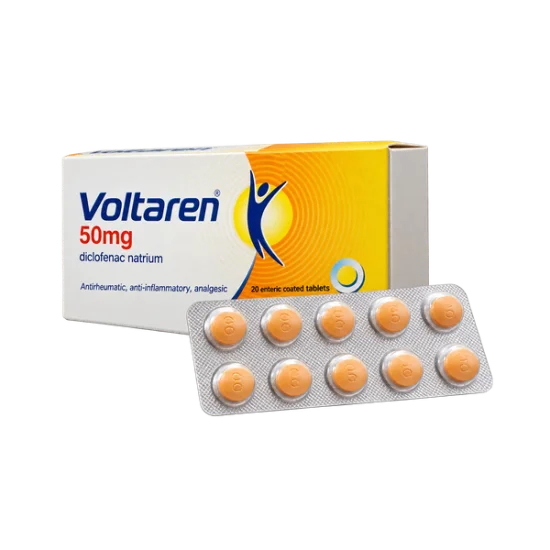
Voltaren
By reducing prostaglandin production, diclofenac can ease pain and improve movement. It is used for inflammatory pain and swelling affecting joints, muscles, and other tissues.
Overview
Diclofenac sodium, the active ingredient in Voltaren, is a non-steroidal anti-inflammatory drug (NSAID) supplied as enteric-coated tablets. The dose is decided individually, taking age, other medicines, and health conditions into account. It is used for inflammatory pain and swelling affecting joints, muscles, and other tissues.
Directions for use
Voltaren is supplied as an enteric-coated tablet. The dose is decided individually, taking age, other medicines, and health conditions into account. The dosing schedule is individualised according to symptom severity, age, kidney and liver function, cardiovascular risk, and concurrent treatment.
Usual administration principles include:
- Take the prescribed amount by mouth with water.
- Swallow the enteric-coated tablet whole.
- Use the lowest suitable dose for the shortest clinically appropriate course.
- Do not add another NSAID without medical direction.
- If a dose is missed, take it when remembered unless the next dose is due soon; do not double the next dose.
- Seek advice before continuing treatment beyond the intended course.
Long-term use requires review because cumulative NSAID exposure can raise the chance of ulceration, bleeding, kidney impairment, high blood pressure, heart failure, and cardiovascular events.
Formulation
Voltaren contains diclofenac sodium, an NSAID with analgesic, anti-inflammatory, and antirheumatic properties. The available form is an enteric-coated tablet containing diclofenac sodium. The dose is decided individually, taking age, other medicines, and health conditions into account.
The enteric coating delays release until the tablet passes through the stomach. This does not remove the risk of stomach irritation, because diclofenac still affects prostaglandins involved in protecting the digestive tract.
Diclofenac sodium is the salt form of diclofenac used for oral treatment. It differs from topical diclofenac preparations, which are applied to the skin and produce higher concentrations near the application site with less exposure throughout the body.
Mechanism of action
Diclofenac reduces the activity of cyclooxygenase enzymes, commonly called COX-1 and COX-2. These enzymes help produce prostaglandins, chemical mediators involved in pain, swelling, heat, and inflammation.
Lower prostaglandin production reduces the sensitivity of pain receptors. It also limits inflammatory signalling in affected tissues, including joints and surrounding soft tissue. Prostaglandin E2 is one of the mediators involved in this process.
Diclofenac may also influence inflammatory cytokine activity, including tumour necrosis factor alpha (TNF-α), interleukin-6, and interleukin-8. The clinical result is usually less pain, reduced stiffness, and easier movement rather than a direct reversal of joint damage.
Oral diclofenac reaches the circulation and can act throughout the body. This makes it useful when pain affects more than one area, though it also creates more systemic exposure than a topical preparation. The EMA and MHRA recognise diclofenac as an NSAID requiring careful assessment of gastrointestinal, kidney, liver, cardiovascular, and allergic risks [1].
Therapeutic indications
Voltaren may be prescribed for inflammatory pain associated with conditions such as:
- Osteoarthritis affecting the knee, hip, hand, spine, or other joints
- Rheumatoid arthritis and other inflammatory arthritides
- Acute musculoskeletal pain
- Sprains, strains, and soft-tissue inflammation
- Acute attacks of gout
- Painful inflammation after injury or surgery
- Menstrual pain, when an NSAID is clinically suitable
Osteoarthritis involves structural changes in cartilage and the surrounding joint tissues. Diclofenac can reduce pain and inflammation, but it does not restore damaged cartilage or cure the underlying degenerative process.
Rheumatoid arthritis has a different immune-driven mechanism. Diclofenac may reduce pain and stiffness, yet it does not replace disease-modifying treatment used to limit joint damage.
The correct dose is decided individually, taking age, other medicines, and health conditions into account. Treatment should use the lowest dose that controls symptoms for the shortest suitable period.
Common mistakes
Several practical errors make diclofenac treatment less useful or less safe:
- Taking it alongside ibuprofen or naproxen
- Continuing it for weeks without a medication review
- Doubling a dose after a missed tablet
- Crushing an enteric-coated tablet
- Ignoring black stools or persistent upper-abdominal pain
- Using it during dehydration
- Forgetting to mention anticoagulants or steroids
- Assuming that topical and oral diclofenac can be combined freely
- Taking leftover tablets for a new type of pain
- Driving after dizziness or unusual drowsiness develops
A common misunderstanding is that a medicine with anti-inflammatory action can be used to “push through” worsening joint symptoms. Persistent pain may reflect infection, fracture, inflammatory arthritis, or another condition that needs a different response.
Reasons not to use it
Voltaren should not be used by a person with:
- A current or previous NSAID-related stomach or intestinal ulcer
- Previous gastrointestinal bleeding or perforation caused by an NSAID
- A serious allergic reaction to diclofenac, aspirin, ibuprofen, naproxen, or another NSAID
- Asthma, nasal swelling, or hives triggered by aspirin or NSAIDs
- Severe heart failure, severe kidney disease, or severe liver disease
- Established ischaemic heart disease, peripheral arterial disease, or previous stroke when systemic diclofenac is judged unsuitable
- Active gastrointestinal bleeding
- The third trimester of pregnancy
Diclofenac can interact with warfarin and other anticoagulants, low-dose aspirin, corticosteroids, lithium, methotrexate, ciclosporin, tacrolimus, diuretics, ACE inhibitors, angiotensin-receptor blockers, selective serotonin reuptake inhibitors, and some medicines for high blood pressure.
When this is not for you
This treatment is NOT for you if you have a contraindication, relevant allergy, or health condition that makes systemic diclofenac unsafe. Speak to a doctor before using it if you have heart failure, kidney or liver disease, high blood pressure, asthma, Crohn’s disease, ulcerative colitis, or a history of ulcers. It may also be unsuitable if you have reacted badly to aspirin, ibuprofen, naproxen, or another NSAID, take anticoagulants or steroids, or are pregnant. Diclofenac should not be used during the final three months of pregnancy because it may affect the baby’s circulation, kidneys, and labour.
Unwanted effects
Mild side effects may include:
- Indigestion or stomach discomfort
- Nausea or vomiting
- Diarrhoea or constipation
- Headache or dizziness
- Increased blood pressure
- Mild fluid retention
- Skin rash or itching
Taking Voltaren with food may reduce immediate stomach discomfort, though it does not eliminate the possibility of ulceration or bleeding. Alcohol can add to stomach irritation and may worsen dizziness or impaired judgement.
Stop taking the medicine and seek urgent medical help for black stools, vomiting blood, severe abdominal pain, facial or throat swelling, breathing difficulty, blistering skin, widespread rash, yellowing of the skin, sudden chest pain, weakness on one side, or a major reduction in urine.
A patient may notice dizziness before realising that concentration has changed. Another may develop ankle swelling without feeling breathless. Both symptoms deserve attention, especially in older adults or people with heart or kidney disease.
The risk of gastrointestinal bleeding increases when diclofenac is combined with anticoagulants, antiplatelet medicines, corticosteroids, selective serotonin reuptake inhibitors, or other NSAIDs. The MHRA has issued safety guidance concerning cardiovascular and gastrointestinal risks associated with systemic NSAIDs [3].
Comparison
Diclofenac, ibuprofen, and naproxen are NSAIDs. They share anti-inflammatory, analgesic, and fever-reducing properties, though their dosing schedules, duration of action, interactions, and individual tolerability differ.
Paracetamol is an analgesic and antipyretic rather than a conventional anti-inflammatory drug. It may be preferred when inflammation is limited or when NSAIDs present a high gastrointestinal, kidney, cardiovascular, or allergy risk.
Prescription options such as celecoxib, meloxicam, indomethacin, piroxicam, and etoricoxib are also anti-inflammatory medicines. They may be selected for specific clinical situations, but each has its own cardiovascular, gastrointestinal, kidney, liver, or interaction concerns. Tramadol acts through the central nervous system and may be considered for selected pain syndromes, though sedation, constipation, dependence, and respiratory depression require attention.
| Option | Pharmacological group | Main clinical consideration |
|---|---|---|
| Voltaren | Diclofenac NSAID | Anti-inflammatory action with gastrointestinal, kidney, liver, and cardiovascular precautions |
| Ibuprofen or naproxen | NSAIDs | Similar anti-inflammatory purpose, with different duration and individual risk profiles |
| Paracetamol | Analgesic and antipyretic | Less anti-inflammatory activity; excessive dosing can damage the liver |
The World Health Organization stresses that analgesic selection should match the pain type, duration, comorbidities, and risk of harm [2]. A medicine that helped one episode may be unsuitable during another, especially after a new diagnosis, operation, illness, or change in regular medicines.

What doctors say
In clinical practice, doctors often use oral diclofenac when inflammation is contributing substantially to pain and when a local treatment cannot cover the affected areas. They also look for a clear stopping point rather than allowing an NSAID course to continue automatically.
A prescriber may choose a stomach-protective medicine for someone with increased gastrointestinal risk. That does not make diclofenac risk-free; it mainly addresses one part of the risk profile.
The expected benefit is symptom control. It should make movement easier or reduce pain enough to support normal activity. It should not be judged by whether it repairs cartilage or eliminates the cause of chronic arthritis. Treatment goals should be reviewed if symptoms persist. A prescriber can then reassess the diagnosis and plan.
Doctors also review response. If pain remains unchanged, becomes more severe, or is accompanied by swelling in several joints, fever, weakness, or unexplained fatigue, repeating the same course without assessment may delay a more suitable diagnosis.
Comparison
What customers often ask
How long does a Voltaren course last, and is long-term use acceptable?
The course length depends on the pain diagnosis, response, age, and medical risk factors. The NHS and MHRA advise using systemic NSAIDs at the lowest suitable dose for the shortest necessary period; these principles remain relevant in 2026. Long-term treatment can increase gastrointestinal, kidney, liver, blood-pressure, and cardiovascular risks, so continued use requires periodic clinical review.
What should I do if the expected result does not come?
Do not increase the dose or add ibuprofen, naproxen, or another diclofenac product without medical direction. The NHS's 2026 patient information advises reassessment when pain does not improve, worsens, or develops with fever, marked swelling, weakness, or unexplained symptoms. The cause may need a different treatment, and lack of response can signal that the pain is not primarily NSAID-responsive.
How soon can the effect become noticeable?
Some people notice reduced pain within a few hours, while inflammation-related stiffness may take longer to improve. The NHS's 2026 patient information describes diclofenac as a medicine that can begin relieving pain relatively quickly, though the response depends on the condition and dose. A lack of meaningful improvement after the intended short course should lead to a review rather than repeated self-treatment.
Which symptoms mean stopping Voltaren and seeking urgent medical help?
Stop and seek urgent care for vomiting blood, black stools, severe abdominal pain, facial swelling, breathing difficulty, blistering rash, yellow skin, sudden chest pain, or a major reduction in urine. The EMA's 2013 referral identifies gastrointestinal bleeding, severe hypersensitivity, serious skin reactions, kidney injury, and cardiovascular events as important NSAID risks. Urgent assessment is also needed for new neurological symptoms such as facial drooping, one-sided weakness, or difficulty speaking.
Do you offer anonymous delivery?
Your order will be securely packed and shipped within 24 hours. This is exactly what your package will look like (images of an actual item sent). It has the size and look of a regular private letter (24x11x0.7 cm) and its contents cannot be seen.
How Buyers Rate Voltaren
The back pain improved, but I developed indigestion and felt slightly dizzy in the afternoons. My doctor changed the plan after I mentioned that I was also taking aspirin.
It helped with a painful ankle after an injury, especially during the first few days. The improvement was not complete, and I avoided taking extra ibuprofen because I had been warned about combining NSAIDs.
Sources
- European Medicines Agency (2013). Diclofenac-containing medicines — referral under Article 31 of Directive 2001/83/EC.
- World Health Organization (2019). WHO Guidelines for the Pharmacological and Radiotherapeutic Management of Cancer Pain in Adults and Adolescents.
- Medicines and Healthcare products Regulatory Agency (2015). Diclofenac: new contraindications and warnings after a Europe-wide review of cardiovascular safety.