I was prescribed it after a urine infection did not settle with the first treatment. The urinary pain eased after a couple of days, but I had mild nausea and avoided alcohol. I finished the course and did not have tendon problems.
Cipro
By blocking bacterial enzymes needed for DNA replication, Cipro helps stop susceptible bacteria from multiplying. It contains ciprofloxacin for selected bacterial infections in adults, including complicated urinary infections and bacterial prostatitis, when clinical assessment supports a fluoroquinolone.
Overview
Cipro contains ciprofloxacin, a fluoroquinolone antibiotic. The regimen for the chosen strength should be confirmed with a healthcare professional before starting. Ciprofloxacin is bactericidal: it damages bacterial DNA processes rather than merely slowing bacterial growth. The drug is reserved for infections where the likely organism is susceptible and other suitable antibiotics may not provide an appropriate option.
Directions for use
Oral tablet presentation and strength
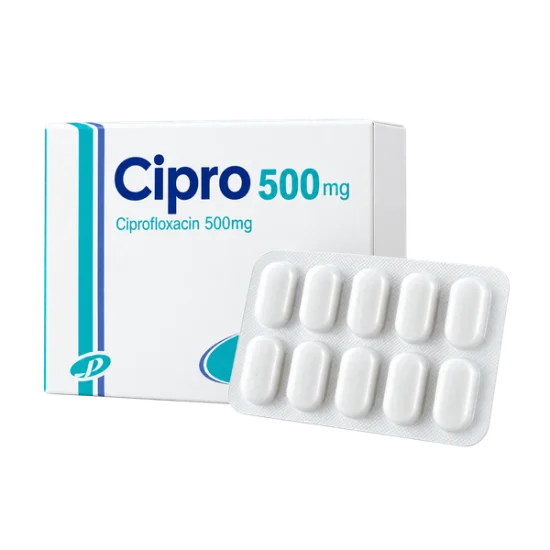
Cipro is supplied as oral tablets containing ciprofloxacin. The active ingredient is absorbed through the gastrointestinal tract and distributed into body tissues, with substantial elimination through the kidneys.
The regimen for the chosen strength must be confirmed with a healthcare professional before starting. Dose selection can change with the infection, renal function, age, interacting medicines, and local prescribing guidance. The treatment period also varies by infection type and response.
Ciprofloxacin tablets should be taken exactly at the prescribed interval. They can be taken with water, with or without food, but mineral supplements and certain indigestion remedies can reduce absorption.
Avoid taking ciprofloxacin at the same time as:
- Aluminium- or magnesium-containing antacids.
- Calcium-containing antacids or mineral supplements.
- Iron or zinc supplements.
- Sucralfate.
- Fortified drinks containing substantial calcium.
Separate these products from ciprofloxacin according to the prescriber’s or medicine-specific instructions. Ordinary meals are different from concentrated mineral supplements, although taking the tablet with dairy as the only food source may reduce absorption.
If a dose is missed, take it when remembered unless the next dose is near. Do not double the dose to compensate. Complete the prescribed course unless a clinician instructs you to stop because of a suspected serious reaction.
Dosage and administration
The regimen for the chosen strength must be confirmed with a healthcare professional before starting. The correct schedule depends on the diagnosed infection and kidney function, so a fixed universal dose would be unsafe.
Key administration points include:
- Take the prescribed tablet by mouth at the scheduled times.
- Swallow it with water.
- Keep doses evenly spaced when a regular schedule has been prescribed.
- Avoid taking it together with antacids, iron, calcium, zinc, or sucralfate.
- Do not take two doses together after a missed dose.
- Do not share tablets with another person.
- Do not save unused antibiotics for a later illness.
Kidney impairment may require a lower dose or a longer interval between doses. Older adults may face a higher tendon-injury risk, especially when corticosteroids are also used.
Formulation
Cipro contains ciprofloxacin, a fluoroquinolone antibiotic. The regimen for the chosen strength should be confirmed with a healthcare professional before starting.
Mechanism of action
Classification and mechanism of action of Ciprofloxacin
Ciprofloxacin works through two bacterial enzymes:
- DNA gyrase: helps bacteria unwind and organise DNA during replication.
- Topoisomerase IV: separates newly copied DNA so bacterial cells can divide.
- Ciprofloxacin inhibition: blocks both enzymes, disrupting DNA replication and transcription.
- Bactericidal action: severe DNA damage leads to bacterial cell death.
The dual enzyme effect explains why ciprofloxacin can act against several Gram-negative organisms. It does not treat viral illnesses such as influenza or most uncomplicated colds. Regulatory information from the European Medicines Agency describes important restrictions for systemic fluoroquinolones because of potentially long-lasting tendon, nerve, muscle, and nervous-system reactions.[1]
Inhibition of bacterial enzymes
A bacterial cell must constantly copy and repair its DNA. DNA gyrase reduces twisting tension in the DNA strand, while topoisomerase IV separates copied chromosomes. Ciprofloxacin attaches to these enzymes and interferes with their normal activity.
This mechanism is different from that of antibiotics that interrupt bacterial cell-wall construction or protein production. The result can be rapid loss of bacterial viability, although symptom improvement still depends on the infection site, organism, tissue penetration, kidney function, and the susceptibility of the bacteria.
Therapeutic indications
Clinical indications and targeted bacterial conditions
Ciprofloxacin is prescribed for selected bacterial infections, not for every infection described as a urinary, chest, or abdominal illness. The decision depends on microbiology, local resistance patterns, infection severity, kidney function, previous antibiotic exposure, and the availability of narrower alternatives.
Potential clinical uses include:
- Complicated urinary tract infections.
- Acute pyelonephritis, which is a bacterial infection involving the kidney.
- Selected cases of bacterial cystitis when susceptibility and treatment guidance support use.
- Chronic bacterial prostatitis.
- Certain infections caused by susceptible Gram-negative organisms.
- Selected gastrointestinal or systemic infections where ciprofloxacin is clinically appropriate.
Uncomplicated cystitis often has treatment options with a narrower spectrum. Ciprofloxacin may be unsuitable when the suspected bacteria are resistant or when a safer targeted antibiotic is available. It is also not a routine first choice for many community-acquired respiratory infections because activity against important respiratory pathogens can be limited.
The term complicated urinary tract infection usually refers to infection associated with factors such as obstruction, a catheter, kidney impairment, structural urinary abnormalities, recurrent infection, or infection in a male patient. Acute pyelonephritis can require prompt assessment because untreated kidney infection may progress to bloodstream infection.
Ciprofloxacin reaches the prostate better than some antibiotics, which is why it may be selected for confirmed or strongly suspected chronic bacterial prostatitis. A urine culture or other microbiological test can guide treatment when symptoms recur or the illness is difficult to treat.
Antibacterial spectrum and susceptibility profile
Ciprofloxacin has activity against several Gram-negative bacteria, including susceptible Escherichia coli and some strains of Pseudomonas aeruginosa. It can also affect selected Gram-positive organisms, though its clinical role depends on the exact organism and infection site.
Resistance is a central issue. An organism may carry mutations in DNA gyrase or topoisomerase IV, reduce antibiotic entry, or increase drug efflux from the cell. These mechanisms can make ciprofloxacin ineffective even when symptoms resemble a previous infection.
A laboratory susceptibility report may classify an isolate as susceptible, intermediate, or resistant. Prescribers use this information alongside the patient’s symptoms and kidney function. An antibiotic that helped a previous infection may be unsuitable for a later episode caused by a different organism.
Activity against Gram-negative pathogens
E. coli is a common cause of urinary infection, yet ciprofloxacin resistance varies between regions and patient groups. Pseudomonas aeruginosa is a more specialised organism often associated with healthcare exposure, chronic lung disease, wounds, or urinary devices; treatment decisions should be guided by susceptibility testing.
Ciprofloxacin does not cover every bacterium. It also does not treat fungi, parasites, or viruses. Persistent fever, flank pain, vomiting, confusion, or worsening urinary symptoms require clinical reassessment rather than self-extension of the antibiotic course.

Common mistakes
Common patient mistakes
Several avoidable errors reduce treatment reliability or increase side-effect risk:
- Taking the tablet with an iron or magnesium supplement.
- Using leftover ciprofloxacin for a new urinary symptom.
- Stopping immediately when symptoms improve without medical advice.
- Continuing exercise through tendon pain.
- Forgetting to mention clozapine, warfarin, steroids, or tizanidine.
- Taking two doses together after a missed dose.
- Treating severe diarrhoea with anti-diarrhoeal medicine without clinical advice.
- Assuming ciprofloxacin treats viral coughs or colds.
- Taking the tablet with very little fluid when already dehydrated.
- Ignoring numbness or burning in the feet and hands.
Do not drive, cycle, or operate machinery if dizziness, visual disturbance, confusion, or severe drowsiness affects concentration.
Reasons not to use it
Cipro is not suitable for everyone. It should not be used with tizanidine, and it requires a specific clinical decision in people with previous serious reactions to quinolone or fluoroquinolone antibiotics.
Ciprofloxacin may be unsuitable or require specialist assessment in people with:
- Previous tendon disorder linked to a quinolone or fluoroquinolone.
- Myasthenia gravis, because muscle weakness may worsen.
- Significant kidney impairment.
- Known QT prolongation or a history of serious heart-rhythm disturbance.
- Aortic aneurysm, aortic dissection, or major risk factors for these conditions.
- Epilepsy or a lowered seizure threshold.
- Significant peripheral neuropathy.
- Pregnancy or breastfeeding, unless a prescriber judges treatment necessary.
- Previous severe antibiotic-associated colitis.
- Allergy to ciprofloxacin or another quinolone.
Children and adolescents generally require specialist indications because fluoroquinolones can affect developing joints and tendons. Ciprofloxacin may still be used in specific situations under specialist direction.
When this is not for you
Not for you if you take tizanidine or have had a serious quinolone reaction, unless a specialist provides a different treatment plan. Seek immediate medical attention for sudden chest, abdominal, or back pain, fainting, severe allergic symptoms, or rapidly progressive tendon pain. These symptoms are not suitable for watchful waiting.
Unwanted effects
Side effects and tolerability
Common reactions can include nausea, diarrhoea, abdominal discomfort, headache, dizziness, sleep disturbance, and changes in taste. Mild digestive symptoms may settle during treatment, but severe or persistent diarrhoea can indicate antibiotic-associated colitis caused by Clostridioides difficile.
Fluoroquinolone reactions require special attention because some can persist after treatment. Stop strenuous exercise and seek urgent medical assessment for:
- Pain, swelling, or weakness in a tendon.
- Numbness, burning, tingling, or altered sensation.
- New muscle weakness.
- Severe anxiety, confusion, hallucinations, or marked sleep disturbance.
- Fainting, palpitations, or an irregular heartbeat.
- Sudden severe chest, stomach, or back pain.
- Serious rash, facial swelling, or breathing difficulty.
The MHRA has advised that fluoroquinolones should be prescribed only when their benefits outweigh the risks, with prompt action for serious or disabling reactions.[2]
Photosensitivity can occur. Strong sunlight and tanning equipment may provoke a reaction, so protective clothing and high-factor sunscreen are sensible during treatment.
A practical point patients often miss: tendon symptoms can appear during treatment or after the last tablet. Do not assume that pain beginning after the course has finished is unrelated.
Alcohol has no specific chemical reaction with ciprofloxacin comparable to the interaction between alcohol and certain other antibiotics. It can still worsen dizziness, nausea, sleep disruption, or poor concentration. Avoid alcohol if it makes symptoms worse or if the infection has caused dehydration.
Comparison
Comparison with other antibiotic approaches
Ciprofloxacin is selected by infection site and bacterial susceptibility, not simply because it covers many organisms. Narrower antibiotics may be preferred when they are likely to work and carry fewer fluoroquinolone-specific risks.
| Treatment approach | Typical clinical role | Main limitation |
|---|---|---|
| Ciprofloxacin | Selected complicated urinary, prostatic, and Gram-negative infections | Resistance, interactions, and tendon or nerve-related adverse effects |
| Nitrofurantoin | Some lower urinary tract infections | Limited suitability for kidney infection or prostate tissue infection |
| Trimethoprim | Selected urinary infections when susceptibility supports use | Resistance and important interactions, including with some blood-pressure medicines |
The comparison depends on culture results, kidney function, pregnancy status, infection severity, and local guidance. Nitrofurantoin is concentrated in urine but does not provide the same tissue distribution for suspected prostatitis. Trimethoprim may be unsuitable when resistance or a clinically significant interaction is present.
Ciprofloxacin may be useful when a susceptible Gram-negative organism is involved and tissue penetration is needed. Its broader spectrum does not make it preferable for every urinary infection.
What doctors say
Doctor perspectives on ciprofloxacin treatment
In clinical practice, doctors usually reserve ciprofloxacin for a defined bacterial indication rather than prescribing it for vague urinary discomfort. A urine culture becomes more valuable when symptoms recur, the patient has recently taken antibiotics, or resistance is suspected.
A clinician also reviews renal function, current medicines, tendon history, heart-rhythm risk, neurological conditions, and corticosteroid use before choosing a fluoroquinolone. The benefit must justify the specific safety profile.
The World Health Organization places fluoroquinolones within antibiotic stewardship frameworks because unnecessary broad-spectrum use accelerates resistance. The practical aim is to use the narrowest suitable antibiotic for the shortest clinically appropriate period, not to select the strongest-sounding option.[3]
Patients often expect improvement after the first tablet. Symptoms may take time to settle, and fever or flank pain can signal an infection that needs reassessment. Lack of improvement, deterioration, or new symptoms should prompt clinical review rather than extra tablets. The response varies by organism and infection site. Treatment decisions should follow the prescribed plan.
Comparison
Cipro Current
Minocin
Minomycin
Nitrofurantoin
What customers often ask
Which condition rules out Cipro?
A previous serious tendon reaction to a quinolone or fluoroquinolone is a strong reason to avoid ciprofloxacin unless a specialist determines that no suitable alternative exists. Tizanidine must not be taken with ciprofloxacin because the interaction can sharply increase tizanidine exposure. The EMA fluoroquinolone safety review also identifies caution for people with neuropathy, aortic disease, heart-rhythm risk, and myasthenia gravis; these warnings remain clinically relevant in 2026.[4]
What is the best time of day to take Cipro?
There is no universal morning or evening time that suits every prescription. The best schedule is the one that maintains the prescribed interval and keeps ciprofloxacin separate from antacids, iron, calcium, zinc, and sucralfate. NICE's 2024 antimicrobial prescribing guidance supports tailoring antibiotic administration to the infection, renal function, and interacting medicines rather than choosing a time based only on convenience.[5]
Can alcohol be used while taking Cipro?
Alcohol does not create the classic enzyme reaction associated with some other antibiotic combinations. It can still worsen dizziness, nausea, poor sleep, dehydration, and impaired concentration during an infection. NHS guidance in 2024 commonly advises avoiding alcohol when it aggravates symptoms or makes it harder to judge whether the treatment is helping.
How long does a Cipro course last, and is long-term use acceptable?
The course length depends on the infection, culture result, response, and kidney function, so it must be set by the prescriber. Long-term or repeated use is not appropriate as a self-directed strategy because resistance, tendon injury, neuropathy, C. difficile diarrhoea, and other adverse effects become more concerning. The WHO 2021 antibiotic stewardship framework supports review of prolonged treatment and switching to a narrower option when microbiology allows.
Do you offer anonymous delivery?
Your order will be securely packed and shipped within 24 hours. This is exactly what your package will look like (images of an actual item sent). It has the size and look of a regular private letter (24x11x0.7 cm) and its contents cannot be seen.
How Buyers Rate Cipro
The infection improved, although the first few doses made me feel restless and affected my sleep. I was also taking mineral supplements and had not realised they could interfere with absorption. The pharmacist helped me separate the timings.
I stopped after feeling better because the stomach upset was annoying. The symptoms returned soon afterwards, and the course had to be reviewed. I would not repeat that mistake or use leftover antibiotics.
Sources
- European Medicines Agency (2018). Quinolone- and fluoroquinolone-containing medicinal products: referral procedure and safety restrictions.
- MHRA (2019). Fluoroquinolone antibiotics: suicidal thoughts and behaviour.
- World Health Organization (2021). WHO AWaRe Antibiotic Book.
- European Medicines Agency (2019). Fluoroquinolone and quinolone antibiotics: reminder of measures to reduce the risk of long-lasting and potentially irreversible side effects.
- NICE (2024). Pyelonephritis (acute): antimicrobial prescribing.