Skip to content
Karela

Karela

Quality products
24/7 Support
Fast delivery
Delivery from 4 days
Active ingredient Karela

Free delivery on orders from £ 166.00, free express delivery from £ 249.00

Karela tablets are taken by mouth as part of a daily metabolic-wellness routine, with the amount and frequency agreed with a doctor or pharmacist. They contain the bitter gourd herb, valued for supporting healthy blood glucose regulation. Karela is intended to complement balanced eating and regular activity, not replace prescribed diabetes treatment.

Overview

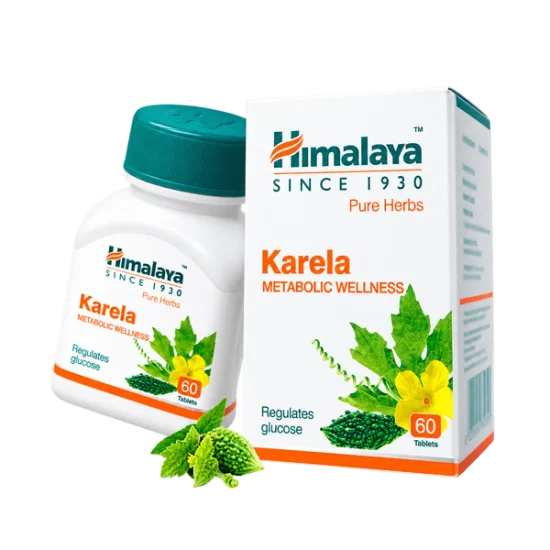
Karela is a herbal tablet based on bitter gourd, also called bitter melon. The product is presented as a pure-herb metabolic-wellness supplement with 60 tablets. The bitter gourd plant belongs to the Momordica charantia group.

Directions for use

Karela is taken orally as tablets. The amount and frequency depend on the purpose of use and are agreed with a doctor or pharmacist.

  • Take the tablets by mouth with water.
  • Keep the timing consistent from day to day.
  • Take them with food if stomach discomfort occurs.
  • Do not increase the amount because blood glucose remains above target.
  • If a dose is missed, avoid doubling the next intake; follow the individual dosing plan provided by the doctor or pharmacist.
  • Record unusual symptoms, especially sweating, shakiness, dizziness, confusion or weakness.
If Karela is added to a diabetes routine, record glucose readings and the time of the tablet for the first several days. This makes a possible treatment-related pattern easier to recognise.

Formulation

Karela is a herbal tablet based on bitter gourd, also called bitter melon. The product is presented as a pure-herb metabolic-wellness supplement with 60 tablets. Its stated purpose is to help regulate glucose as part of a broader approach to metabolic health.

The bitter gourd plant belongs to the Momordica charantia group. Fresh bitter gourd is classified as a vegetable and contains naturally occurring plant compounds, fibre, vitamin C and folate. A tablet should not be treated as nutritionally identical to a serving of fresh vegetables, since the amount of plant material and processing method determine its final composition.

Vitamin C and antioxidant function

Fresh bitter gourd contributes vitamin C, a water-soluble nutrient involved in collagen formation, normal immune function and protection of cells from oxidative stress. The UK National Health Service describes fruit and vegetables as important dietary sources of vitamin C, with cooking and storage affecting the amount retained [1].

Karela tablets provide a herbal approach rather than a replacement for dietary vitamin C. People using the product should continue to obtain vitamin C from vegetables, fruit and other balanced food choices.

Folate in fresh bitter gourd

Folate supports normal red blood cell formation and DNA synthesis. Green vegetables are established dietary sources, though the folate content of a tablet cannot be calculated from the product name alone. The National Institutes of Health explains that folate is required for cell division and normal tissue growth [2].

Karela therefore fits best alongside a varied diet. It should not be used as a substitute for a folic-acid supplement when a clinician has specifically prescribed one.

Mechanism of action

Several biological mechanisms have been proposed for bitter gourd:

  • support for glucose uptake by cells;
  • influence on enzymes involved in carbohydrate metabolism;
  • possible effects on insulin signalling;
  • contribution of plant compounds to a higher-fibre dietary pattern when consumed as food.

These mechanisms are subjects of laboratory and clinical research. They do not prove that every person will experience a measurable reduction in blood glucose after taking Karela.

Therapeutic indications

Karela is used as part of a daily metabolic-wellness routine to support healthy blood glucose regulation. It is intended for adults seeking herbal support alongside balanced eating and regular physical activity, and it does not replace prescribed diabetes treatment. Agree the amount and frequency with a doctor or pharmacist.

Common mistakes

  • treating the tablets as a substitute for prescribed diabetes medicine;
  • taking extra tablets after one high glucose reading;
  • skipping meals after taking a glucose-focused product;
  • failing to tell a clinician about the supplement;
  • stopping glucose monitoring because symptoms have improved;
  • starting Karela at the same time as several other supplements;
  • continuing it despite repeated dizziness, sweating or shakiness;
  • assuming that a herbal product cannot interact with medicines;
  • taking tablets irregularly and then judging the result after only a few days.
Keep Karela in the same daily routine as the agreed meal or medication schedule, but do not alter prescribed diabetes treatment to compensate for the supplement.

Reasons not to use it

  • use insulin or glucose-lowering medicines that can cause hypoglycaemia;
  • have repeated episodes of unexplained low blood glucose;
  • are pregnant, planning pregnancy or breastfeeding;
  • have a known allergy to bitter gourd or related plant material;
  • are preparing for surgery or a procedure requiring fasting;
  • have significant liver or kidney disease requiring monitored glucose treatment;
  • are unable to monitor symptoms or communicate changes in your condition.

Tell the doctor or pharmacist about all diabetes medicines, steroid medicines, anticoagulants and other supplements. The concern is not limited to a named interaction; combined effects can change glucose readings, appetite, hydration or bleeding risk.

When this is not for you

Karela is not suitable for everyone. Pregnancy and breastfeeding require caution because herbal glucose-regulating products may not have adequate safety evidence for these situations. Children and teenagers should not use Karela unless a qualified clinician has specifically recommended it.

Unwanted effects

Karela may be tolerated without difficulty, but herbal products can still cause unwanted effects. Possible reactions include stomach discomfort, nausea, loose stools, abdominal cramping, headache or an allergic response.

The most relevant concern for people using glucose-lowering treatment is blood glucose falling too low. Warning symptoms can include:

  • trembling or sweating;
  • sudden hunger;
  • dizziness or blurred vision;
  • palpitations;
  • irritability or confusion;
  • unusual weakness;
  • fainting or loss of consciousness.
Stop taking Karela and seek urgent medical assessment after facial swelling, difficulty breathing, widespread rash, collapse or severe confusion. These symptoms can indicate a serious reaction or clinically significant low blood glucose.

Gastrointestinal symptoms often improve when tablets are taken with food, but persistent diarrhoea or vomiting can affect hydration and glucose control. Continuing the tablets through repeated vomiting is not a sensible approach.

Comparison

Approach Main role Key limitation
Karela tablets Herbal metabolic support Exact glucose-lowering effect varies and evidence is limited
Fresh bitter gourd Vegetable providing fibre and micronutrients Portion, preparation and total diet determine its contribution
Structured diabetes care Uses monitoring, nutrition, activity and prescribed treatment Requires an individual plan and regular review

Fresh bitter gourd supplies dietary water, fibre and micronutrients that are not automatically equivalent to a tablet. Tablets may be more convenient for people who do not regularly eat bitter gourd, but convenience does not establish a stronger clinical effect.

Prescribed diabetes treatment has a defined active ingredient, dose and monitoring plan. Karela does not replace that framework. The World Health Organization identifies healthy diet, physical activity, blood glucose monitoring and appropriate treatment as central parts of diabetes care [3].

What doctors say

In clinical practice, doctors usually judge a glucose-support supplement by its effect on the whole treatment plan, not by the product name alone. They look at glucose readings, meal patterns, weight changes, activity, symptoms and prescribed medicines.

A sensible expectation is modest support rather than a rapid correction of high glucose. The NHS explains that diabetes management depends on an individual plan covering food, activity, monitoring and treatment; a supplement cannot provide the same level of control as a prescribed medicine with a defined dose [4].

Doctors also pay attention to timing. A patient who starts Karela at the same time as changing diet, exercise and prescription treatment may not know which factor caused a change in glucose. Introducing only one change at a time makes the response easier to assess.

A useful clinical detail is that HbA1c reflects average glucose over roughly two to three months, while a home reading reflects one point in time. Feeling well does not prove that glucose is controlled, and a single high reading does not show whether a supplement has failed.

Comparison

Comparison table: Diabetes

What customers often ask

What is the best time of day to take Karela?

Karela is taken orally at the time agreed with a doctor or pharmacist, because the suitable schedule depends on the purpose of use and other glucose-related treatment. Taking it consistently with a meal may reduce stomach discomfort for some adults. NHS diabetes guidance available in 2026 continues to place meal planning, glucose monitoring and prescribed treatment at the centre of diabetes care.

Can older adults use Karela?

Older adults may use Karela only after considering their medicines, kidney function, appetite, meal regularity and history of low blood glucose. Age itself does not determine a suitable amount, and the risk of hypoglycaemia can increase when several glucose-lowering treatments are combined. WHO guidance current in 2026 supports individualised diabetes management, especially where frailty, multiple medicines or irregular eating are present.

What should happen if the expected result does not come?

Do not increase the number of tablets after a disappointing glucose reading. Record readings, meal timing, activity and symptoms, then discuss the pattern with a doctor or pharmacist; persistent high glucose can require a review of established treatment. Evidence reviewed by NCCIH in 2020 found that bitter melon studies were limited and inconsistent, so lack of a clear response is possible.

Can people under 18 use Karela?

Children and adolescents should not use Karela unless a clinician who knows their medical history has recommended it. Young people with diabetes need a structured plan for insulin, food, activity and glucose monitoring, and an unplanned herbal supplement can complicate that plan. The MHRA’s 2024 medicine-safety guidance supports careful consideration of age, product information and adverse reactions when a supplement is used.

How long does one Karela dose keep working?

There is no established universal duration of action for one Karela tablet. Effects may vary with the botanical preparation, meal pattern, glucose treatment and individual metabolism, while longer-term measures such as HbA1c require repeated assessment rather than a single dose. EMA principles for herbal medicines published in 2018 distinguish traditional use from proven clinical efficacy, so a precise duration should not be assumed without product-specific evidence.

Do you offer anonymous delivery?

Your order will be securely packed and shipped within 24 hours. This is exactly what your package will look like (images of an actual item sent). It has the size and look of a regular private letter (24x11x0.7 cm) and its contents cannot be seen.

How Buyers Rate Karela

3.6
Based on 5 reviews
Lucy, 57
Southampton
Several weeks
Verified
Rating: 4 out of 5

Southampton, took the tablets as directed with breakfast for several weeks and reported that they fitted easily into her routine. She still needed to manage portions carefully and did not notice a dramatic change in home readings.

10 Oct 2026
Ellie, 67
Portsmouth
Several weeks
Verified
Rating: 3.5 out of 5

Portsmouth, used Karela as directed alongside a diet change for several weeks. She felt less comfortable when taking it before food, so she moved it to a meal after discussing the timing with her pharmacist.

16 Oct 2026
Susan, 50
Wolverhampton
About a month
Verified
Rating: 2.5 out of 5

Wolverhampton, took the tablets as directed for about a month and expected faster results. Her glucose readings remained variable, and she found that regular meals and walking had a clearer day-to-day effect.

23 Oct 2026
Louise, 51
Swansea
Several weeks
Verified
Rating: 5 out of 5

Swansea, took the tablets as directed for several weeks and reported that they were easy to swallow and caused no stomach problems when taken with food. She continued monitoring glucose rather than relying on how she felt.

29 Oct 2026
Julie, 68
Ipswich
Several days
Verified
Rating: 3 out of 5

Ipswich, took the tablets as directed for several days before stopping after experiencing repeated shakiness while also using glucose-lowering treatment. The symptoms settled after prompt clinical advice, and she regarded the interaction risk as the main drawback.

6 Nov 2026

Sources

  1. National Health Service (2024). Vitamins and minerals: Vitamin C.
  2. National Institutes of Health, Office of Dietary Supplements (2025). Folate: Fact Sheet for Health Professionals.
  3. World Health Organization (2023). Diabetes.
  4. National Health Service (2024). Type 2 diabetes: Treatment.
Get our free app Shop faster and track your orders 3.9 · 433 reviews Install