The first dose increases caused nausea, especially after breakfast. Smaller meals helped, and by the fourth week my glucose readings were steadier. I still needed to monitor closely alongside my other diabetes tablets.
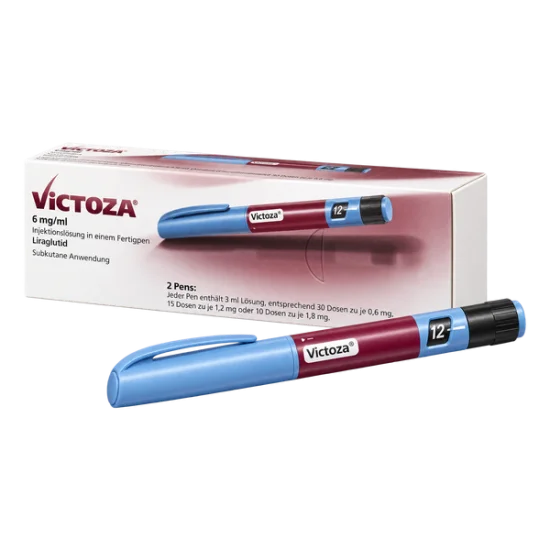
Victoza
Adults with type 2 diabetes may use Victoza alongside diet and physical activity to improve blood glucose control. It contains liraglutide, a once-daily GLP-1 receptor agonist that increases glucose-dependent insulin release, reduces glucagon secretion and slows gastric emptying.
Overview
Victoza contains liraglutide and is supplied as an injectable solution in a pre-filled pen. Liraglutide belongs to the glucagon-like peptide-1 receptor agonist group, commonly shortened to GLP-1 RA. Dosing differs between strengths and between users, so there is no single amount that suits everyone. Its licensed role is the management of type 2 diabetes alongside dietary measures and physical activity, rather than treatment of type 1 diabetes. [1]
Insulin helps glucose move from the bloodstream into cells. Glucagon has the opposite broad effect: it signals the liver to release stored glucose. Liraglutide acts on GLP-1 receptors, helping the body release more insulin when blood glucose is elevated while reducing inappropriate glucagon secretion.
The response is glucose-dependent. This means Victoza does not stimulate insulin release in the same way at all glucose levels. The risk of hypoglycaemia still rises when it is combined with insulin or a sulfonylurea.
Directions for use
Victoza is injected under the skin once daily. The injection may be given at any time of day, with or without food, but using it at a consistent time can make daily dosing easier to remember.
The usual treatment approach begins with a lower dose followed by gradual escalation. The exact dose differs between strengths and between users, so there is no single amount that suits everyone. Dose changes should follow the prescriber’s plan rather than being made in response to one high or low glucose reading.
General administration principles include:
- Inject Victoza subcutaneously into the abdomen, thigh or upper arm.
- Rotate injection sites to reduce repeated irritation in one area.
- Use a new needle for each injection.
- Never share a pen, even when the needle has been replaced.
- Do not inject into a vein or muscle.
- Do not double the next dose after a missed injection.
- Follow the current UK product instructions for storage, pen preparation and needle disposal.
Once-daily injection technique
Wash and dry the hands before preparing the injection. Select the prescribed dose on the pen, attach a new needle and choose an appropriate subcutaneous injection site. Keep the needle in place for the period specified in the current device instructions so the full selected dose is delivered.
A pen must not be shared with another person. This remains true even when a fresh needle is fitted because the pen itself can become contaminated.
Dose escalation and missed doses
Gastrointestinal symptoms can become more noticeable after an increase. Persistent vomiting or diarrhoea should not be managed by independently reducing, stopping or restarting treatment.
If a dose is forgotten, the missed dose should not be replaced with two injections. The next dose should follow the official dosing instructions and the individual plan provided by the prescriber.
Formulation
Victoza contains liraglutide and is supplied as an injectable solution in a pre-filled pen. Liraglutide belongs to the glucagon-like peptide-1 receptor agonist group, commonly shortened to GLP-1 RA. Dosing differs between strengths and between users, so there is no single amount that suits everyone. Its licensed role is the management of type 2 diabetes alongside dietary measures and physical activity, rather than treatment of type 1 diabetes. [1]
Liraglutide and GLP-1 receptor activity
Approved role in type 2 diabetes
Suitability depends on the person’s glucose targets, current medicines, kidney function, digestive health and history of pancreatitis or gallbladder disease. A prescriber may use Victoza alone or alongside other diabetes medicines when the treatment plan supports that combination.
The Medicines and Healthcare products Regulatory Agency and the European Medicines Agency identify liraglutide as a treatment option for adults with type 2 diabetes within a broader programme of glucose management.
Mechanism of action
Liraglutide acts on glucagon-like peptide-1 receptors. This increases glucose-dependent insulin release and reduces glucagon secretion, helping regulate blood glucose. It also slows gastric emptying, which can reduce the rate at which glucose enters the bloodstream after food.
Therapeutic indications
Adults with type 2 diabetes may use Victoza alongside diet and physical activity to improve blood glucose control.
Its licensed role is the management of type 2 diabetes alongside dietary measures and physical activity, rather than treatment of type 1 diabetes. [1]
Common mistakes
Common patient mistakes
- Doubling a missed dose: take the next dose according to the prescribed schedule instead.
- Sharing a pen: use one pen for one person only, even with a new needle.
- Ignoring dehydration: seek clinical advice when vomiting or diarrhoea prevents adequate fluid intake.
- Changing insulin independently: obtain a specific adjustment plan before altering insulin or sulfonylurea treatment.
- Stopping after early nausea: discuss persistent symptoms because the clinician may adjust the escalation plan.
- Using Victoza for type 1 diabetes emergencies: Victoza does not replace insulin in diabetic ketoacidosis or insulin-dependent emergencies.
- Injecting into the same site repeatedly: rotate sites to reduce local irritation.
Reasons not to use it
Victoza is contraindicated in people with a personal or family history of medullary thyroid carcinoma, also called MTC. It is also contraindicated in people with Multiple Endocrine Neoplasia syndrome type 2, or MEN 2.
It is not appropriate as treatment for diabetic ketoacidosis or as a substitute for urgent insulin treatment in type 1 diabetes.
When this is not for you
Victoza is NOT for you if you have a personal or family history of medullary thyroid carcinoma or MEN 2, or if you need urgent insulin treatment for type 1 diabetes or diabetic ketoacidosis. A prescriber needs a clear medical history before treatment, including thyroid cancer history, endocrine syndromes, pancreatitis, kidney disease, gallbladder problems, pregnancy and breastfeeding.
A new neck lump, persistent hoarseness, difficulty swallowing or breathing difficulty requires medical assessment.
Unwanted effects
The most frequent early problems involve the digestive system. Nausea, diarrhoea and vomiting can occur, especially during dose escalation, and may become less troublesome as the body adapts. The UK Summary of Product Characteristics describes these reactions and the precautions linked to dehydration and glucose-lowering combinations. [2]
| Symptom or situation | Practical response | Urgent medical assessment |
|---|---|---|
| Nausea, loose stools or mild vomiting | Take smaller meals and maintain fluid intake | Seek help if symptoms persist or prevent drinking |
| Severe or lasting abdominal pain | Stop self-management and obtain clinical advice | Urgent assessment, especially with repeated vomiting or pain radiating to the back |
| Sweating, shaking, hunger, dizziness or confusion | Treat suspected low glucose according to the diabetes plan | Urgent help if confusion, collapse or inability to swallow develops |
| Reduced urine output, marked weakness or confusion | Treat as possible dehydration | Prompt assessment for acute kidney injury |
Common gastrointestinal effects
Nausea may be worse after a dose increase or after eating a large meal. Simple changes such as smaller portions, slower eating and avoiding heavy meals may reduce discomfort.
Diarrhoea and vomiting can cause fluid loss. The risk is greater when Victoza is combined with another medicine that also causes gastrointestinal symptoms, such as metformin. Severe or persistent symptoms require clinical review.
Serious pancreatic and renal risks
Acute pancreatitis is uncommon but serious. Warning symptoms include severe, persistent abdominal pain that may extend to the back, with or without vomiting. Abdominal discomfort alone does not establish pancreatitis, yet severe ongoing pain warrants urgent medical assessment.
Dehydration from repeated vomiting or diarrhoea can impair kidney function and contribute to acute kidney injury. Reduced urine output, unusual drowsiness, confusion or inability to keep fluids down needs prompt attention.
Hypoglycaemia risk
Victoza alone has a lower hypoglycaemia risk than insulin or sulfonylurea treatment, but the risk increases when these medicines are combined. Symptoms may include sweating, trembling, hunger, dizziness, blurred vision, irritability and confusion.
People using insulin or a sulfonylurea may need glucose monitoring and a prescriber-led dose adjustment. Do not alter insulin or sulfonylurea doses in response to symptoms without an agreed diabetes plan.
Comparison
Different medicines address different treatment needs. The choice depends on glucose control, cardiovascular and kidney considerations, injection preference, adverse effects and the person’s existing regimen.
| Medicine or category | Main difference from Victoza | Key limitation or safety point |
|---|---|---|
| Victoza, liraglutide | Daily injectable GLP-1 RA; supports glucose-dependent insulin release and slows gastric emptying | Gastrointestinal effects; hypoglycaemia risk rises with insulin or sulfonylureas |
| Januvia, sitagliptin | Oral DPP-4 inhibitor rather than an injectable GLP-1 RA | Different glucose-lowering profile; individual kidney function and treatment goals affect suitability |
| Trulicity, dulaglutide | Injectable GLP-1 RA generally administered weekly | Switching needs a clinician-led schedule; gastrointestinal effects can occur |
| Basal insulin | Replaces or supplements background insulin activity | Hypoglycaemia and weight changes require monitoring |
Januvia and Victoza are not interchangeable on a simple dose-for-dose basis. Trulicity has a different dosing frequency, while basal insulin has a replacement role that differs from GLP-1 receptor stimulation.
When a switch is considered, the medicines should not be overlapped or stopped casually. The prescriber should set the timing, monitoring plan and any dose adjustments.
What doctors say
The Medicines and Healthcare products Regulatory Agency and the European Medicines Agency identify liraglutide as a treatment option for adults with type 2 diabetes within a broader programme of glucose management.
The practical meaning is modest but useful: liraglutide has been studied across several treatment contexts, yet the appropriate choice still depends on the patient’s clinical profile.
Comparison
Glyxambi
Invokana
Januvia
Karela
What customers often ask
Which diet, exercise and daily habits support Victoza treatment?
A structured eating pattern, regular physical activity and consistent glucose monitoring can support Victoza treatment for type 2 diabetes. Large, fatty meals may worsen nausea, while dehydration can increase the consequences of vomiting or diarrhoea. The NHS and MHRA continue to place medication within a broader diabetes self-management plan in 2026. Victoza does not cancel the need for prescribed dietary or activity advice. Monitoring patterns can help the prescriber adjust the plan.
Can older adults use Victoza?
Older adults may use Victoza when their prescriber considers the benefits and risks suitable. Kidney function, frailty, dehydration risk, appetite changes and the number of other medicines require attention. The EMA product information available for clinical use in 2026 supports individual assessment rather than an automatic age-based exclusion. A lower tolerance for fluid loss can make persistent gastrointestinal symptoms more urgent in older people.
Can Victoza be used during pregnancy or breastfeeding?
Victoza is not generally used during pregnancy because liraglutide is not intended to provide glucose control in pregnancy. A person who becomes pregnant should contact the prescribing team promptly for a planned treatment review rather than stopping essential diabetes treatment without advice. The MHRA’s medicine-safety framework in 2026 supports prompt review of diabetes medicines during pregnancy. Breastfeeding also requires an individual decision because treatment may need to change.
What should happen if the expected glucose improvement does not occur?
The first step is a clinical review of injection technique, adherence, dose escalation, diet, illness, other medicines and glucose measurements. Do not increase Victoza independently or add another glucose-lowering medicine without a treatment plan. NICE guidance used in UK diabetes care in 2026 supports reviewing the full regimen when targets are not reached. Persistent high glucose with vomiting, abdominal pain, marked thirst or drowsiness requires urgent assessment.
Does Victoza cause nausea?
Nausea is a recognised adverse effect of Victoza, especially after treatment starts or the dose increases. Smaller meals, slower eating and adequate fluids may help mild symptoms, but repeated vomiting or inability to drink needs medical attention. The MHRA product information current for clinical reference in 2026 links gastrointestinal reactions with dehydration risk. Severe abdominal pain should be assessed urgently because acute pancreatitis can present with persistent pain and vomiting.
How soon can Victoza’s effect become noticeable?
Some people see changes in glucose readings during the first days or weeks, yet the full response depends on dose titration, diet, activity, kidney function and other medicines. Gastrointestinal effects can appear before the desired glucose pattern stabilises. The EMA’s liraglutide information available in 2026 supports gradual escalation rather than judging the treatment after one injection. HbA1c assessment takes longer because it reflects average glucose over preceding weeks.
What is the correct technique for using the Victoza pen?
Victoza is injected under the skin once daily using the prescribed dose, with a new needle for each injection. The abdomen, thigh and upper arm are suitable areas when used according to the device instructions, and injection sites should be rotated. The manufacturer’s device instructions and MHRA safety information available in 2026 should guide priming, dose selection, needle removal and disposal. Never share the pen, never inject into a vein or muscle, and never compensate for a missed dose by doubling the next injection.
Do you offer anonymous delivery?
Your order will be securely packed and shipped within 24 hours. This is exactly what your package will look like (images of an actual item sent). It has the size and look of a regular private letter (24x11x0.7 cm) and its contents cannot be seen.
Cardiovascular outcomes and clinical evidence
Major Adverse Cardiovascular Events, or MACE, usually means cardiovascular death, non-fatal heart attack or non-fatal stroke. The LEADER trial studied liraglutide in adults with type 2 diabetes who had elevated cardiovascular risk and reported a reduction in major cardiovascular events compared with placebo during the trial period. [3]
Those findings apply to the population studied. They do not guarantee prevention of heart attack or stroke for every person using Victoza. Blood pressure management, lipid treatment, smoking status, physical activity and glucose control remain relevant.
Other research has examined liraglutide in different clinical settings. The named evidence base includes Pratley (1860), AWARD-6, Bailey’s LIRA-SWITCH, Davies’ LIRA-RENAL and ELLIPSE. These studies address different questions, such as glucose control, treatment switching, kidney-related outcomes or paediatric diabetes, so their results should not be combined into one universal claim.
How Buyers Rate Victoza
I found the pen straightforward after practising the steps. My appetite was lower, though diarrhoea was inconvenient during the first fortnight. I contacted the surgery rather than changing the dose myself.
The daily injection fitted my routine, but the result was slower than I expected. I had two episodes of vomiting after escalation and needed advice about fluids. The treatment plan was reviewed rather than abandoned without guidance.
Sources
- European Medicines Agency (2018). Victoza: Summary of Product Characteristics and Product Information.
- Electronic Medicines Compendium (2024). Victoza 6 mg/ml solution for injection in pre-filled pen: Summary of Product Characteristics.
- New England Journal of Medicine (2016). Liraglutide and Cardiovascular Outcomes in Type 2 Diabetes.